

The Nigeria Governors’ Forum (NGF) has expressed its support for the recent federal reforms mandating that all Oil and Gas revenue entitlements be remitted directly into the Federation Account.
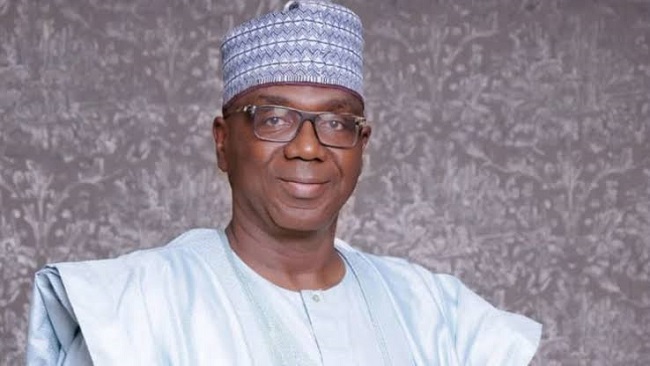
The forum’s Chairman, Gov AbdulRahman AbdulRazaq of Kwara State, expressed the support in a statement by Yunusa Abdullahi, Director of Media and Strategic Communications for the NGF, in Abuja on Monday, March 2, 2026.
AbdulRazaq described the move as a vital step towards strengthening fiscal transparency, predictability, and constitutional alignment across the three tiers of government.
AbdulRazaq lauded Executive Order 9, signed by President Bola Ahmed Tinubu on Feb. 13, 2026.
The order directed the realignment of oil and gas revenue flows – including royalty oil, tax oil, profit oil, and profit gas – to ensure they conform to constitutional provisions.
According to AbdulRazaq, these reforms are essential for clarifying regulatory mandates within the petroleum sector and ensuring that the Federation Account remains the “backbone of Nigeria’s intergovernmental fiscal system.”
“As a non-partisan body representing the 36 State Governors of the Federation, the NGF underscores that the integrity and predictability of Federation Account inflows are foundational to Nigeria’s fiscal federalism.
“Oil and gas revenues remain a central component of the distributable national income.
“The clarity, transparency, and predictability of those inflows directly affect capital planning, debt sustainability, infrastructure delivery, and public service provision at the federal, state, and local government levels,” he said.
AbdulRazaq stated that recent Federation Account Allocation Committee (FAAC) communiqués had consistently demonstrated a gap between gross revenue collections and final distributable sums.
He said that for the subnational governments, it was the latter that determines fiscal capacity.
“When remittance pathways are layered, complex, or difficult to reconcile, fiscal predictability weakens, and that directly affects capital planning cycles across the Federation at federal, state, and local government levels.
“Nigeria’s population now exceeds 220 million and continues to grow rapidly. States sit at the frontline of delivering education, primary healthcare, infrastructure, security architecture, and economic opportunity to this expanding population.
“Predictable revenue flows strengthen the ability of states to meet these obligations responsibly,” he said.
Commenting on the development, AbdulRazaq emphasised the link between revenue clarity and public service delivery.
“Structural clarity in the remittance of nationally owned resources strengthens fiscal stability across all tiers of government.
“Predictability improves planning. Planning improves delivery.
“The Governors’ Forum supports reforms that enhance transparency and strengthen the collective capacity of governments to meet the needs of our growing population,” AbdulRazaq said.
With Nigeria’s population now exceeding 220 million, he said that states are at the frontline of providing essential services such as primary healthcare, education, and security.
He added that predictable revenue flows were necessary for states to meet these obligations responsibly.
AbdulRazaq also said that sustainable economic growth requires strong institutions, disciplined revenue management, and alignment between policy intent and operational execution.
He reaffirmed the governors’ commitment to collaborating with the Federal Government to ensure fiscal reforms result in tangible development outcomes for all Nigerians.
By Emmanuel Oloniruha