

West Africa’s downstream petroleum sector is proving resilient in spite of escalating geopolitical tensions, industry leaders declared during a high-level webinar convened on Tuesday, March 17, 2026.
The forum, hosted by Major Energies Marketers Association of Nigeria (MEMAN) with S&P Global Energy, examined Middle East tensions, supply security risks, and Nigeria’s transition to a deregulated downstream regime.
According to the speakers, the global oil market remains fragile, with disruptions to Iranian output and threats around the Strait of Hormuz unsettling supply chains and pricing stability.
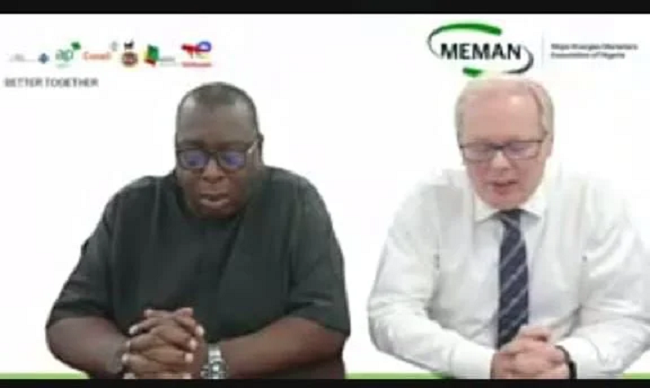
MEMAN Chairman, Huub Stokman, described the crisis as a “double-edged reality” shaping opportunities for producers while intensifying pressure on downstream operators and consumers.
“While it creates opportunities for producers, it exerts immense pressure on downstream operators and, ultimately, consumers,” Stokman said.
He noted rising volatility, surging shipping and insurance costs, and rapid shifts in sourcing as countries scrambled to secure alternative crude supplies.
According to him, Nigeria stands at a strategic crossroads, with potential to emerge as a reliable global energy partner if structural bottlenecks are addressed decisively.
He cited pipeline insecurity, regulatory opacity, and infrastructure deficits as key constraints limiting Nigeria’s ability to fully capitalise on current market dynamics.
He highlighted domestic refining growth, especially the Dangote Refinery, as a buffer against shocks, though warning of risks linked to supply concentration.
In spite of improvements, Stokman said domestic fuel prices remained tied to global trends, with adjustment delays often driven by inventory cycles and working capital pressures.
He disclosed that Nigeria maintained over 30 days of petrol supply, with NNPC Ltd. continuing to act as supplier of last resort.
From a global perspective, S&P Global’s Gary Clark warned refined product markets are tightening amid rising margins for diesel and jet fuel.
Clark attributed the surge to supply disruptions and heightened risk premiums, alongside costly vessel diversions around the Cape of Good Hope.
He said these detours were tightening supply further and inflating freight costs, particularly across European markets already under strain.
Stanislas Drochon, Head of Fuels and Refining, S&P Global Energy, warned Sub-Saharan Africa remained highly vulnerable due to import dependence, weak refining capacity, and limited storage infrastructure.
“Energy security is not just about supply. It is about reliability, affordability, and accessibility, requiring sustained investment across the entire value chain,” Drochon said.
On Nigeria’s deregulation path, Joe Nwakwue, CEO, Zera Advisory and Consulting Ltd., described the shift as necessary but turbulent, marked by price volatility and structural realignment.
He said expanding domestic refining would not shield prices from international benchmarks, stressing the need for a transparent and competitive market framework.
The session, moderated by MEMAN Executive Secretary, Clement Isong, ended with consensus that resilience will depend on policy consistency and infrastructure investment.
Participants agreed that while short-term volatility is inevitable, Nigeria’s reforms could transform uncertainty into long-term stability and growth.