

Across Southern Africa, inequality is felt daily at a household level. The Africa Gender Index (2023) reports that women across Africa have achieved just over 50% gender parity, with the weakest outcomes in economic participation and leadership.
In agriculture, where women make up nearly 50% of the labour force, structural exclusion continues to limit access to land, finance, extension services and markets, directly undermining food security and resilience.
In a region where millions of households depend on agriculture for survival, Gender Equality and Social Inclusion (GESI) is not a “nice to have” as it can mean the difference between equitable access to resources and opportunities. Evidence from the World Bank shows that closing gender gaps in agriculture could significantly reduce hunger and poverty, improving nutrition and resilience across communities.
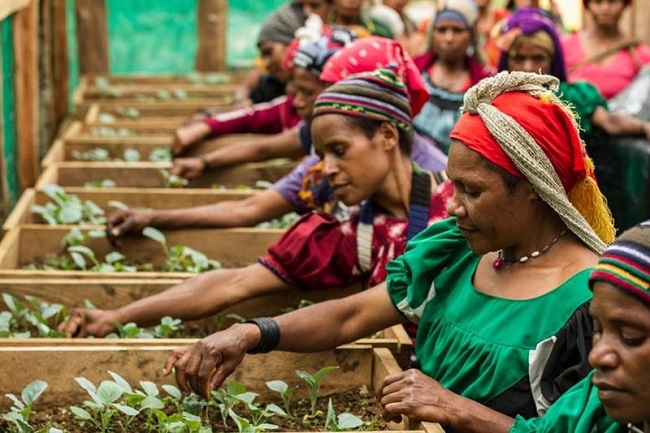
“When exclusion is normalised, hunger becomes generational,” says Humphrey Nxumalo, Head of Programmes at Solidaridad. “GESI dialogues help us confront the real drivers of inequality in farming communities. They raise pertinent issues like who controls land, who makes decisions, and who benefits from markets. If we want resilient food systems, inclusion must be intentional and collective.”
Creating Space for Honest Dialogue and Structural Change
In Southern Africa, Solidaridad’s Gender Equality and Social Inclusion (GESI) Dialogues are designed as safe, structured spaces where farmers, community leaders, implementers and partners critically examine how gender norms and power dynamics shape livelihoods. Using tools such as the Women’s Empowerment in Agriculture Index (WEAI), the dialogues explore access to productive resources, participation in extension services, leadership representation, and household decision-making.
“GESI is about shifting mindsets as much as systems. When women realise that deciding is not disobedience, and that learning comes through mistakes, confidence grows. We see women stepping into leadership, managing income, and investing in their farms. These changes ripple through entire households,” explains Evlizy Neves, Acting Regional Gender and Youth Lead at Solidaridad.
According to Neves, the stories heard in these dialogues remind regional smallholder farmers that in as much as dependency is learned, autonomy can also be learned. She asserts that once women see themselves as capable decision-makers, productivity and dignity will simultaneously increase.”
When inclusion fails, it is not abstract groups that suffer, it is women-headed households, landless youth, people with disabilities, informal farm workers, and climate-exposed smallholders who pay the price first and most severely. These are the households that eat last, pull children out of school first, migrate under distress, or rely on negative coping strategies when droughts, floods, or price shocks hit. In Southern Africa, exclusion determines who has access to land titles, early warning information, climate-resilient inputs, credit, and markets. Without these, survival itself is compromised.
Critically, GESI shifts who absorbs risk. Instead of shocks being borne by the most marginalised, inclusive systems distribute resources, information, and power more equitably improving resilience at household and community level. In this sense, GESI is not only about fairness; it is about who survives crises and who does not. When inclusion is intentional and measurable, hunger is reduced, forced migration slows, and dignity becomes a lived reality rather than a distant promise.
Learning from Women on the Ground
During a recent GESI training for a homogeneous group of women farmers in Boane, Mozambique, discussions centred on autonomy, ethical leadership and growth mindset. Many participants across Mozambique as well as several other Southern African countries, shared how decades of dependency limited their progress, until they recognised their right to make decisions about work, time and income.
GESI is not only embedded in Solidaridad’s field programmes, but also within its organisational culture. From gender-responsive labour standards to strengthened workplace policies, Solidaridad continues to align internal practice with external impact in Southern Africa.
“Inclusion starts within the organisation. When we model ethical leadership, respect and accountability internally, we are better positioned to support partners and communities to do the same. GESI strengthens teams, programmes and outcomes. By institutionalising GESI within its HR architecture, Solidaridad ensures that the same principles it advocates in farming communities are reflected in its own corridors. This internal alignment strengthens credibility, deepens trust with partners, and reinforces the organisation’s ability to drive structural change beyond its walls,” says Olivia Tanyanyiwa, Regional Human Resources Manager at Solidaridad.
This commitment is reflected in Solidaridad’s regional work on gender-responsive policies and representation, including efforts to strengthen women’s participation and leadership across agricultural sectors in Southern Africa.
“At the end of the day, the scale of gender inequality demands collective action. No single organisation can dismantle structural exclusion alone. We are calling on governments, civil society, donors and the private sector to partner with us. When we align our efforts, GESI becomes a catalyst for food security, dignity and sustainable livelihoods. That is the future we are working toward,” concludes Nxumalo.