

The world came to Samarkand, Uzbekistan, to learn from Nigeria’s experience.
The occasion was CITES CoP20, the once-every-three-years global conference where governments decide how to protect endangered species by regulating international wildlife trade – held in Samarkand late last year. In the audience, officials from dozens of countries gathered to learn what works in combating wildlife trafficking. And on stage were officials from the Nigerian government and Wildlife Justice Commission, there to share their expertise.
Nigeria’s experience offers hard-earned lessons in protecting pangolins, one of the world’s most trafficked animals.
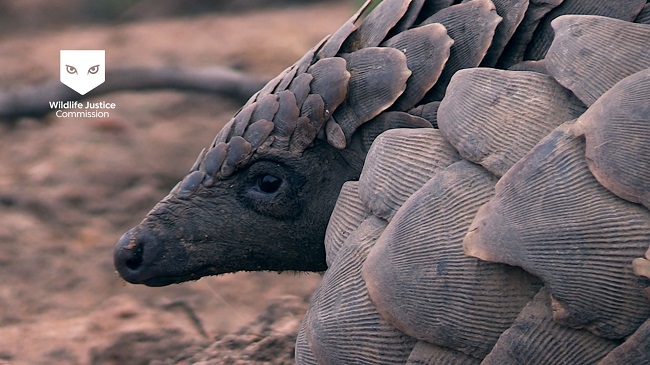
For too long, pangolins have been pushed towards extinction by sophisticated criminal networks that traffic them as a high-value commodity. Not long ago, Nigeria sat at the centre of that illegal trade. Today, it stands as proof that wildlife trafficking networks can be disrupted, not merely by seizing shipments, but by breaking the routes traffickers rely on, arresting those who organise the trade, and making the business too risky to continue. Pangolins now have a fighting chance.
Between 2016 and 2019, Nigeria was one of the world’s largest hubs for pangolin trafficking, linked to more than half of all major global seizures and serving as a key transit point for pangolin scales bound for Asia. Thousands of Nigeria’s pangolins were trapped, killed, and exported by highly organised transnational criminal networks.
Traditional enforcement approaches – focused primarily on intercepting shipments—were not enough. What was required was a fundamental shift.
That shift began with a bold partnership between the Nigeria Customs Service (NCS) and the Wildlife Justice Commission, grounded in intelligence-led enforcement. Together, we moved beyond pursuing seizures and instead focused on disrupting the criminal networks trafficking pangolin scales out of Nigeria. We systematically infiltrated supply chains,
identified kingpins, and supported law enforcement action where it would cause the greatest damage: at the very top of the criminal hierarchy.
The results have been transformative – and measurable.
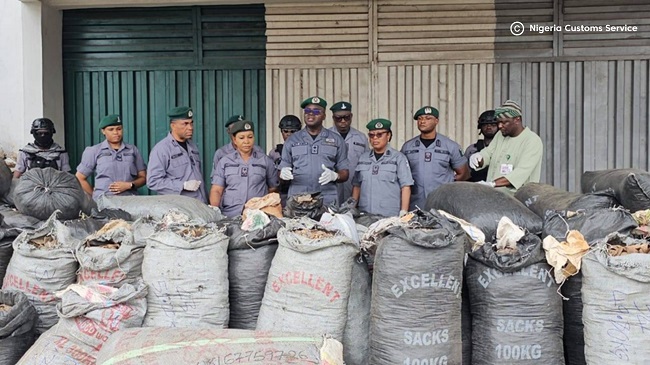
Between July 2021 and December 2025, Nigerian authorities, supported by Wildlife Justice intelligence, seized 25.3 tonnes of pangolin scales, representing an estimated 135,000 pangolins. Twenty ground operations led to 42 arrests and 15 convictions. During this period, 91% of all pangolin seizures in Nigeria involved Wildlife Justice intelligence support.
But the real impact goes far beyond the numbers. The statistics, striking as they are, tell only part of the story.
Trafficking routes from Nigeria have collapsed. For more than three years, no major reported pangolin scale shipments originating from Nigeria have been intercepted at Asian seaports. Market prices have dropped as traffickers have abandoned this criminal activity. Wildlife trafficking from Nigeria is now viewed by criminals as a high-risk activity. This shift is visible even inside criminal networks. As one trafficker texted: “U know that this business is not like before and people are really after us.” The trafficker was right: we saw this text because his phone was seized when he was arrested.
These outcomes were made possible by the strategic leadership and commitment of the NCS, whose willingness to embrace intelligence-led enforcement has set a new benchmark for high-risk transit countries.
In 2022, this partnership led to the arrest of a Vietnamese kingpin and his key associates, central figures in pangolin and ivory trafficking, whose convictions in 2023 sent a clear signal that wildlife crime would no longer be tolerated. In 2025, Nigerian authorities arrested a Chinese national linked to the largest global pangolin scale seizure since 2020, following a months-long investigation.
Nigeria’s leadership was showcased on the global stage in Samarkand, where the Government of Nigeria and Wildlife Justice co-hosted a high-level event, Enforcement in Action. Senior officials from the Nigerian government, UNODC, and Wildlife Justice shared their expertise, explaining how intelligence-led investigations, financial analysis, and strong partnerships are delivering measurable reductions in wildlife trafficking. In the audience, dozens of officials from around the world took notes.
They learned how, with the support of the Wildlife Justice Commission, Nigeria has strengthened financial investigations, enhanced analytical capacity, and dismantled transnational wildlife trafficking networks.They learned that species are not saved by chance – they are saved by strategy.
They learned that by targeting the kingpins who orchestrate wildlife crime, following the money, and sustaining long-term intelligence-led investigations, enforcement agencies can dismantle even the most entrenched criminal networks.
Nigeria’s success proves that this approach works, and that it can be replicated elsewhere. Today, the Wildlife Justice model of partnering with government authorities is being applied to confront trafficking in ivory, rhino horn, marine species, and exotic pets across Africa and beyond. Our success is also reshaping international policy discussions by demonstrating that wildlife trafficking must be addressed as serious organised crime.
Nigeria’s experience offers hope – not just for pangolins, but for countless species threatened by organised wildlife crime. Nigeria has hard-earned lessons to share. For the rest of the world, it is a call to action.
By Bashir Adewale Adeniyi, Comptroller-General, Nigeria Customs Service and Olivia Swaak-Goldman, Executive Director, Wildlife Justice Commission