

As U.S. President Donald Trump met with the Venezuelan opposition leader and Nobel prize winner, María Corina Machado, on Thursday, January 15, 2026, in Washington DC, new analysis by 350.org and Zero Carbon Analytics finds that 68% of global oil production is impacted by U.S. aspirations to dominate the world’s oil and gas markets.
Machado’s visit comes as doubts persist over the U.S. administration’s appeal for companies to invest in Venezuela which holds 20% of the world’s crude oil reserves. Since its intervention in Venezuela the U.S. has made explicit threats of force against other resource-rich countries.
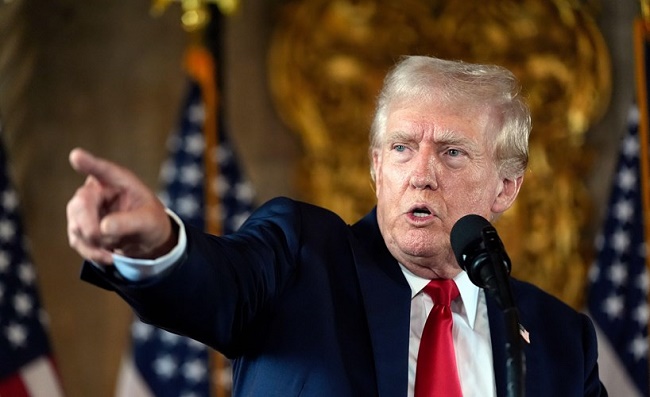
The Trump administration’s latest National Security Strategy, which outlines U.S. intentions to expand its sphere of influence across politics, economics and the military, is being dubbed the “Donroe Doctrine,” a reference to the foreign policy approach that echoes the 1823 Monroe Doctrine by asserting U.S. pre-eminence across the Western Hemisphere. While the original Monroe Doctrine opposed European intervention in the region, it was historically used to justify extensive U.S. political and military interference throughout Latin America and the Caribbean.
Andreas Sieber, Head of Political Strategy, 350.org: “Dependence on oil has never made us more vulnerable and unsafe. More than two out of every three gallons of oil on the global market now come from countries where the Trump government either projects ruthless influence or threatens to do so. Fossil fuel dependence has become a security risk, exposing countries and consumers to sudden price spikes, supply disruptions, and conflict-driven instability. Every escalation, sanction, or threat of force ripples through global markets, hitting households with higher bills and governments with economic shocks they cannot control.
“High energy bills, economic shocks, and political instability aren’t accidents. They’re the predictable result of letting a few actors dominate a system everyone depends on. The real alternative is obvious: an energy system that no dictator or superpower can switch off – renewable, local, and controlled by people, not polluters. Just renewable energy systems do not require military protection, do not destabilise regions, and do not trigger geopolitical conflict.”
Data snapshot:
- 68% of global production oil is controlled by countries in the U.S. sphere of influence
- 81% of global oil reserves are controlled by countries in the U.S. sphere of influence
- 53% of global gas production comes from countries in the U.S. sphere of influence
- 52% of global proved gas reserves are controlled by countries in the U.S. sphere of influence
Under this strategy, the countries of North, Central, and South America are explicitly framed as falling within the United States’ sphere of influence. The stated aim is to reassert U.S. dominance across the hemisphere, reshaping political, economic, and security relationships in the process.
Fossil fuel influence
Taken together, 79% of global oil production is either within the U.S. sphere of influence or controlled by Russia, highlighting the structural volatility and insecurity baked into today’s oil markets. Over the past year, the U.S. administration has bombed or militarily intervened in Venezuela, Iran and Iraq, while issuing explicit threats of force against multiple other countries and territories, including Canada, Colombia, Greenland and Mexico.
Across the Americas, many of the countries that Trump has threatened may not be under direct U.S. control but are widely regarded as falling within Washington’s strategic sphere of influence – a reality that carries significant political and market risk.
Even oil producers not subject to direct U.S. threats are deeply embedded in U.S. military and financial systems, as illustrated by long-standing U.S.–Saudi security cooperation and the financial and defense integration of the United Arab Emirates. In practice, this reinforces U.S. leverage over global oil supply without the need for direct military action.
Bridget Woodman, Head of Politics and Finance, Zero Carbon Analytics, said: “This analysis exposes how control over fossil fuels is consolidating into increasingly rival blocs, which can only have negative implications for global security and costs of oil and gas supply. It is a clear alarm call for those countries that continue to prioritise volatile fossil fuels over stable, domestic renewable energy.”
According to the International Energy Agency, global renewable power capacity is expected to expand by nearly 4,600 gigawatts between 2025 and 2030, double the growth of the previous five years. Wind, solar, battery storage, and electrification are not only climate solutions; they are long-term security strategies. These trends underscore the urgent need to reduce dependence on fossil fuels and accelerate a just transition to renewable energy systems that are more resilient, democratic, and secure.