

Floating liquefied natural gas (FLNG) is rapidly becoming a central component of Africa’s natural gas development strategy as the continent prepares for a sharp rise in energy demand and seeks faster, lower-risk routes to market.
According to the State of African Energy 2026 Outlook published by the African Energy Chamber (AEC), Africa’s natural gas demand is projected to increase by 60% by 2050, intensifying pressure on producers to bring new supply online efficiently. ‘
The report notes that Africa already hosts the world’s highest concentration of FLNG infrastructure, positioning the continent as a global testbed for floating gas solutions.
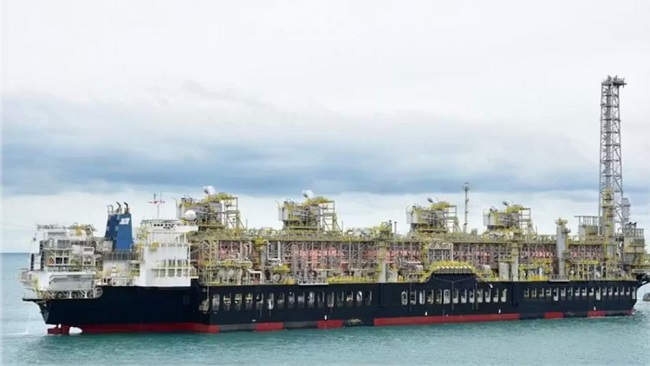
FLNG technology allows offshore gas resources to be processed and exported directly at sea, reducing reliance on extensive onshore infrastructure and mitigating security, land access and logistical risks that have delayed several traditional LNG projects across Africa.
Cameroon’s Hilli Episeyo remains Africa’s first operational FLNG facility and is widely regarded as a global benchmark after achieving production in record time. The project demonstrated the viability of FLNG in monetizing relatively small gas reserves while accelerating exports.
In West Africa, the Gimi FLNG vessel reached commercial operations in 2025 at the bp-led Greater Tortue Ahmeyim project on the maritime border of Senegal and Mauritania.
Operated by Golar LNG, the facility is the first FLNG unit in the MSGBC region and is expected to monetize up to 15 trillion cubic feet of gas over a 20-year lease period.
Additional projects are advancing elsewhere on the continent. In Gabon, Perenco is developing the Cap Lopez FLNG project, with a planned capacity of 700,000 tons per year starting in 2026.
Offshore Nigeria, UTM Offshore is progressing toward a final investment decision on a $5 billion FLNG facility at the Yoho field.
The AEC notes that FLNG’s modular and scalable design reduces upfront capital requirements and shortens development timelines.
This approach has been demonstrated by the Congo LNG project, where operator Eni brought phase two production online in 2025, just 35 months after construction began and ahead of schedule. First exports are expected in 2026.
FLNG has also proven resilient in high-risk environments. In Mozambique, security challenges in Cabo Delgado delayed several onshore LNG projects, while offshore FLNG developments such as Coral Sul, which began operations in 2022, continued largely uninterrupted.
A final investment decision for the Coral Norte FLNG project was reached in 2025.
Beyond exports, FLNG is expected to support gas-to-power projects, petrochemical development and regional energy security, contributing to broader economic growth and energy access across the continent.
However, the AEC cautions that successful deployment depends on clear regulatory frameworks, stable fiscal terms and alignment with national development strategies.
“These discussions will be central at African Energy Week 2026, where governments and industry leaders will explore how floating solutions can unlock Africa’s gas potential while managing risk and accelerating timelines,” the chamber said.
AEC Executive Chairman, NJ Ayuk, said FLNG offers African producers a pathway to faster monetization and sustainable development.
“FLNG is changing the game for African gas producers by reducing exposure to security and infrastructure risks and generating revenues that can be reinvested into broader development,” Ayuk said.