

Environmental challenges are undermining the health of ecosystems, the stability of economies and the well‑being of communities worldwide. Around 3.2 billion people – roughly 40 per cent of the global population – are directly affected by land degradation, while up to $577 billion in annual global crop production is at risk from pollinator loss.
Experts agree that addressing these challenges requires not only technological solutions or policies but also informed, engaged and capable societies.
This is where education comes in.
On January 24 each year, the International Day of Education, led by the United Nations Educational, Scientific and Cultural Organisation (UNESCO), brings global attention to education’s role in shaping a better future and achieving the 2030 Agenda for Sustainable Development.
From classrooms to communities, and from local initiatives to global movements, here are five ways in which education is driving environmental action.
1. Investing in students is investing in the future
Education from an early age is important for understanding the natural world and humanity’s relationship with it. By building environmental literacy, critical thinking and problem-solving skills, schools shape informed citizens who can make environmentally responsible decisions throughout their lives.
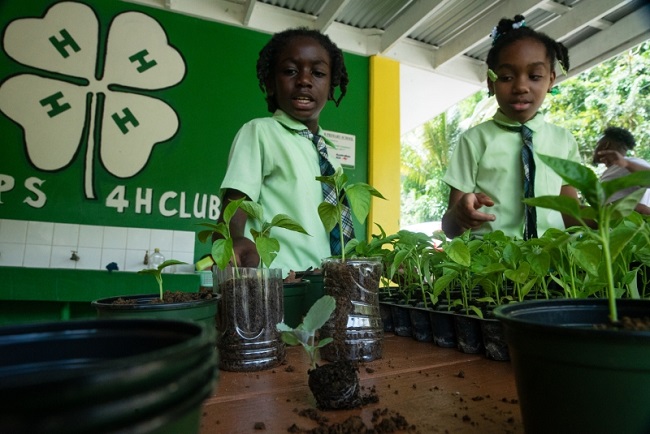
Initiatives like #GenerationRestoration Schools, led by the UN Decade on Ecosystem Restoration in partnership with the Foundation for Environmental Education (FEE), support schools worldwide to teach and take action for nature, enabling students to learn about the environment by taking part in hands-on ecosystem restoration projects.
2. Outside the classroom, environmental learning teaches life skills
Beyond school grounds, non-formal means of education also play a crucial role in building environmental awareness. Things like workshops, training groups and programmes empower young people to collaborate, mobilise and tackle challenges within their communities.
For example, the Tide Turners Plastic Challenge, part of UNEP’s Beat Plastic Pollution campaign, engages youth worldwide through existing networks. In partnership with World Scouting and Girl Guides, it has reached over 800,000 young people, showing the power of grassroots action. Opportunities such as this build leadership and life skills while driving youth-led environmental solutions.
3. Universities are stepping up for ecosystem restoration
By incorporating ecosystem restoration into teaching, research, operations and supply chains, universities are transforming their campuses into living laboratories for nature recovery. For example, more than 700 higher education institutions in over 100 countries are part of Nature Positive Universities, a global network dedicated to halting and reversing biodiversity loss through efforts like habitat restoration, biodiversity monitoring and sustainable infrastructure projects.
These actions improve the environments of cities and local landscapes, contributing to the development of a nature-positive future.
4. Students already are changemakers
Students around the world are exploring, documenting and communicating environmental challenges. Through journalism, storytelling and digital platforms, young people are sharing solutions and inspiring others to take action.
Programmes like Young Reporters for the Environment (YRE), which partners closely with the UN Decade on Ecosystem Restoration, have been training and mentoring thousands of future environmental leaders for over 30 years. Many environmental reporters and advocates today started their journeys through YRE, where they developed skills to investigate issues, report on local challenges, and support initiatives focused on solutions.
5. Classrooms are becoming future-proof
According to a recent analysis by the United Nations Children’s Fund (UNICEF), at least 242 million students across 85 countries had their schooling disrupted by climate crises in 2024, including heatwaves, storms, floods and droughts. In some contexts, repeated disruptions have threatened children’s right to education.
Climate-resilient schools help protect children from extreme weather and keep learning on track. For example, in one of India’s most heat-vulnerable regions, Supriya Sahu, laureate of the UNEP Champions of the Earth Award, has introduced cooling measures and nature-based solutions to protect families and schools. Projects like the Cool Roof Project in public “green schools” lower indoor temperatures and improve learning conditions, ensuring that learning can continue.