

Group Managing Director/Chief Executive Officer of Alfa Designs Nigeria Ltd., Mr. Quadri Fatai, says the company plans to invest in electric vehicles (EVs) as a long-term component of Nigeria’s energy transition.
Fatai said this in an interview, noting that while EVs offer near-zero emissions and environmental benefits, current realities in Nigeria make gas a more practical transition fuel in the short to medium term.
He said the company’s move to invest in electric vehicles would, however, depend on the resolution of critical challenges, particularly the availability of stable power supply and the cost of electricity.
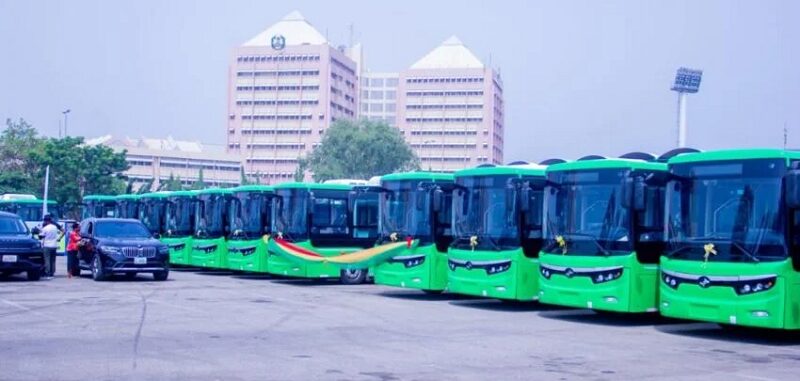
“The adoption of EVs must be guided by economic and infrastructural realities, particularly the availability, stability and cost of electricity,” he said.
Fatai explained that the decision to prioritise gas over petrol and diesel in Nigeria was largely driven by affordability and lower environmental impact, adding that the same cost-based logic must apply to EVs.
“When you charge a vehicle with expensive electricity, it no longer becomes economical. Cost is always a major concern for the populace.”
According to him, electric vehicles produce almost zero emissions at the point of use, unlike internal combustion engines and even gas-powered vehicles, which still emit carbon dioxide and, in some cases, soot due to incomplete combustion.
“With EVs, you are almost at zero emission. You don’t have carbon dioxide or soot formation from the vehicle, which makes it very attractive from an environmental standpoint.”
The Alfa Designs CEO said the company views EV investment as a “phase three” objective, to be pursued after Nigeria closes key gaps in power generation, transmission and distribution.
He said widespread and affordable electricity supply was essential before EVs could become commercially viable for most Nigerians.
“First, we need a steady and stable power supply. When we have enough power outlets and electricity becomes cheaper per kilowatt, then EVs will make more economic sense.
“Nigeria’s vast gas resources positioned the country to first use gas to address power deficits and reduce dependence on petrol, before transitioning more aggressively to electric mobility.
“Our company already has partnerships in the electric vehicle space but we deliberately chose not to prioritise large-scale deployment at this stage.
“We have partners working on electric vehicles, but our focus for now is gas. At present, the cost per kilowatt of electricity in Nigeria is still higher than the equivalent cost of gas,” he said.
He expressed optimism that increased domestic gas utilisation would eventually drive down electricity costs, making EV adoption more attractive in the future.
“With increased gas deployment for domestic power generation, electricity will eventually become cheaper. At that point, EVs will naturally become a more viable and competitive option,” Fatai said.
“A phased approach to energy transition will allow Nigeria to balance environmental goals with affordability and economic growth.
“Our approach is based on reality; once electricity becomes cheaper than gas on an energy-equivalent basis, EVs will become a natural next step,” he added.
By Emmanuella Anokam