

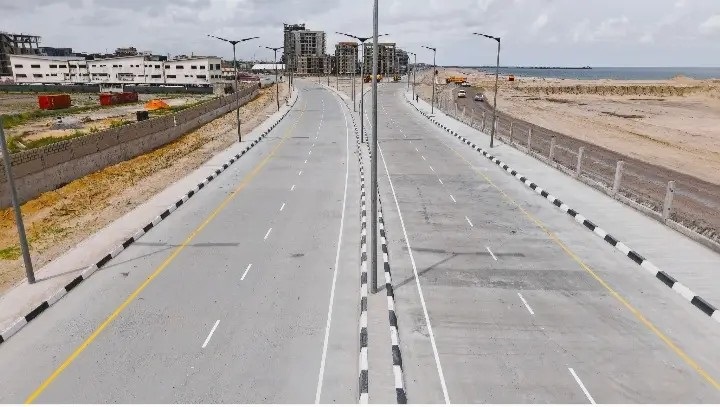
The Lagos-based firm of Natural Eco Capital Limited (NEC) has disclosed that it played a central role in the actualisation of the Lagos–Calabar Coastal Highway project.
Apart from preparing the Environmental and Social Impact Assessment (ESIA) for the project, NEC disclosed in a statement that it obtained all required national regulatory approvals.
“Most notably the key approval from the Federal Ministry of Environment (FMEnv), thereby ensuring full legal compliance. The statutory disclosure process, managed transparently, promoted stakeholder engagement and accountability.
“By delivering regulator-approved ESIAs, NEC established the indispensable legal and technical foundation upon which lenders could confidently conduct due diligence and advance financing discussions,” the firm stated.
Dr. Eugene Itua, CEO of NEC, explained: “Our mandate was to protect the project from regulatory risk and provide the legal foundation for financing. By securing approvals for both Section 1 and Section 2, we ensured the Lagos–Calabar Coastal Highway could move forward with confidence.”
He added that, after NEC secured regulatory approvals, Sky Kapital led the lender-focused aspects of the project.
“Sky Kapital adapted the project’s management plans to meet international lender frameworks, including the IFC Performance Standards. Their work aligned regulatory compliance with lender requirements, ensuring the project remains bankable and meets global safeguards. This approach enhances credibility, reduces risk, and accelerates financing discussions.
“This partnership ensures the Lagos–Calabar Coastal Highway is fully compliant with Nigerian law and aligned with international lender criteria, making it a secure and attractive investment. Congratulations to the Federal Government of Nigeria, the Federal Ministry of Works, and Hitech Construction Company on achieving this milestone,” disclosed Itua.
Meanwhile, President Bola Tinubu has welcomed the $1.26 billion funding agreement for the Lagos–Calabar Coastal Highway, calling it a transformative investment to address transport challenges, improve connectivity, and drive economic growth through new business and job opportunities along the corridor.
The Lagos–Calabar Coastal Highway, spanning over 700 km, is among West Africa’s most ambitious road projects. It is expected to facilitate regional trade and ease the movement of goods and people. The new funding is for Section 2 (47.5 km–104 km), a segment that has been politically sensitive and subject to public scrutiny.