

Oil and gas experts have urged Nigeria’s newly appointed petroleum regulators to make the full and faithful implementation of the Petroleum Industry Act (PIA) the central focus of their leadership.
The experts, who made these submissions in separate interviews in Lagos on Friday, December 26, 2025, described the law as too critical to be diluted after two decades of legislative struggle.
The interviews serve as part of agenda-setting expectations for the new leadership of the Nigerian Upstream Petroleum Regulatory Commission (NUPRC) and the Nigerian Midstream and Downstream Petroleum Regulatory Authority (NMDPRA).
They also called for decisive enforcement of a “Nigeria First” policy framework, including concrete measures to reverse the country’s long-standing dependence on imported petroleum products.
The experts also called for the mandatory implementation of at least 30 per cent value addition to raw materials before export.
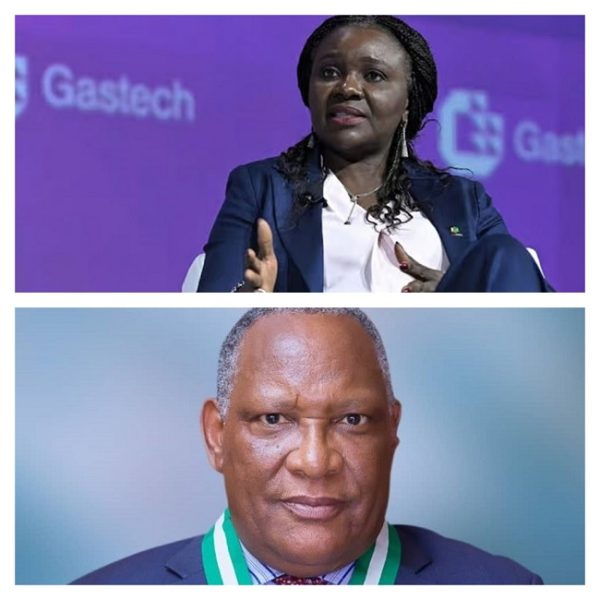
Prof. Ken Ife, an Energy Development Economist, congratulated Mrs. Oritsemeyiwa Eyesan, Chief Executive of NUPRC, and Mr. Saidu Mohammed, Chief Executive of NMDPRA, describing their appointments as a rare opportunity to steer Nigeria through a difficult but pivotal phase of energy-sector industrial transformation.
According to Ife, the overriding task before both regulators is the uncompromising implementation of the PIA, particularly provisions designed to strengthen domestic refining capacity and deepen local value creation.
“The critical focus of their leadership must be the full implementation of the PIA law that took us 20 years to pass,” he said.
“This must be anchored on a Nigeria First policy – reversing import dependency and enforcing a minimum of 30 per cent value addition to our raw materials before export.”
For the upstream regulator, Ife urged strict enforcement of Domestic Crude Obligations (DCO), the naira-for-crude framework, and reforms to make upstream operations more efficient and attractive to investors.
He also proposed the introduction of a five per cent non-DCO compliance tax and insisted on backward integration, arguing that oil marketers should be compelled to invest in modular refineries or take over existing NNPC refineries.
“Developing strategic petroleum reserves to stabilise supply across the value chain must also be prioritised,” he added.
Turning to the downstream regulator, Ife advised the NMDPRA leadership to begin with a fact-finding visit to the Dangote Refinery to establish its existing production capacity, inspect Compressed Natural Gas (CNG) logistics and distribution systems, and assess laboratory facilities.
He further recommended independent testing of imported fuels suspected to be substandard, establishment of mutual cooperation with local refiners, and a clear determination of Nigeria’s actual daily fuel consumption.
“NMDPRA should urgently build its own internationally accredited laboratory in Nigeria and advise NUPRC on domestic supply capacities.
“The importation of petroleum products that drain foreign exchange, damage public health, and destroy machinery must stop,” he said.
Ife also called for the immediate implementation of the 15 per cent ad valorem levy on imported fuels, noting that facilitating the emergence of an oil and gas processing and refining hub should be a core mandate of the authority.
In his submission, Prof. Wumi Iledare, Professor Emeritus of Petroleum Economics at Louisiana State University, said expectations for the new regulators should be anchored not on personalities, but on leadership mindset and institutional loyalty to the PIA.
“Nigeria does not need transactional regulators who merely administer routines, manage optics, or negotiate influence.
“What this moment demands is transformational regulatory leadership, one that strengthens institutions, restores credibility, and applies the law without fear, favour, or political convenience.”
Using what he described as the QUAD-E framework, Iledare stressed the need for efficiency, effectiveness, equity, and ethics in regulation.
He urged regulators to reduce discretion-driven delays, eliminate regulatory frictions, and ensure predictable, time-bound approvals that lower transaction costs across the oil and gas value chain.
“Regulation must translate into measurable outcomes such as investment confidence, infrastructure development, domestic capacity growth, and energy security, not just compliance statistics,” he said.
Iledare further cautioned against regulatory capture, stressing that competitive neutrality must be maintained among state, private, domestic, and foreign operators.
“Above all, credibility will rest on transparency, rule-based decision-making, and strict adherence to both the spirit and letter of the PIA.
“Without ethical guardrails, efficiency and effectiveness quickly become instruments of exclusion,” he added.
According to him, the true measure of success for the new leadership is not early announcements or enthusiasm, but whether the institutions evolve into strong, predictable, and law-governed regulators, which he says is the real test before them.
An energy lawyer, Dr Ayodele Oni, said both regulators should jointly publish accurate monthly production data to boost transparency, policy clarity and investor trust.
Oni urged practical and lasting solutions to the Domestic Crude Oil Supply Obligation, alongside stronger institutional backing for domestic refiners.
He said the NUPRC should conclude the licensing round and tighten compliance to reduce leakages and improve fiscal discipline.
According to Oni, the NMDPRA should prioritise safety, environmental standards and effective market oversight to guarantee fuel availability and quality.
He also advised the new leadership to consolidate areas where the outgoing management delivered strong performance.
MEMAN Chief Executive, Dr Clement Isong, praised the outgoing NMDPRA leadership for integrating key petroleum agencies into a single authority.
“That integration was no mean feat,” Isong said, noting it helped stabilise downstream regulation and policy coordination.
He said steady stakeholder engagement during petrol price deregulation helped prevent supply disruptions and improved industry transparency.
Isong described Mohammed as a seasoned professional and pledged industry support for policies that deepen regulatory effectiveness.
He added that sustained investment in staff skills, safety systems, automation and customer service would strengthen downstream regulation.
CPPE Chief Executive, Dr Muda Yusuf, said domestic refining and energy security must anchor Nigeria’s new petroleum regulatory era.
Yusuf urged deliberate support for locally refined products to cut imports and align downstream policy with the Nigeria-First agenda.
He said fair competition requires equal regulatory and fiscal conditions for imported and locally refined petroleum products.
Yusuf added that domestic refining drives jobs, foreign exchange savings and long-term economic stability.
On the upstream segment, he called for urgent investment to raise crude output amid tightening global energy transition timelines.
Yusuf urged the NUPRC to target at least two million barrels daily through investment facilitation, security improvements and industry collaboration.
By Yunus Yusuf