

At a three-day media training workshop held from October 21 to 23, 2025, in Kaduna, Kaduna State, media professionals were presented with an urgent new ethical framework for reporting on the climate crisis, moving beyond traditional norms to counter misinformation, protect sensitive sources and effectively communicate with diverse audiences. The message was clear: climate journalism is a critical public service where the obligation is to truth, not false balance.
In his five presentations at the training workshop on “Strengthening Journalism and Reporting on Climate-Related Issues: Focus on Deforestation” a key message by Michael Simire, conference facilitator, was that a noteable challenge to conventional practice was the new awareness to be hesitant in giving a platform to climate deniers.
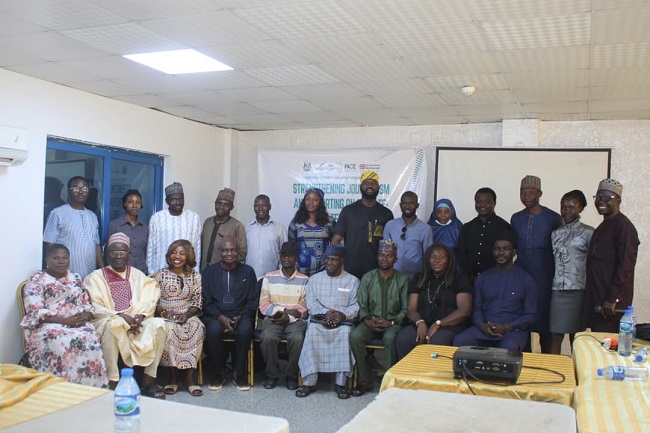
Under workshop modules such as “Investigative Reporting Techniques”, “Ethics and Challenges in Climate Journalism” and Storytelling and Media Engagement”, Simire, an urban planner and Editor-in-Chief of EnviroNews, delivered papers on “Research methods for climate reporting”, “Using data to tell compelling stories”, “Framing messages for diverse audiences”, “Misinformation and ethical dilemmas”, and “Navigating access to sources and sensitive information.”
Simire argued that ethical journalism dictates there are not two equal “sides” to the established scientific fact of human-caused climate change. “Journalists should platform the scientific consensus and if necessary, frame denial as a political or ideological counterfactual, not a legitimate scientific debate,” he stated.
According to him, “This approach is vital to combat a coordinated ‘infodemic’ of disinformation, including outright denial, ‘climate delay’ tactics, and corporate greenwashing that undermines public trust and delays policy responses.”
He said that, complementing this, journalists were equipped with strategies for handling sensitive information and navigating barriers to access.
The presentations highlighted the risks to both data and journalists themselves, especially when investigating powerful interests like extractive industries. Best practices include using Freedom of Information (FOI) laws, building trust with community sources, and employing secure communication tools like Signal and ProtonMail to protect whistleblowers.
The ethical imperative is to minimise harm while seeking truth, ensuring that the publication of sensitive details always serves the public interest.
To ensure that stories resonate, the workshop emphasised the science of message framing. Journalists were urged to move beyond a one-size-fits-all approach by first understanding their diverse audiences, their values, priorities, and cultural contexts. Effective strategies include using positive “gain frames” (highlighting benefits of action) for hesitant audiences and precise, accessible language instead of jargon. The choice of a trusted messenger, such as a community member directly impacted by climate change, can be as important as the message itself in building credibility and connection.
A key dilemma addressed was balancing the severity of the crisis with hope. To combat audience overwhelm and “doomism,” journalists were encouraged to practice “solutions journalism,” which rigorously investigates what is working without becoming advocacy.
Furthermore, a central pillar of ethical climate reporting is to prioritise climate justice, humanising the story by focusing on how impacts and solutions disproportionately affect marginalised, vulnerable, and Indigenous communities.
The workshop concluded by framing climate journalism as an essential public service that cuts across all beats – from economy to health.
“In an era of disinformation, upholding journalistic integrity is not just about reporting facts, but is essential for democracy and a habitable planet,” submitted the facilitator, who challenged attendees thus: “Your voice can change the world. Will you use it?”
The training was organised by the Kaduna-based not-for-profit organisation, Bridge That Gap Initiative.
By Lola Seriki-Idahosa, Kaduna