

The Cross River State Government has intensified efforts to reduce gender inequality by expanding access to clean water in schools, commissioning a series of solar-powered boreholes targeted at improving the welfare and education of girls.
The initiative, unveiled in Calabar South as part of activities marking World Water Day 2026, reflects a broader strategy to address the disproportionate impact of water scarcity on women and girls.
Representing Governor Bassey Edet Otu, the Vice Chairman of the State Planning Commission, Pastor Bong Duke, said the administration is prioritising inclusive water, sanitation and hygiene (WASH) interventions to ensure that vulnerable groups, particularly schoolgirls, have reliable access to safe water.
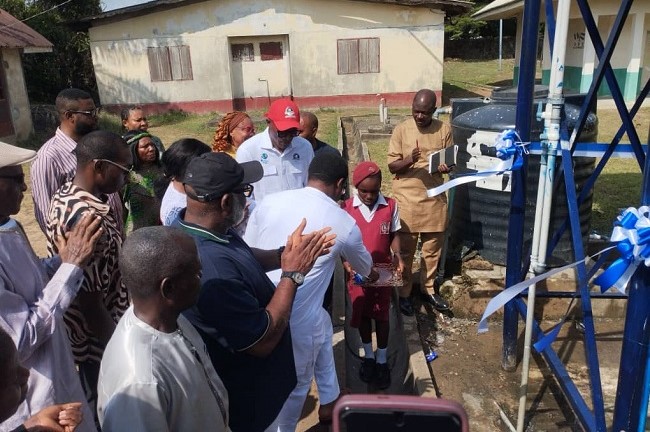
He stressed that inadequate access to water and sanitation continues to undermine girls’ education, noting that many are forced to travel long distances to fetch water, often at the expense of their safety and school attendance.
According to him, the government’s approach goes beyond infrastructure, positioning water access as a critical enabler of health, dignity and economic opportunity.
As part of the programme, solar-powered systems were installed to upgrade existing boreholes at Edgerly Memorial Girls Secondary School and Government Girls Secondary School, Big Qua, while a new borehole with overhead tank and reticulation network was provided at Academy Primary School, Mayne Avenue.
The projects were delivered by the State Ministry of Water Resources in partnership with the Borehole Drillers Association of Nigeria (BODAN), with a focus on strengthening water supply in schools that serve large populations of girls.
Commissioner for Water Resources, Barrister Bassey Offiong Mensah, said the intervention would significantly improve hygiene conditions in schools and support safe menstrual health practices, which remain a major challenge for many girls.
Stakeholders at the event also called for sustained collaboration between government, development partners and the private sector to address funding gaps and expand WASH services to underserved communities.
In his remarks, the Permanent Secretary in the ministry, Dr Okon Ita, highlighted the daily struggles faced by girls who bear the responsibility of sourcing water for their households, warning that without deliberate policies, the inequality gap would persist.
The state government, however, reaffirmed its commitment to scaling up investments in sustainable water infrastructure to ensure equitable access for all residents.
By Stina Ezin, Calabar