

The International Institute of Tropical Agriculture (IITA) says the conservation of crops at gene bank and research conduction are vital to addressing food security challenges in Africa and globally.
Dr Olaniyi Oyatomi, an Associate Scientist and Seedbank Manager at IITA’s Genetic Resource Centre, said this at a media training on Gene bank, Genetic Resources and Bioscience organised by IITA on Tuesday, September 23, 2025, in badan, Oyo State.
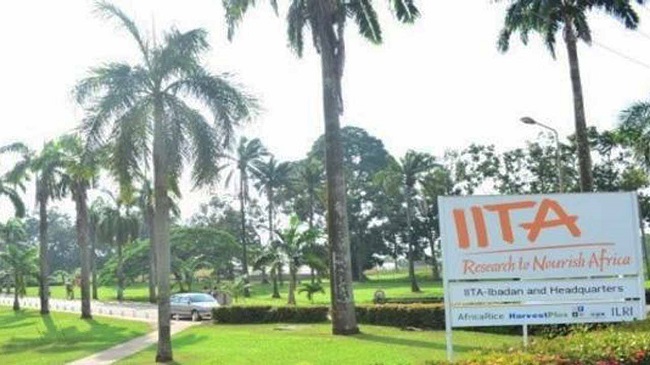
Oyatomi said crop conservation and research would help in regeneration and development of improved crop varieties that were pest and disease resistance and adaptable to changing climatic and environmental conditions.
According to him, without conservation of seeds at the gene bank and research there will be no improve seed to develop for future utilisation for breeders to breed improved varieties.
The scientist said the old seed planted by farmers was gradually degenerating and needed to be improved upon to be able to adapt to changing climatic conditions and pests and diseases resistance.
“At IITA gene bank, we have different crops like cowpea, yam, cassava ,plantain and banana collected from different Africa countries and the world, which we conserved and improved on its varieties.
“We have the largest collection of cowpea accessions which is around 16,000 in IITA gene bank.
“Gene bank plays a significant role in short, long term crops preservation, quality retention, prevent degeneration for present and future generations and continuous supply to breeders to use and ensure food security,” Oyatomi said.
He said the institute had enough materials and resources to get improved crop varieties, that were adaptable to different climatic conditions, noting that without crop improvement there could not be food security.
According to him, seed security is recipe for food security, if there are no secure seeds, pests and diseases as well as climate change would affect them and this will lead to food security challenges.
He said that seeds collection and preservation served as an opportunity for breeders to use for breeding new varieties that are high yielding which would be supply to farmer to plant to ensure food sufficiency.
Oyatomi said that the institute had been receiving a lot of request from breeders in Africa and different parts of the world and to use those improved crop varieties for breeding high yielding crops.
He called on government to invest in research, especially in breeding new crop varieties in order to overcome food security challenges in Africa and the world generally.
Also speaking, Dr Yemi Fajire, Laboratory Manager, Bioscience, IITA, said challenges facing agriculture could be mitigated through science innovations in order to meet global food demands.
Fajire said that adoption of technology would make breeding easier and shorten the length of time to develop new varieties that were high yielding and crop improvement.
Journalists were later taken round for field and laboratory visits.
The training is to equip media professionals with the knowledge to report agricultural innovation accurately, especially in the area of crop improvement.
By Suleiman Shehu