

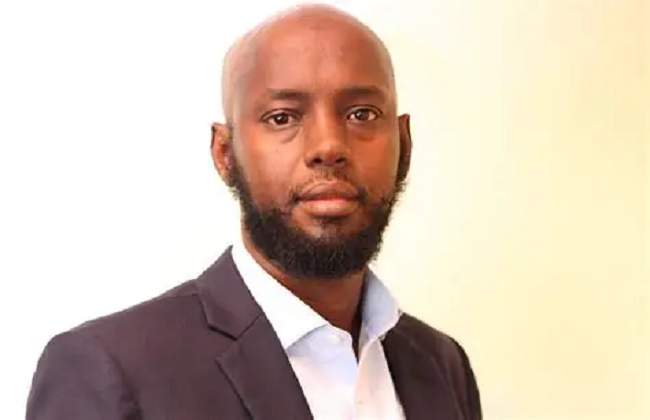
Mohamed Adow, Founder and Director, Power Shift Africa, responds to new texts at COP30
After two weeks of talks, COP30 is drawing to a close with proposed final texts that fall dramatically short of what the world needs. What was meant to be a flexible climate agreement designed to ratchet up ambition has instead been whittled down through horse-trading to the lowest common denominator.
In the scramble to prove that multilateralism still works, negotiators have produced outcomes that do little to demonstrate that claim. The result is a package that neither reflects scientific urgency nor responds to the lived realities of vulnerable communities already contending with climate collapse.
Finance has been among the most contentious areas. Developed countries have resisted making concrete commitments, undermining attempts to secure the resources that developing nations need to act. The Just Transition mechanism, touted early on as a cornerstone of COP30, has been pushed into future negotiations and stripped of a coordinating function that would make it meaningful.
The Presidency opened the conference by calling it a “COP of truth”, yet two weeks on, negotiations remain stuck in a deadlock that threatens any prospect of genuine progress.
For Africa and other vulnerable regions, the disappointment is acute. We arrived in Belém with priorities shaped by escalating climate impacts, ranging from droughts and cyclones to floods and food insecurity. Instead of concrete support, what we have now is watered-down language shaped more by politics than by the severity of climatic impacts.
The biggest catastrophe of our times is not waiting for governments to gather courage, and communities on the frontlines cannot afford to continue paying the price for global hesitation.
Developing countries and civil society have repeatedly pushed for decisive action across mitigation, adaptation and just transitions. Yet the draft texts on the table amount mostly to placeholders, postponing ambition to another year, another COP, another round of consultations. Until leaders listen to the increasingly urgent warnings from scientists and communities, the world will remain on a dangerous path.
Vulnerable countries came to Belém demanding an adaptation finance goal capable of meaningfully advancing delivery of the Global Goal on Adaptation (GGA). Instead, the proposed text offers diluted language that calls only for “efforts” to triple adaptation finance by 2030 relative to 2025, a baseline that is too low. It also places no obligation on developed countries, making it weaker than the Glasgow doubling pledge, which at least referenced Article 9.4 of the Paris Agreement and recognised the responsibility of wealthier nations.
The text also disconnects finance from the achievement of the GGA, fails to address the quality of finance, such as grants, and bypasses the critical need for balance between mitigation and adaptation. Without linking finance to real needs or a process to define a needs-based regime, this approach falls far short of narrowing the adaptation finance gap, projected to reach between $310 billion and $365 billion by 2035.
While the GGA indicators include some safeguards around means of implementation, but In the absence of a strong, grant-based finance goal underpinning the framework, the indicators amount to political compromises rather than instruments that can deliver resilience for the communities most at risk.
The broader finance package reveals the same pattern. We asked for commitments that matched the scale of the crisis; instead, the text skirts around responsibility. The proposed Article 9.1 text, establishing a two-year work programme on climate finance, extends beyond Article 9.1 implementation and risks devolving into yet another discussion platform without concrete delivery.
It echoes the weaknesses of the New Collective Quantified Goal negotiations at COP29 in Baku last year, offering no accountability mechanism, no specificity and no binding action plan by 2026. It reflects developed-country positions almost entirely, leaving developing countries back at the drawing board.
Although negotiators removed the most problematic GGA indicators related to national budgets and private finance, the rest of the package still lacks clarity and coherence. Without real, grant-based resources linked to the GGA, it remains a diplomatic compromise rather than a credible plan for bolstering resilience.
The outcome on Just Transition acknowledges the importance of a Just Transition Mechanism, but stops short of establishing it in Belém or assigning it the coordination function essential for implementation. Delaying its creation leaves millions of workers, especially those in Africa’s and the Global South’s informal sectors, without the support they urgently need. Also, the rremoval of references to critical minerals from the Just Transition Work Programme is another serious setback.
The deaths of more than 30 artisanal cobalt miners in the DRC earlier this week should awaken us to the dangers faced by communities who supply minerals that are indispensable to the global shift toward renewable energy. Excluding these issues from the text glosses over the human cost of mineral extraction and ignores the need for equitable value chains.
Mitigation talks have been no less fraught. Developed countries have pushed to reaffirm the commitments outlined in COP28’s Global Stocktake, despite their own Nationally Determined Contributions falling well short of what is required. They have pointed to the Like-Minded Developing Countries as the source of delays, yet it is developed countries who arrived in Belem without the finance and means of implementation necessary to enable ambition.
If they ever come forward with genuine commitments and LMDCs still obstruct progress, the criticism might be valid. Until then, the LMDCs remain convenient scapegoats for inaction by those most responsible for the crisis.
There is still a narrow window for leadership. If developed countries step forward with real, grant-based finance, credible timelines and mechanisms capable of coordinating support, COP30 could yet deliver something more than disappointment.
The world needs clear commitments, not rhetorical flourishes; coordination, not delay; solidarity, not strategic ambiguity. In the next few hours, there is still time to be ambitious and sincere, and the stakes for vulnerable communities could not be higher.