

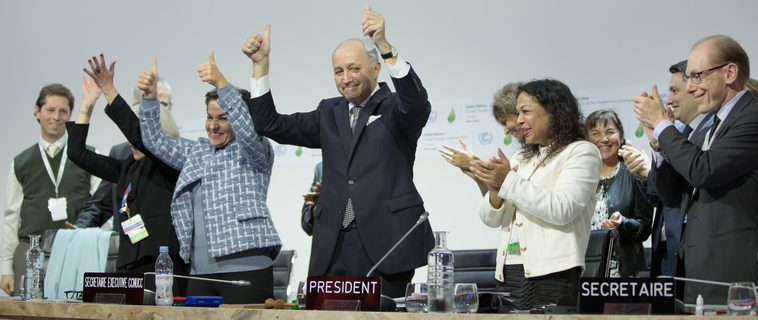
The much-vaunted Paris Climate Agreement, adopted in 2015 and to which the South African government is a signatory, has failed to prevent a 1.5 °C planetary overshoot. The Trump administration has withdrawn from the Paris Agreement, is gutting climate science institutions (including the National Ocean and Atmospheric Administration), rolling back investments in renewable energy, increasing coal investments, and is cranking up Liquid Natural Gas (LNG) exports to Europe.
Together with Qatar, the US has also put pressure on Europe to soften its commitments to its Green Deal and climate policies. At the same time, digital monopolies are driving demand for gas and nuclear energy sources, to ensure big data centres, computing power and AI scalability is reached. In other words, the countries that have historically been responsible for most climate emissions are continuing to intensify emissions and further lock into fossil fuels and dangerous nuclear energy. Instead of rapidly phasing out fossil fuels and nuclear power, the world is moving in the opposite direction, including South Africa.
At the same time, leading climate scientists are suggesting that a 1.5 °C overshoot over the past two years is here to stay. At the first-ever conference to assess the 1.5 °C overshoot, held this year many climate scientists in attendance expressed views that suggest 1.5 °C is already lost. Whether the planetary average temperature exceeds 1.5 °C temporarily or the planet overshoots 1.5 °C as a permanent planetary average, climate extremes are intensifying with serious implications for life and fiscal costs for governments.
In the first half of 2025, climate disasters were the most costly on record, exceeding $101 billion. Many highly indebted countries, including South Africa, face the risk of climate insolvency in this context. A group of 160 scientists from 23 countries has warned that we have reached the first catastrophic tipping point in our oceans, marked by mass coral reef die-offs. This impacts half a billion people worldwide who rely on coral reefs for food. The oceans are just one of many tipping points that are on the verge of collapsing. The Arctic continues to thaw, releasing methane, the Amazon rainforest has become a net emitter of CO2, and ice sheet loss continues at an unprecedented rate. These developments all add up to negative feedback loops accelerating planetary heating.
Almost a decade after the South African Government became a signatory to the Paris Agreement, the South African cabinet has approved the final draft of the disastrous Integrated Resource Plan (IRP). While a significant amount of new generation capacity is set to be generated through solar photovoltaics and wind energy (11270 MW and 7340 MW respectively), a significant proportion of the proposed future energy mix relies on gas-to- power and new nuclear energy: 6,000 megawatts (MWe) of gas-powered electricity generation by 2030 and 5200 MW of new nuclear.
This continued commitment to non- renewable forms of energy, which is falsely marketed as ‘green’, takes place in a country that is heating at twice the global average, and is already experiencing increasingly frequent and destructive unnatural climate shocks. Just four months ago, over a hundred people were killed by floods in Mthatha, with thousands left homeless. Many key sectors in South Africa are already at significant monetary risk, with the South African Government not offering any significant and transformative responses to the intensifying climate crisis. We reject this IRP because it locks the country into fossil fuel dependence for generations.
From the October 23 to the 24, 2025, representatives of the Climate Justice Charter Movement (CJCM) from frontline communities across South Africa came together to chart a path forward centred around its transformative politics. From our deliberations, we believe the best response for South Africa to a 1.5 °C overshoot and worsening climate crisis is to get prepared now. South Africa is unprepared, but we can take active steps together now. We call for:
- Climate risks assessments to be mainstreamed at all levels of government, sectors and in communities. The CJCM calls on the 292 organisations that have endorsed the Climate Justice Charter to work with us bottom up to get people and worker driven climate risk assessments going in communities, workplaces and sectors so we can make the necessary and hard adaptation choices to limit harm;
- The country to embrace a Climate Emergency Social Contract consistent with the pluri-vision of the Climate Justice Charter to address the legacies of apartheid, our current polycrisis and secure a just, democratic and emancipated future for all. We call on all endorsing organisations of the charter to work with us bottom up to popularise this idea and to build such a contract in the deep just transition;
- Accelerating the deep just transition from below through supporting the campaigns of the CJCM and allies such as the South African Food Sovereignty Campaign, Rights of Nature Campaign , Water Commons and Justice Campaign, including community mobilisation to address the water crisis in the City of Johannesburg on 1st November outside Council Chambers;
- Collaboration with us to build a national and united campaign to stop and phase out fossil fuels and nuclear. Let’s stand with communities fighting offshore oil and gas extraction, impacted by more coal extraction such as New Castle, and unite with anti- nuclear campaigners;
- United action in support of our campaign for Just Transition Cities, Towns and Communities during the 2026 local government elections. As an anti-party movement, we are clear that political parties do not have the vision and systemic solutions the country needs. Let’s use the local government elections moment to ensure the people own the problems and solutions for the country. Let’s take back power for people and worker-driven local government!
The Climate Justice Charter is five years old. It invites us to advance climate justice as a political project, grounded in an ethics of care for people and planet. We will continue on our journey to institutionalise the CJCM as a people and worker-driven movement in provinces and local communities.