

Street food is a daily reality in Nigeria, from suya (smoke-grilled spiced meat) to puff-puff (spongy, deep-fried snack), akara (deep-fried bean cake) to roasted corn, boli (roasted plantain) and moin moin (steamed bean pudding).
For millions of Nigerians, buying from street vendors is cheap, convenient, and deeply cultural. The informal street-food sector in Nigeria has grown into a major source of nutrition and income, especially in low- and middle-income communities.
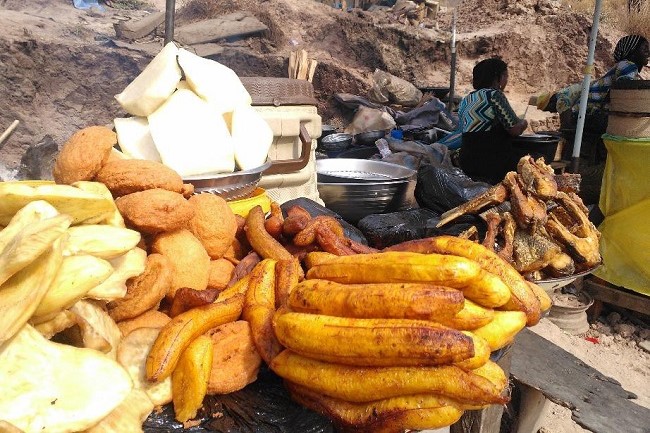
Yet behind the smoky aroma lies a hidden climate cost: deforestation from charcoal production, black carbon emissions, and a mounting plastic waste crisis.
Today, 60% of food vendors operate in unhygienic conditions, and over half (53.6%) don’t even cover their hair while cooking, which is a sign of deeper systemic weak regulation.
In places like Dape, Abuja, weak waste management systems make the problem much worse.
The Climate Cost of Charcoal
According to Global Forest Watch, Nigeria lost about 253,000 hectares of natural forest in 2024 alone, equivalent to 114 million tonnes of carbon dioxide emissions. Tree cover loss from charcoal production and other pressures has made Nigeria one of the world’s top deforestation hot spots. To put that in perspective, that’s an area almost four times the size of Lagos city disappearing in just one year.
For many street food vendors, however, charcoal remains the fuel of choice because it is cheap and fast.
Rachel Fidelis, a climate expert and founder of EcoCulture 360, explained: “For every bag of charcoal made, a tree must be cut down. Cooking with firewood contributes to deforestation, and the smoke emissions add to air pollution. The packaging vendors use only adds to plastic pollution and all of these feed into the bigger climate crisis.”
In Dape, a street food vendor confirmed the reliance on charcoal: “A bag costs ₦11,000, and we use about 12 bags in a week. Gas is more expensive and using hot plate will make electricity bills outrageous, so we just stick with charcoal.”
That means a single food business spends over ₦132,000 weekly on charcoal – burning through dozens of trees every month just to keep stoves running.
Beyond the loss of forests, experts warn that the black carbon released from charcoal stoves also poses serious health risks, especially for women and children exposed to the smoke daily.
Consumers Love the Taste – But Ignore the Cost
Consumers admit their choices are driven mainly by price and taste. Speaking with Israel Olawale, a regular street food buyer, he said: “I buy street food almost every day – it’s easier to get and way cheaper. And to be candid, food cooked with charcoal taste delicious compared to gas; charcoal gives the food a special kind of taste, especially when it’s beans and softly cooked. No denial.”
Even when aware of waste issues, convenience still takes priority. Olawale said: “I prefer plastic takeaway to pack my food because it’s reusable and convenient. Most times after heavy rainfall, you see nylons everywhere. I discard mine properly because I know the climate implications, but not everyone does.”
This highlights a wider gap between awareness and behavior. People notice waste piling up in their communities, yet still choose the cheaper, more convenient options. According to the World Bank, Nigeria generates about 1.5 million tonnes of plastic waste annually, but barely 10 percent is recycled.
Packaging and Nigeria Waste Crisis
Street food packaging adds another layer to the problem. Styrofoam, nylon bags, and single-use plastics are the default. Vendors argue they meet customer demand: “Not everyone brings a cooler to buy food, so we use nylon, styrofoam, and plastics depending on what you buy.”
But convenience has consequences. Plastic accounts for over 13% of Nigeria’s municipal solid waste and, according to the World Bank, only about 10% is recycled. In places like Dape, where waste collection is irregular, the result is visible: piles of uncollected wastes line roadsides, clogging gutters and worsening flood risks.
The Dape vendor confirmed this reality: “It takes a very long time before waste is packed here. The waste on that road keeps piling, and it’s scary now that dry season is near.”
A Culture In Need of Change
Street food is here to stay. As Rachel puts it: “Street food has become a beloved part of our culture, but plastic waste cannot be. We must embrace sustainability as part of our culture instead.”
Solutions exist – solar stoves, biodegradable packaging, and even returning to traditional wrappers like banana leaves, but adoption remains slow. Vendors insist they would switch if alternatives were affordable: “If cheaper and cleaner fuels or packaging were provided, of course we would switch. Cooking is not easy and the gain is not enough,” said the street food vendor.
Policy and the Road Ahead
Nigeria has environmental policies on paper, including Lagos State’s ban on single-use plastics. But enforcement is weak.
Rachel warns: “Government has the highest influence in driving sustainable change. Beyond bans, policies should make it easier for vendors to adopt alternatives, with incentives, funding, and awareness campaigns.”
If nothing changes, the future looks grim. Floods, food insecurity, and heatwaves are already a reality. The next decade, Rachel insists, “must be about urgent action, not waiting for the worst to happen.”
Street food is not just about hunger and taste; it is also about health, environment, and survival. In Dape, the story of smoky beans cooked on charcoal and meals packed in styrofoam is also the story of disappearing forests, polluted air, and waste-filled gutters.
If Nigeria is serious about addressing climate change and urban waste, then the country must start where life happens daily – on the streets, where millions buy and sell their meals.
By Oyeyemi Abolade