

Corporate Accountability and Public Participation Africa (CAPPA) has commended the Federal Government on the commissioning of Nigeria’s first dedicated Polychlorinated Biphenyls (PCBs) treatment facility in Abuja.
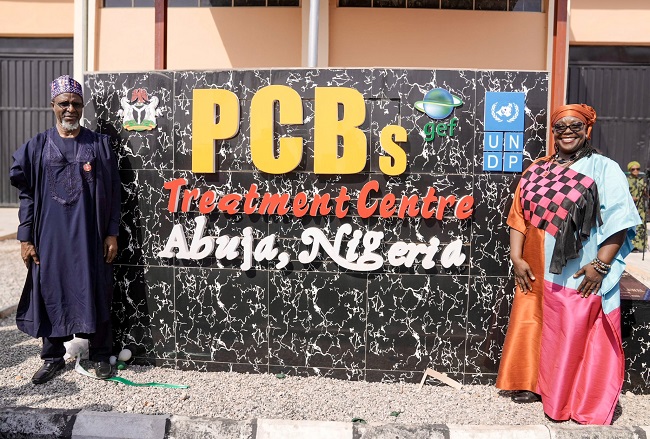
The facility, established under the supervision of the Federal Ministry of Environment, in collaboration with the Global Environment Facility (GEF) and the United Nations Development Programme (UNDP), was inaugurated on Thursday, December 18, 2025, in Abuja.
CAPPA, in a statement, noted that the facility represents a critical infrastructure milestone in Nigeria’s national chemicals and waste management framework.
Polychlorinated biphenyls are persistent organic pollutants (POPs) characterised by high toxicity, environmental persistence, bioaccumulation, and long-range environmental transport. PCBs are scientifically linked to carcinogenicity, endocrine disruption, immunotoxicity, neurodevelopmental impairment, and reproductive disorders, in addition to causing significant adverse impacts on terrestrial and aquatic ecosystems.
Their improper handling, storage, or disposal results in widespread contamination of soil, surface and groundwater, and the food chain, posing serious risks to public health and ecological integrity.
The statement observed that Nigeria, being a Party to the Stockholm Convention on Persistent Organic Pollutants, is legally obligated to eliminate the use of PCBs in equipment, ensure the identification and labelling of PCB-containing materials, and guarantee their environmentally sound management (ESM) and final disposal.
“The commissioning of this treatment facility, therefore, constitutes a practical demonstration of Nigeria’s compliance with both its international treaty obligations and its domestic regulatory framework under the PCBs Control and Disposal Regulations, 2020,” it added.
Commenting on the development, the Executive Director of Corporate Accountability and Public Participation Africa, Akinbode Oluwafemi, stated that the establishment of the PCB treatment facility “validates the spirit of the National Environmental (PCBs Control and Disposal) Regulations, 2020, and signals the Federal Government’s readiness to operationalise environmentally sound management systems for hazardous chemical wastes in Nigeria.”
He emphasised that the facility will not only strengthen national capacity for the treatment, decontamination, and final disposal of PCB-containing equipment and wastes, but will also greatly assist in reducing occupational exposure, preventing environmental releases, and mitigating long-term public health risks.
However, the CAPPA head stressed the need for the Federal Government to ensure full, systemic compliance with all provisions of the Regulations, including stringent controls on the manufacture, importation, distribution, use, storage, transportation, discharge, and disposal of PCBs and PCB-containing products. He further called for robust inventory development, monitoring, reporting, enforcement mechanisms, and sanctions to guarantee effective implementation.
Oluwafemi also urged the Federal Government to prioritise the scaling up, sustained investment, technical upgrades, and long-term operational sustainability, noting that adequate funding and skilled personnel are critical to meeting national PCB phase-out targets, and realising the environmental and socio-economic benefits associated with the facility.
Finally, CAPPA reaffirmed its commitment to advancing environmental governance, chemical safety, and public participation, and to engaging relevant stakeholders to ensure Nigeria’s transition towards the complete elimination of PCBs in an environmentally sound and socially responsible manner.