

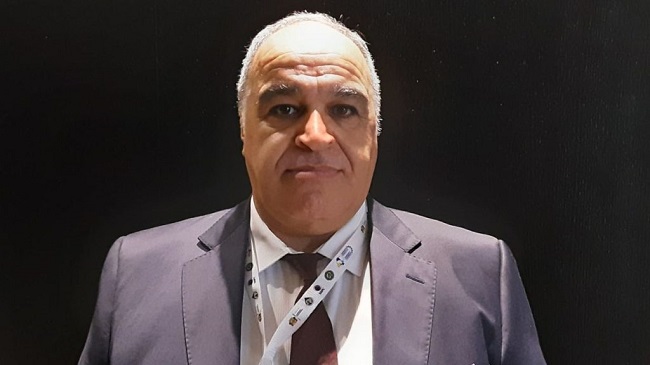
Secretary general of the African Petroleum Producers Organisation (APPO), Farid Ghezali, is set to take centre stage at this year’s Angola Oil & Gas (AOG) Conference, as African energy leaders prepare for the launch of a continent-backed financing institution aimed at transforming the sector.
The conference, scheduled to hold from September 9 to10, 2026, in Luanda with a pre-conference session on September 8, comes just months after the expected debut of the African Energy Bank (AEB), a $10 billion initiative designed to close persistent financing gaps in Africa’s oil and gas industry.
The bank – spearheaded by APPO in partnership with Afreximbank – is being positioned as a strategic alternative to Western capital markets, which have increasingly restricted funding for fossil fuel projects.
Its launch signals a shift toward Africa-led financing mechanisms in a sector long constrained by external capital flows.
Financing pivot for major producers
In its initial phase, the AEB will prioritise projects in Angola, Nigeria and Libya – three of the continent’s largest oil producers – with plans to scale funding capacity to $15 billion by 2030.
The institution will target investments across the value chain, including upstream exploration, refining, gas-to-power projects and cross-border pipeline infrastructure.
Its “Mutual Assured Development” model is designed to balance commercial returns with national economic priorities, while leveraging partnerships with more than 700 African financial institutions to mobilise private capital and distribute risk.
Angola’s urgent capital needs
For Angola, the timing is critical.
The country is attempting to sustain crude production above one million barrels per day while expanding both exploration and refining capacity – ambitions that require substantial and sustained capital inflows.
Although Angola’s upstream sector is attracting an estimated $70 billion in investment, downstream projects remain underfunded.
The Lobito Refinery – expected to be the country’s largest at 200,000 barrels per day – is still seeking $4.8 billion to close its financing gap ahead of a planned 2027 launch.
The AEB is widely seen as a potential solution to such bottlenecks, particularly for capital-intensive infrastructure projects that have struggled to secure funding through traditional channels.
Strategic boost for national oil companies
Beyond direct project financing, the bank is also expected to play a role in strengthening African national oil companies.
In Angola, Sonangol is preparing for a partial privatisation through a planned 2027 initial public offering, which would release 30 percent of its shares to investors.
The move is aimed at expanding access to capital and repositioning the company as a competitive upstream operator.
Institutions such as the AEB could provide critical financial backing and market confidence as companies like Sonangol transition toward more commercially driven models.
A defining moment for Africa’s energy sector
The AOG 2026 conference is expected to draw policymakers, financiers and energy executives at a moment when access to capital has become the decisive factor in whether major oil and gas projects proceed.
With the launch of the African Energy Bank on the horizon, the gathering is likely to serve as a key forum for shaping how the continent finances its energy future – and whether Africa can successfully assert greater control over its resource development agenda.
By Winston Mwale, AfricaBrief