

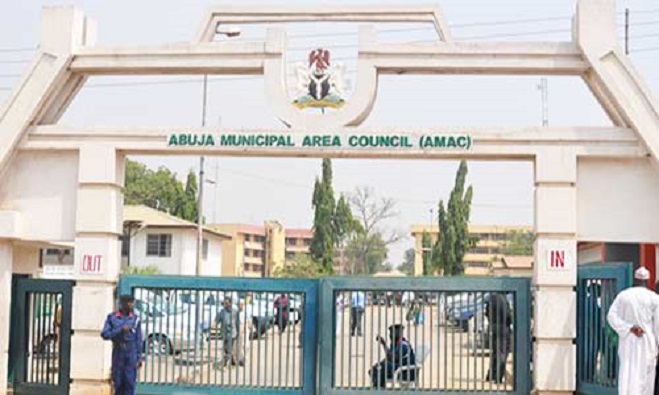
The Abuja Municipal Area Council (AMAC) has declared that payments for environmental health services to the FCTA or unauthorised bodies are invalid.
Mr. Kingsley Madaki, the Senior Special Assistant on Media and Public Affairs to the Executive Chairman of AMAC, said this in a statement in Abuja on Monday, December 29, 2025.
According to the statement, by this development, the council is asserting its exclusive legal right to collect these revenues from residents and businesses.
It explained that the directive is rooted in the 4th Schedule of the 1999 Constitution, which vests the regulation of social and environmental services in local government authorities.
The statement stressed that AMAC retained the sole authority to manage and collect revenue for specific environmental activities.
These include sanitary inspections for facility fitness, pest control services like fumigation, and food and water safety protocols, including medical screenings for handlers.
Additionally, the Council oversees permits for car washes, laundries, and public conveniences.
AMAC raised the alarm over reports of impostors posing as FCTA agents to divert local government revenue.
“In response, the newly formed AMAC Environmental Cadet officials are launching comprehensive enforcement sweeps to eliminate these fraudulent activities.
”To stay protected, business owners are urged to verify the credentials of any inspector and immediately report individuals soliciting cash.
“The council stresses that all legitimate payments must be processed exclusively through authorised AMAC revenue accounts to ensure legal compliance,” the statement said.
It added that to combat fraud, AMAC had implemented a Single Account policy, which emphasized that payments must be made into the council’s designated bank accounts.
”Any payments made to the FCTA Public Health Department or any other organisation shall be rendered invalid.
“Such payments will not be recognised as proof of compliance, and the payer shall be liable for default,” it warned.
AMAC also warned that anyone paying unauthorised agents would do so at their own risk and would still be held liable for non-compliance under AMAC its bylaws.
By Philomina Attah