

Recently, Sierra Leone became the frontline of West Africa’s war on malaria as health ministers, experts, and partners converged on Freetown with one warning: the region either fights together or continues to lose lives.
At the just concluded 27th Ordinary Session of the ECOWAS Assembly of Health Ministers in Freetown, Sierra Leone, delegates called for a unified, multi-sectoral and data-driven approach to malaria elimination.
They warned that fragmented interventions and inefficient use of resources continue to hinder progress.
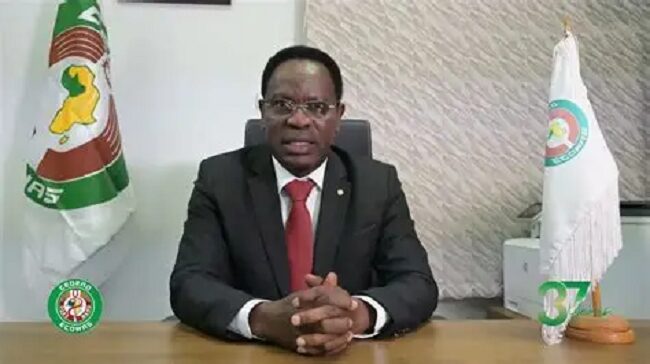
Organised by the West African Health Organisation (WAHO), the session urged a strengthened malaria elimination framework, operationalisation of the regional community health policy, and adoption of the Freetown Charter.
The stakeholders described malaria as a leading cause of death in the region, noting that in spite decades of interventions, the disease persists due to disjointed strategies and weak coordination across sectors.
The meeting reviewed health performance across member states, aligned strategies, and formulated recommendations to guide ministerial decision-making on malaria elimination and health system strengthening.
Ministers approved WAHO’s annual report, noted progress in regional health security, and endorsed continued dialogue on malaria elimination.
A key highlight was renewed emphasis on domestic resource mobilisation as a cornerstone of health sovereignty.
Dr Melchior Aissi, WAHO Director General, told delegates that elimination had become a regional security issue, not just a health goal.
According to Aissi, the theme, “Advancing Malaria Elimination through an Integrated Regional Strategy,” reflects both the scale of the challenge and urgency of collective action.
With West Africa carrying 40 per cent of the world’s malaria burden, he said no country could eliminate malaria alone.
He called for a unified approach anchored on solidarity, harmonised interventions across borders, and real-time data sharing.
“In a region where people and mosquitoes move freely, fragmented campaigns will always fall short,” he argued.
He praised Cabo Verde’s malaria-free certification as proof that elimination was possible in West Africa, but cautioned that without stronger political commitment, gains could slip.
“Elimination is not a one-time event; it is a sustained effort.
“Beyond political will, there are two non-negotiables: technical rigour and sustained domestic financing.
“Donor cycles end, but surveillance, testing, and treatment must continue every rainy season,” he said.
Aissi tabled WAHO’s regional strategic framework for malaria elimination before the ministers.
It prioritises five pillars: strengthened health governance to align national plans, digital transformation for real-time surveillance, effective data use to target hotspots, local innovation to adapt tools to West African contexts, and community engagement to ensure last-mile delivery.
He stressed that elimination could be achieved through isolated national efforts but requires coordinated regional action.
This includes harmonised strategies, continuity of cross-border interventions, integrated epidemiological surveillance, sustained investment, and synchronised implementation.
Aissi reaffirmed the ambition to eliminate malaria across all 15 ECOWAS member states within the next decade, pointing to Cabo Verde as evidence the timeline was possible.
Speaking for technical and financial partners, Mr Dionke Fofana, Lead of WAHO partners, reiterated support for strengthening health systems.
He said that shared priorities among member states were non-negotiable if donor and domestic funds were to be used efficiently.
Fofana called for integrated approaches that break silos, more domestic financing to reduce aid dependency, innovation in tools and delivery, and data-driven decision-making backed by stronger private sector engagement.
He commended WAHO’s leadership for progress despite funding and climate headwinds.
The Assembly reviewed the 2025 WAHO Annual Report, adopted the Regional Framework for Malaria Elimination, and considered the Freetown Charter.
Ministers also tackled strategic priorities: strengthening health financing, aligning with breastfeeding standards, and integrating health into climate change adaptation strategies.
President Julius Bio of Sierra Leone, who chairs the Authority of Heads of State and Government of ECOWAS, underscored the Assembly’s weight as a platform for decisive regional action.
Represented by Chief Minister David Sengeh, Bio said population health was a core test of governance.
He called for concrete, measurable outcomes and a shift from malaria control to elimination through stronger, data-driven, and innovative health systems.
Sierra Leone’s Health Minister Dr Austin Demby, who chaired the session, warned that global malaria progress has stalled since 2015.
With declining external financing and climate change altering transmission dynamics, observers say the region cannot afford business as usual.
He advocated for increased domestic investment, innovation, and transformation of health systems into more resilient and responsive platforms.
Demby said eliminating malaria required collective regional action and integration of financing, vector control, vaccination, diagnostics, treatment, and community engagement.
He noted past efforts were undermined by fragmented planning.
“Financing, insecticide resistance, vaccine deployment and treatment strategies are handled in isolation rather than as interconnected components of a single response framework,” he said.
Demby stressed collaboration across ministries such as finance, environment, water and sanitation, gender, and communication, noting malaria elimination extends beyond health.
He cited the U.S., India and Libya as examples of successful elimination through coordinated efforts.
Sierra Leone’s Deputy Minister of Health Prof. Charles Senesie underscored the urgency of intensifying efforts against malaria, calling it a persistent public health threat.
He urged participants to strengthen cooperation for coordinated regional action.
WAHO used World Malaria Day to restate its commitment, noting West Africa bears about 40 per cent of the global malaria burden.
In spite of progress with nets, indoor spraying, seasonal chemoprevention, rapid tests, treatment, and now vaccines, the disease still hits children under five and pregnant women hardest.
The organisation highlighted stalled progress driven by funding gaps, insecticide and drug resistance, climate change, and conflicts that disrupt services.
These threats demand urgent, coordinated action or risk reversing gains.
WAHO called on governments, partners, civil society, and the private sector to intensify investment in prevention, diagnosis, and treatment. Strengthening health systems, expanding community-based interventions, and fostering innovation are critical to hitting 2030 targets.
“Cross-border collaboration is non-negotiable. No single country can eliminate malaria alone.
“From joint surveillance to synchronised campaigns in border districts, collective action is the only path to a malaria-free West Africa,” WAHO said.
Experts say aside from the speeches and the outlined framework, what happens after the ministers leave Freetown will decide whether it was just another health summit or the start of malaria’s end in West Africa.
According to them, surveillance systems, financing pledges, and border campaigns will be the real verdict – not communiqués.
As Aissi put it: “No country can eliminate malaria in isolation; our solidarity, our data, and our domestic commitment will decide if we meet this target in ten years, or if we fail our people again.”
By Franca Ofili, News Agency of Nigeria (NAN)