

No matter the reason for warfare the environment and the innocent end up bearing the brunt of the inevitable destruction. This fact is clearly illustrated by the several ongoing smoldering and open conflicts that have led to this season being described as one of endless conflicts and violence.
Many of these conflicts and wars have crude oil footprints, suggesting an underlying connection between energy grabbing and wars. The most glaring examples are the situations with Venezuela and Iran.In all these situations of conflict the war waged by the USA and Israel on Iran highlights many distinct concerns.
First, the shifting explanations as to why the first shots were fired suggest to some observers that crude oil and gas are major motivations. Crude oil, more than a drive for democracy, turned out to be the major reason for the assault on Venezuela.
For Iran we are told they must not develop an atomic bomb. Indeed no nation should develop atomic bombs. Reality is that there are already about 13,400 nuclear weapons in the world today and these have a combined explosive yield of more than 360,000 times than the bombs detonated at Hiroshima during the Second World War.
Second, it is much easier to find funds for destruction than for construction or building of lives. This explains why wars gulp close to $3 trillion a year while the budget for development and for tackling the climate chaos and loss of biodiversity hovers in the range of just billions of dollars. At a time when the world should be investing in climate adaptation and mitigation, funds are being gulped by the weapons industry and the oil moguls.
At a time when talks should be on how to recover our collective humanity we are hearing moans over a depletion of stocks of missiles, suicide drones and sundry weapons of mass destruction. We are seeing the bombing of civilian infrastructure, chemical factories, hospitals, and schools.
We are seeing ecocide planned, executed and bragged about without consequence. Unfortunately, one acknowledged common attribute of war mongers is that they know how to start wars but hardly ever how to end them.
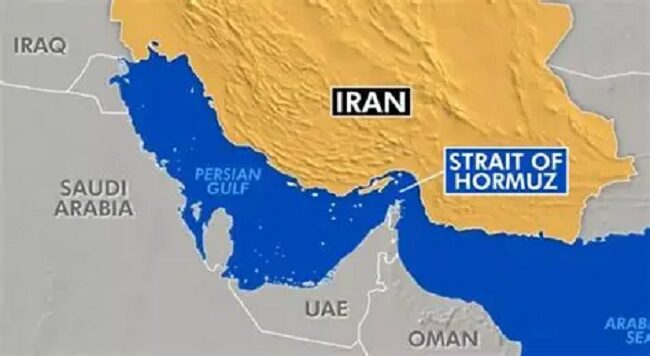
This may be because they are never in the line of fire, besides those from opinion polls.The tourniquet introduced by Iran at the Strait of Hormuz should drive a strong message to every nation – that we live in a common ecosystem of interdependences.
The Strait gets shut and straightaway the world feels the shock. While the missiles fly and sorrow, blood and tears afflict the innocent, the oil companies smile to the bank alongside the players in the military industrial complex. It is estimated, U.S. oil companies may garner up to $63 billion in excess profits from the price increases this year driven by the Iran war.
Experts also estimate that the U.S. may gain additional federal revenue of approximately $600 million/day from its output of 20 million barrels of crude oil per day. With a war that may end up costing an estimated $200 billion, would oil cushion the impact of deaths and destruction?The paradoxical situation for Nigeria is that the sharp rise in the price of oil does not suggest more revenue for social services for the population.
With a poor capacity in local refining, the nation depends on the importation of refined products and is thus totally exposed to the shocks related to global oil conflicts. Privately owned Dangote Refinery that could have cushioned the shocks is forced to import crude oil due to insufficient receipts of locally extracted crude which stands at less than the nation’s OPEC quota.
Moreover, according to reports, 400,000 barrels of the 1.5 million barrels of Nigeria’s daily crude oil production goes to paying debts owed to international oil majors, banks and traders. Thus the pump price of petroleum products is translating to rising costs across board in an unregulated and evidently inefficient economic environment.
Added to the economic quagmire is the reality of the violence inflicted by crude oil extraction and refining on the environment of the Niger Delta. The region experienced an equivalent of one Exxon Valdez oil spill annually for close to 70 years. This level of violence is an undeclared war against the people and the environment.
Back in the Middle East, the explosion of missiles guided by artificial intelligence illustrate the artificiality of warfare fought without conscience and notions of accountability. It is a season of barbarism. Might is not always right. Stealth may sometimes be visible.
The shutting of the Strait of Hormuz (and possibly others) should wake the world from slumber to the essential need to phase out fossil fuels and invest in ecologically sensible alternative energy sources. The release of huge strategic reserves of oil by members of the International Energy Agency may bring a small respite, but the increasing price of oil has not appeared to abate. How much more barrels will be released when the reserves runs dry?
Moreover, experts have noted that the current energy instability introduced by the war against Iran will not easily overcome even after the last missile has exploded. Reasons for this include the huge reconstruction that will be needed to restore damaged or obliterated infrastructure and to rebuild confidence in challenged geopolitical alliances and among sectoral players.
The famous invisible hands of the market has been exposed by the apparent open manipulation of oil prices by statements made, sometimes on social media posts, by political leaders. This underscores the need for energy democracy and an end to dependence on energy resources that plungers the world into conflicts, financial turmoil, social disruptions and unimaginable destruction.
The world needs an urgent phase out of fossil fuels, not digging in and fighting over them. This is the lesson straight from the Strait of Hormuz.
Nnimmo Bassey is Director, Health of Mother Earth Foundation (HOMEF)