

In what looks like a landmark decision adopted on Sunday, March 29, 2026, in Brazil, governments at the fifteenth Conference of the Parties to the Convention on Migratory Species (CMS COP15) formally recognised marine flyways for the first time. Scientists describe this as one of the most significant advances in ocean conservation in a generation.
What Marine Flyways Reveal
Marine flyways are vast migration highways across the open ocean, used by more than 150 seabird species across 54 countries. Despite their resilience, 42% of these species are globally threatened and more than half are declining.
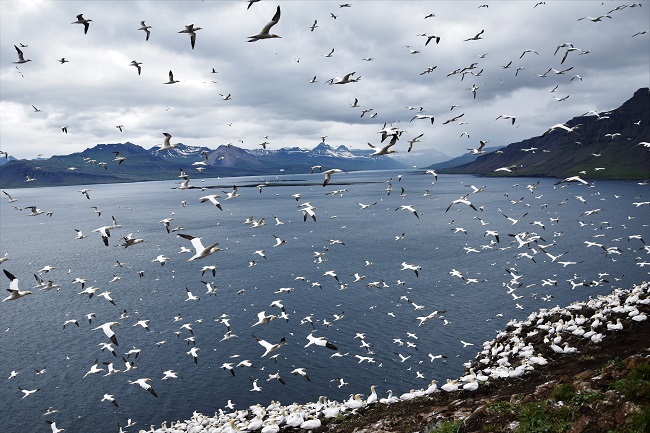
Dr Tammy Davies, Marine Science Coordinator at BirdLife International, says: “Seabirds are indicators of ocean health. When seabirds struggle, it is because the ocean itself is under strain. They are a highly visible dipstick for our ocean’s health.”
New Science, New Urgency
Research from BirdLife International identifies globally important sites, or Key Biodiversity Areas, across these flyways. These highlight where conservation action is most urgently needed. The threats facing seabirds are global and relentless, from invasive species to climate change. No single country can solve these challenges alone.
A Transformative Global Framework
The CMS resolution establishes marine flyways as a global conservation framework. It is built on a simple but transformative principle: shared routes require shared responsibility.
Marine flyways now provide a structure for countries and stakeholders to coordinate priorities, mobilise finance and deliver action. This includes new marine protected areas, invasive species eradication on breeding islands and safer fishing practices.
Prof Dr Aline Kühl Stenzel, Senior Policy Manager, Marine at BirdLife International, says: “Without coordinated action at an ocean basin scale, we will lose many of these species within our lifetimes. Marine flyways show us that the ocean is a single, interconnected system and its protection depends on cooperation at a scale we have never attempted before.”
Strengthening Global Agreements
The new framework supports major global agreements including the Kunming Montreal Global Biodiversity Framework, Regional Seas Conventions and the new High Seas Treaty. It gives governments a shared language, shared priorities and shared accountability.