

WWF Africa has commemorated 20 years of Earth Hour, celebrating two decades of global and African-led action to protect the planet.
Millions of people across Africa joined communities worldwide on Saturday, March 28, 2026, to mark the milestone anniversary of Earth Hour, widely recognised as the world’s largest grassroots environmental movement.
Across the continent, individuals, communities, organisations and cities participated by dedicating one hour to actions supporting nature, climate and local communities.
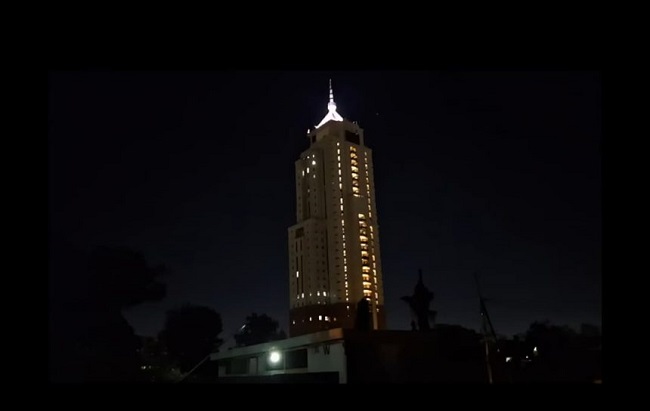
Since its launch in 2007, Earth Hour has evolved from a symbolic lights-off campaign into a year-round global movement mobilising people to safeguard natural systems that sustain life.
Africa’s Unique Approach
While the campaign began as a call to switch off lights, Africa quickly adapted the initiative to reflect its realities. In many communities where electricity access is inconsistent, the symbolic act held less meaning.
Instead, African participation became action-oriented – focusing on tree planting, ecosystem restoration, community clean-ups and environmental education. This practical approach has since influenced the global direction of the movement.
Key Milestones Over Two Decades
Earth Hour began on March 31, 2007, in Sydney, Australia, when 2.2 million people and more than 2,100 businesses switched off their lights to demand action on climate change.
By 2009, the movement had expanded to 4,000 cities in 88 countries, with a petition of one million signatures presented to world leaders at the United Nations Climate Change Conference 2009.
In 2013, WWF-Uganda established the first Earth Hour Forest, protecting 2,700 hectares of land while supporting local livelihoods.
Youth engagement became a defining feature in 2019 through partnerships with the Africa Alliance of YMCA and the World Organization of the Scout Movement, mobilising thousands of young people in environmental action across the continent.
During the COVID-19 pandemic, Earth Hour transitioned to a fully digital campaign in 2020, connecting participants across 190 countries. In 2021, its “Virtual Spotlight” campaign reached 2.4 million views within 24 hours.
The initiative has since evolved into “The Biggest Hour for Earth,” introducing tools such as the Hour Bank to track environmental actions. In 2024, Africa recorded a leading contribution of 171,531 hours globally.
Calls for Leadership and Action
Regional Director for East and Southern Africa, Yvonne Godo, said the anniversary is a moment to recognise the role of communities and young people in driving environmental change.
“Across the continent, people are showing that when individuals act together, even one hour can inspire lasting change for nature and climate,” she said.
Meanwhile, Regional Director, Congo Basin ad Interim, Laurent Some, urged African leaders to prioritise measurable environmental initiatives.
“This movement is about leadership and decisive action to safeguard the natural systems that underpin our economies, stability, and identity,” he said.
Growing Environmental Urgency
Africa remains home to some of the world’s richest biodiversity and ecosystems, but these face increasing threats from climate change, environmental degradation and biodiversity loss.
Earth Hour continues to serve as a unifying platform for individuals and organisations to reconnect with nature and demonstrate commitment to protecting it.
WWF has called on individuals, communities and organisations to take part by dedicating one hour to activities such as tree planting, clean-ups and environmental education, while logging their contributions through the global Hour Bank.
The organisation says collective action across the continent will be key in shaping a sustainable and nature-positive future.
By Winston Mwale, AfricaBrief