

A research report titled “Who Funds and Who Pays: the funding of solar geoengineering” and released on Tuesday, March 10, 2026, has revealed that funding for solar geoengineering has increased exponentially in the past five years, from a little less than US$6 million in 2020 to over US$60 million by September 2025.
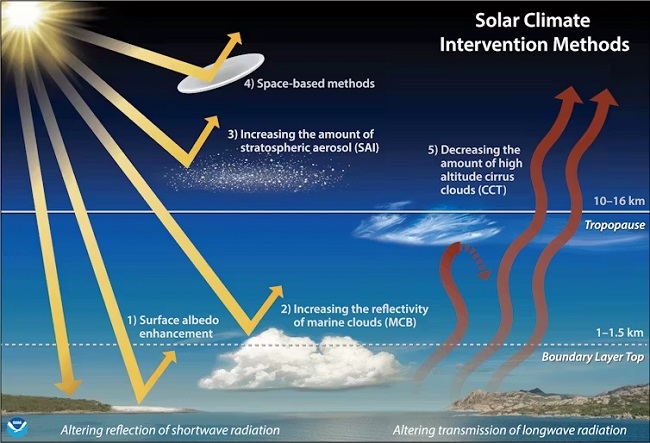
Solar geoengineering is a group of large-scale approaches to reduce global warming by increasing the amount of sunlight that is reflected away from Earth and back to outer space.
Philanthropic foundations, the UK government and tech billionaires have led the race to fund solar geoengineering, with over 80% funding coming from them. Up until 2024, private sources of funding dominated solar geoengineering funding with the UK government’s Advanced Research and Invention Agency (ARIA) trumping that in 2025.
Funding for solar geoengineering has been spread across research, profit making and building awareness on solar geoengineering with almost exclusively private funding supporting solar geoengineering awareness and advocacy.
In the last five years, 166 organisations across the globe have received funding, with 53 based in the US, followed closely by 24 in the UK. This has been followed closely by organisations in Europe, Asia, Africa and Latin America. Out of these, nine-tenths of all funding recipients between 2020 and 2025 were universities or governmental research organisations.
Linda Schneider, Senior Programme Officer, International Climate Policy, Heinrich Böll Stiftung, said: “It is alarming to see how much money is being poured into the research and development of solar geoengineering technologies. We have seen a tenfold funding increase, with the last two years seeing unprecedented levels of funding. When it comes to investors and philanthropic funders, this push has been largely driven by actors from the tech sector, raising serious questions about whose interests these high-risk technologies would ultimately serve.”
“Powerful governments could deploy these technologies unilaterally, potentially at the expense of others, thereby further destabilising an already fragile climate system,” added Linda.
The report also highlighted that some solar geoengineering funders are putting substantial resources towards risky solar geoengineering schemes instead of trying to solve the root causes of the climate crisis. At the same time, the report also shares how language on solar geoengineering is being reframed by these groups to obfuscate its dangers – from using the term solar radiation management with the intent of sounding bureaucratic or deliberately calling it “climate intervention” in place of geoengineering.
Coraina de la Plaza, Hands Off Mother Earth Alliance, added: “At a time when the world urgently needs real climate action, it is shocking to see such an increase in funding for solar geoengineering. We call out and resist these dangerous distractions that do nothing to address the root causes of the climate crisis and merely attempt to mask warming while creating new global risks.
“These scams are being promoted as an escape hatch for those who benefit from delaying real transformation. Millions are being poured into speculative, risky techno-fixes largely backed by wealthy tech interests. Funding should be redirected to proven existing real solutions instead. There is no place for false solutions that gamble with the planet.”
This research comes on the heels of data exposing that while funding for solar geoengineering research tripled in 2025 despite huge risks and uncertainties surrounding the deployment of such risky schemes, there have been growing calls for a Solar Geoengineering Non Use Agreement backed by over 600 academics and 2000 civil society organisations. Non use calls for a ban on outdoor experiments and highlights that solar geoengineering deployment cannot be fairly governed globally and poses unacceptable risks if implemented.
This call was echoed by African environmental ministers at the AMCEN meeting last year who reaffirmed their rejection of any attempt to promote Stratospheric Aerosol Injection (SAl) or other forms of solar geoengineering technology as a climate change mitigation solution.