

WaterAid Nigeria has commenced the third phase of its Water, Sanitation and Hygiene (WASH) intervention in Bwari Area Council of the FCT Abuja, backed by a $300,000 grant.
The one-year project, titled “Strengthening Water and Sanitation Delivery in Abuja, Year-3,” aims to enhance sustainable WASH services across selected communities.
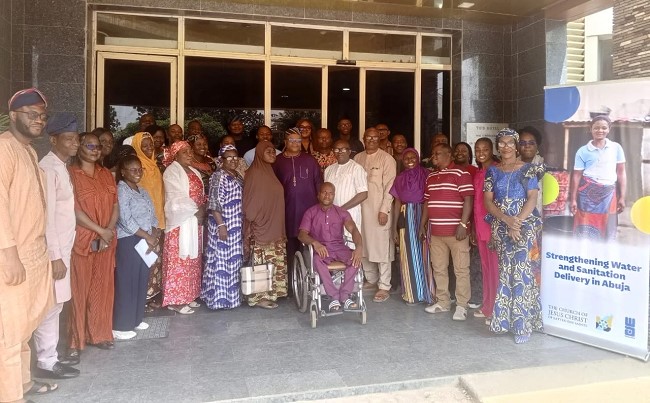
Mr. Onaivi Orisaremi, WaterAid’s Fundraising Officer, at the event on Wednesday, March4, 2026, said the initiative would expand access to WASH services in underserved communities and suburbs within Bwari Area Council.
According to him, the intervention builds on gains recorded in the first and second phases, deepening access and strengthening sustainability mechanisms.
He explained that the project would involve the construction or rehabilitation of three water facilities and one sanitation facility, likely to be sited in a school.
The intervention is expected to provide clean water to about 6,000 residents, while 450 schoolchildren will benefit from improved sanitation facilities.
In addition, 3,000 residents will be reached through hygiene promotion and behaviour change campaigns aimed at reducing waterborne diseases.
“We cannot build water facilities and toilets without promoting proper hygiene practices. Hygiene education is critical to reducing disease burden,” Orisaremi said.
He added that three community WASH management structures would be established to oversee operations and maintenance as part of sustainability measures.
“Our goal is to ensure facilities remain operational years after completion, with communities and government taking ownership,” he said.
Earlier, Mr. Obinna Ogbodo, WaterAid’s Sanitation and Hygiene Coordinator, said communities would be selected based on identified WASH gaps, population size, accessibility, and security considerations.
He disclosed that three communities and one school would be targeted under the current phase.
Beyond infrastructure delivery, Ogbodo said the project would train community WASH structures on operations, maintenance, hygiene promotion, and water safety planning.
Communities will also be supported to implement water safety plans and conduct basic water quality testing using locally produced hydrogen sulphide vials.
He noted that the Area Council and the FCT Rural Water Supply and Sanitation Agency (RUWASSA) have budget provisions for counterpart contributions but stressed the need for timely fund release.
“Having a budget line does not automatically translate to fund release. Part of our advocacy is to ensure these funds are accessed and utilised to close WASH gaps,” he said.
Ogbodo further revealed that the second phase exceeded its target of providing water to 9,000 people by reaching over 10,000 beneficiaries.
He assured that WaterAid would continue engaging relevant departments to strengthen WASH service delivery in Bwari.
Mr. Matthew Abu, Assistant Director of Planning at FCT RUWASSA, who represented the Director, Mrs. Abigail Epenesi, said the agency provides technical and institutional support.
According to him, RUWASSA conducts geophysical surveys to determine appropriate borehole locations and prevent contamination.
“Our experts ensure water facilities are sited safely, away from sanitation facilities, to guarantee safe water for communities,” Abu said.
He added that the agency complements development partners by providing infrastructure support within its mandate.
Although some schools are constructed without adequate sanitation facilities outside RUWASSA’s direct scope, Abu said the agency intervenes when gaps are identified.
“When we discover schools lack toilets or facilities have become dilapidated, we collaborate with authorities within available resources to rehabilitate them. Our focus is preventive to protect public health,” he said.
Ibrahim Yusuf, the traditional ruler of Bwari Area Council, urged residents to take ownership of the infrastructure provided to ensure proper maintenance.
He pledged continued community support and collaboration for the sustainability of the intervention.
By Akpan Glory