

Energy and green economic specialists have called on Nigeria’s federal government to adopt a more pragmatic strategy in its pursuit of a low-carbon economy.
They claim that this is significant because many of the existing laws and policies, such as the Nationally Determined Contributions (NDCs), intended to guide the country’s transition process, lack a scientific foundation regarding the political, economic, and sociocultural implications of decarbonising the nation’s oil sector.
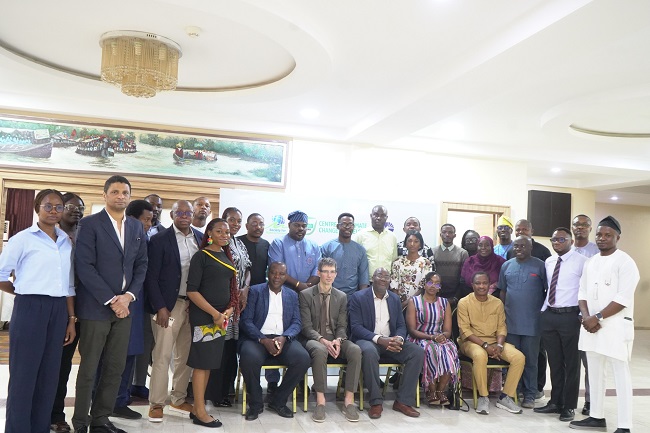
Speaking at a stakeholder workshop in Abuja on Tuesday, February 24, 2026, organised by the Society for Prosperity and Planet (SPP) and its partners, they said that any real transition would undoubtedly have far-reaching effects on jobs, welfare, economic growth, government revenue, and political stability because of the country’s historical reliance on fossil fuels for more than 50% of its exports and public revenue.
Although Nigeria has proposed using gas to address its transition issues through a phased-down plan of action, these experts, however, have expressed serious concerns about the net-zero-by-2060 pledge and the global and national climate imperatives. They contend that it calls into question whether gas can actually serve as a transition fuel, the timing and pace of a phase-down, and the macroeconomic consequences of alternative pathways.
According to SPP President, Prof. Chukwumerije Okereke, the need to find answers to this problem inspired his organisation and its partners to do research that carefully considers the environmental and economic effects of alternative pathways to using gas as a transition source of energy.
Therefore, the objective of the workshop, he elaborated, is to create a structured, inclusive, and intellectually rigorous space for key stakeholders to engage with the preliminary findings of the research programme. It is also intended to be a moment of collective sense-making rather than a presentation of final conclusions, to test assumptions, scrutinise new evidence, stress-test modelling scenarios, and reveal political, economic, and social insights that might not be visible from technical analysis alone.
“This is to ensure that the resulting outputs are analytically robust, politically grounded, and practically useful for informing Nigeria’s just transition pathways,” Prof. Okereke told the participants at the event.
In a similar vein, SPP researcher Mr. Uche Nnamani believes that evidence-based policies are still essential to ensuring that Nigeria’s transition to a low-carbon economy is in line with the nation’s growth since they offer useful information to direct stakeholders, investors, and policymakers.
“When we model things, we are not necessarily predicting the future; it’s to equip those who are making these decisions with the right information for them to know the direction they are taking,” he said.
Dr. Timothy Kelsall, a senior research fellow at ODI Global UK, asserts that data-backed research will help Nigeria create green jobs and enhance their understanding of how the government is spending the money saved from the removal of fuel subsidy.
According to him, such studies will also enable the country to determine which course to take in its energy transition strategy, whether gas, renewable, or otherwise, to ensure economic, environmental, and sociopolitical alignment throughout the process.
By Etta Michael Bisong, Abuja