

Experts have urged the government to rethink its decision to completely ban the importation of solar panels into the country. This reconsideration is essential for Nigeria to reduce its reliance on foreign technology in tackling its energy crisis and disrupting the already fragile foundation that the nation’s energy system relies on.
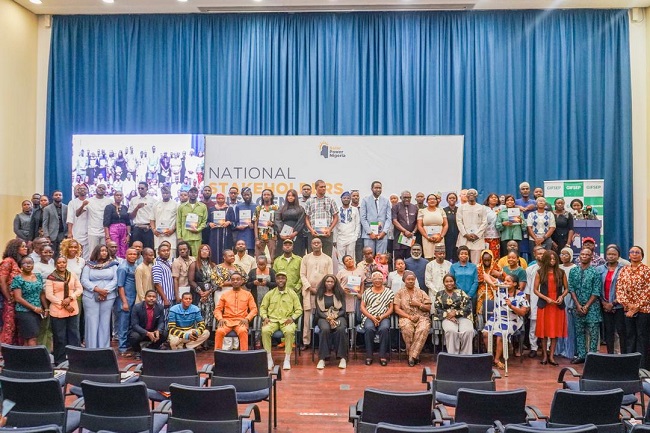
They made the demand at a national stakeholders engagement hosted by the Global Initiative for Food Security and Ecosystem Preservation (GIFSEP) on Tuesday, February 24, 2026, in Abuja, arguing that if the decision is not carefully reconsidered, it will result in an increase in the cost of this equipment, depriving many Nigerians of access to energy.
Banning solar imports now, according to Dr. David Terungwa, GIFSEP’s Executive Director, would be like removing lifelines in a crisis.
He continued by explaining that Nigeria is not yet prepared for a complete ban on solar panel imports and that such a policy, if implemented, would probably aggravate energy poverty, hinder the adoption of renewable energy, and harm homes and businesses.
So, the GIFSEP boss suggested that what Nigeria needs now is a clean energy policy that offers incentives for local solar production and promotes local assembly and manufacturing, as well as affordable financing for clean energy systems.
“Slow the Ban, let’s get some basic things right before a blanket ban,” he appealed.
Dr. Terengwa urged state governors to take advantage of the Electricity Act 2023, which aims to restructure the electricity sector by promoting decentralised generation, incentivising renewable energy investment, and giving state governments more regulatory authority over electricity supply.
From a legislative and policy perspective, Nigeria’s path forward should be deliberate and phased, according to Terseer Ugbor, the Deputy Chairman of the House Committee on Environment.
This path, he noted, should include a structured localisation roadmap that gradually increases capacity, ranging from assembly to component production and eventually to complete manufacture, allowing the industry to grow sustainably while providing uninterrupted access.
The lawmaker said that maintaining policy coherence across the energy, trade, industrial, and climate sectors will continue to be crucial, necessitating ongoing cooperation between development partners, the private sector, government institutions, and civil society.
“Nigeria must position itself not only as a consumer of renewable technologies but as a producer and innovator within Africa’s clean energy future,” Hon. Ugbor stated, urging that this proposed transition to clean energy must be guided by evidence, inclusiveness, and long-term thinking to ensure that industrial growth and energy access advance together and not in conflict.
According to Joseph Ibrahim, Campaign Director of the Secure Energy Project, any immediate ban on solar panel imports will be perceived as a “protectionist shock” that will most likely result in a 15% – 25% price increase and a rise in counterfeit or “rebadged” panels.
While he agrees that a tariff based policy will offer competitive preference, he also cautioned that it may not provide enough stability for long-term growth.
Consequently, he recommended a phased restriction as the most viable pathway for the country.
“Achieving a self-sustaining solar hub requires a strategic policy framework focused on incubation rather than exclusion,” Ibrahim asserts.
The event, themed “Accelerating Nigeria’s Clean Energy Transition”, was attended by industry participants such as government officials, civil society groups, journalists, and development partners. The launch of a report titled “Readiness of Nigeria for a Ban on Importation of Solar Panels” was the programme’s high point.
By Etta Michael Bisong, Abuja