

The Effectiveness Evaluation Group under the Minamata Convention on Mercury gathered in Geneva from February 9 to 11, 2026.
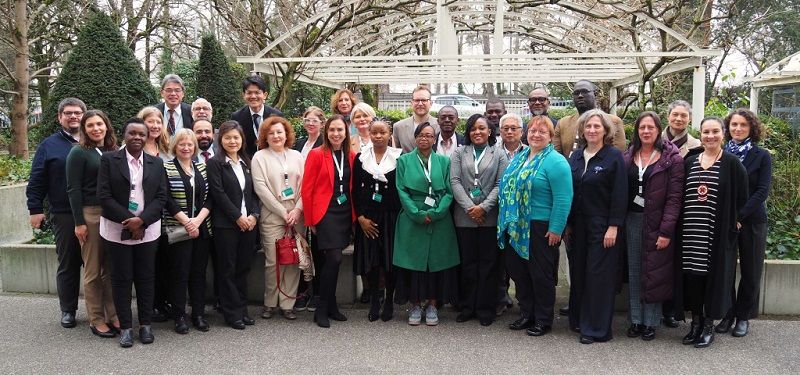
While the group has already met seven times on-line, this was the first face-to-face meeting, marking a key milestone in preparing the Convention’s first global assessment of its impact. The in-person meeting brought together 30 participants, including Members of the Group from Parties and observers, to review progress and shape the next steps of this important process. The session was co-chaired by Kateřina Šebková (Czech Republic) and Linroy Christian (Antigua and Barbuda).
Participants reviewed a preliminary draft of the report and agreed to further elaborate on it ahead of the next meeting. National reports submitted under Article 21 remain a key source of information, and the Secretariat provided an update on the second full reporting cycle, which has already reached a 76 per cent submission rate.
Over the three days, discussions were both fruitful and highly interactive. The Group focused on key areas of the Convention, including mercury supply and trade, mercury-added products and processes, artisanal and small-scale gold mining, emissions and releases, waste and contaminated sites, financial and technical support, and information and knowledge.
Participants also worked on identifying the main findings that will shape the report and help streamline it into clear and actionable elements for consideration by the Conference of the Parties at its seventh meeting in 2027. The co-chairs of the Open-Ended Scientific Group (OESG) provided an update on the development of the draft scientific report on mercury emissions, releases and levels in biota and humans.
In their closing remarks, the co-chairs and the Executive Secretary thanked participants for three days of intensive and constructive work. Co-chair, Linroy Christian, expressed “appreciation for the dedication shown throughout the meeting and for the Secretariat’s steady support behind the scenes”.
Co-chair, Kateřina Šebková, underlined that “the Group has made a significant step forward in developing the draft report. A clear pathway is now in place to deliver the next phase of work on time and with quality”.
Executive Secretary, Monika Stankiewicz, thanked members for their time, “intellectual engagement and openness in addressing challenges and successes”.
The effectiveness evaluation will provide reflections on the extent to which existing measures under the Convention serve the objective of protecting human health and the environment from mercury. This first evaluation will further serve as a baseline for future reviews and will be an important contribution to COP-7, which coincides with the 10th anniversary of entry-into-force of the Convention.
The ninth meeting of the Group will be held online in June 2026.