

The enforcement of the ban on sachet alcohol by the National Agency for Food and Drug Administration and Control (NAFDAC) has continued to garner more views with pro-health groups from Ghana and Uganda commending the agency for the bold move.
Some of the groups that hailed the move are the Uganda Alcohol Policy Alliance (UAPA) and the Vision for Sustainable Accelerated Development (VAST-Ghana).
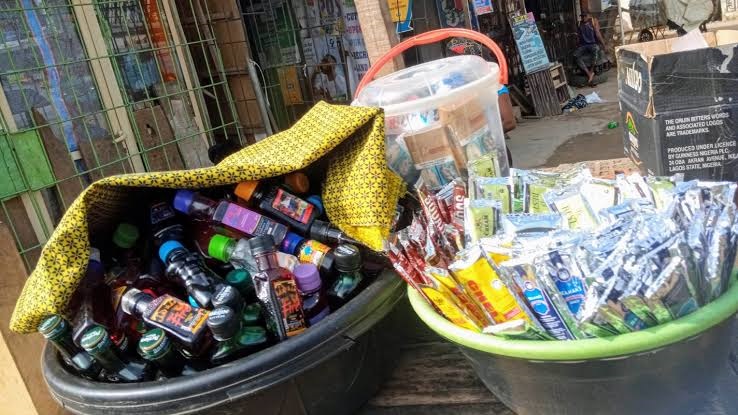
In a letter signed by its Chairperson, Juliet Namukasa, and addressed to the director general of NAFDAC, the UAPA commended the Nigerian agency for the decisive enforcement of the ban on sachet and small-volume alcoholic beverages, describing the move as a policy grounded in safeguarding public health and curbing harmful alcohol use, especially among children and youth.
Namukasa said that the renewed ban demonstrates a commitment to evidence-based regulation, prioritising people before profits.
The group insisted that sachet alcohol formats are inexpensive, easily concealed, and widely accessible; factors that fuel underage drinking and alcohol-related harm, adding that sustained enforcement signals a powerful public health precedence, aligning Nigeria with global alcohol control best practices.
On its part, the VAST Ghana called on the Ghanaian government to emulate the Nigerian example to safeguard public health, especially that of Children.
In a press statement dated February 6, 2026, VAST-Ghana commended NAFDAC for enforcing the nationwide ban on sachet alcohol and small bottles under 200ml, despite strong opposition from the alcohol industry. The organisation revealed that alcohol in sachets contribute to early alcohol use, addiction and long-term health complications, calling on Ghana’s FDA, which it said already has the legal authority under the Public Health Act (Act 851), to impose a similar ban through administrative action.
It will be recalled that the enforcement of the sachet alcohol ban began on 22 January 2026 after more than two years of back and forth between NAFDAC and the alcohol industry over the implementation. The Association of Food, Beverage and Tobacco Employers, and Distillers and Blenders Association of Nigeria had signed an agreement with the Ministry of Health and NAFDAC in December 2018 to phase out production of alcohol in sachet and PET bottles less than 200 ml by January 31, 2024.
At the expiration of the deadline a further extension was given to enable members to adequately prepare for the ban.
The Food, Beverage and Tobacco Senior Staff Association (FOBTOB), which claimed that the ban has disrupted operations of many of its members in different parts of the country, has criticised the policy. There has also been pushback from the Nigeria Employers’ Consultative Association (NECA) and the Manufacturers Association of Nigeria (MAN), both of which also hinged their arguments on job losses.
NAFDAC has however insisted that there is no going back on the policy, insisting that its decision was informed by health risks for children whose physiological systems are exposed to alcohol early and the damage it causes.
The agency has also countered industry narratives of job losses by insisting that its actions are directed at halting the production and sale of alcoholic beverages packaged in sachets and small-volume PET bottles, rather than shutting down the entire manufacturing companies.
A host of Nigerian organisations have equally urged NAFDAC to remain undeterred. They include the Renevlyn Development Initiative (RDI) which dismissed the beverage and alcohol industry arguments, pointing out that it is a known and well documented fact that the industry and their front groups deliberately stand in the way of any form of regulation.