

Africa has advanced a major step toward energy sovereignty with the official handover of the African Energy Bank (AEB) headquarters, a flagship institution created to mobilise capital for the continent’s energy priorities and reinforce Africa’s energy value chains.
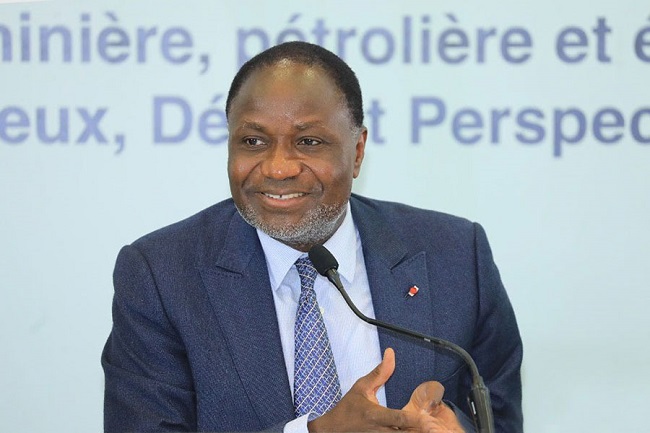
The handover ceremony took place on the sidelines of the Nigeria International Energy Summit in Abuja, where the President of the African Petroleum Producers’ Organisation (APPO) and Côte d’Ivoire’s Minister of Mines, Petroleum and Energy, Mamadou Colibaly, commended Nigeria’s leadership in advancing the initiative. He further announced that the Bank is expected to commence operations in June.
“We are committed to launching this Bank no later than June. I sincerely thank our partners for providing the headquarters and office that make this take-off possible. The African Energy Bank represents Africa’s commitment to finance, develop, and secure its own energy future by Africans, for Africans,” Colibaly said.
The African Energy Bank is a joint initiative of APPO member states and the African Export-Import Bank (Afreximbank). Its core mandate is to mobilise domestic and regional capital for energy infrastructure, reduce Africa’s reliance on external financing, and align energy investments with the continent’s long-term development and industrialisation goals.
While performing the hand-over, Nigeria’s Minister of State for Petroleum Resources (Oil), Senator Heineken Lokpobiri, said: “Nigeria has met every obligation as host. The headquarters is ready, strategically located, and fully equipped and we are prepared for immediate take-off.”
The ceremony underscored a unified African resolve to take greater ownership of the continent’s abundant natural resources. By offering targeted financial instruments, the Bank will support projects across the energy value chain, including exploration, refining, renewable energy integration, and local content development, ensuring that Africa’s resources translate into tangible economic value and job creation.
Speakers at the event emphasised that the African Energy Bank is not merely a financial institution, but a cornerstone of Africa’s broader quest for economic independence and lasting energy security. The handover, they noted, signals the beginning of a new era in which Africans are determined to finance, produce, and sustain their own energy future.
The African Energy Bank is a pan-African financial institution jointly established by APPO member states and Afreximbank to provide tailored financing solutions for energy projects across Africa. The Bank aims to strengthen regional energy markets, enhance value addition, and support sustainable development through increased access to capital.
Meanwhile, the Association of Petroleum Producers’ Organisation (APPO) says African Energy Bank (AEB) is being positioned to raise about $15 billion to finance oil and gas projects in the continent of Africa by 2030.
APPO said the bank, which would begin operation fully by June in Abuja, was expected to create over 500,000 direct jobs in the local midstream.
APPO Secretary-General, Farid Ghezali, disclosed this on Tuesday in his remarks at the official opening of the 2026 edition of the Nigeria International Energy Summit (NIES) at the State House, Abuja.
African Energy Bank is a joint initiative of APPO member states and the African Export-Import Bank (Afreximbank), established with an initial capital of Five billion dollars.
Its core mandate is to mobilise domestic and regional capital for energy infrastructure, reduce Africa’s reliance on external financing, and align energy investments with the continent’s long-term development and industrialisation goals.
“The AEB will unify intra-African pricing for gas and oil, allowing our member countries to achieve savings of up to 30 per cent on their energy imports, a potential gain of 1.4 billion dollars for Africa,” he said.
Ghezali said in spite of the continent’s immense potential, Africa was facing a paradoxical and frustrating reality of exporting about 70 per cent of its crude oil and 45 per cent of natural gas, losing 15 billion dollars yearly.
He said financing remained the main bottleneck hindering the development of the continent’s strategic projects, adding that over 150 essential projects, from refineries to pipelines, such as the Ajeokuta-Kaduna-Kano (AKK) pipeline, to gas infrastructure remained blocked.
To address this anomaly, the APPO secretary-general said the African Energy Bank was designed to unlock the 200 billion needed for the continent’s midstream-downstream projects by 2030.
Ghezali disclosed that the African Energy Bank would allow the listing of shares of the national oil companies in the continent and flagship projects, such as the Dangote Refinery or the AKK Gas Pipeline.
He explained that it would also connect Africa’s certified projects to the world’s largest sovereign wealth as well as to capital markets with structured equipment and public-private partnerships.
In his remarks, the Chairman, Independent Petroleum Producers Group (IPPG), Adegbite Falade, said Nigeria must build an energy industry that could sustain itself, deliver lasting value to Nigerians through collaboration and consolidation rather than through fragmentation.
“The future of the industry lies not in the whole model of extraction and exports of the nation’s raw hydrocarbons, but it lies in creating in-country value that fuels the economy and increasingly contributes to Gross Domestic Product (GDP) growth,” he added.
Falade said since 2025 edition of the summit, Nigeria’s oil and gas industry had recorded notable progresses across the entire value chain, adding that the upstream scaled up in terms of liquid production while gas production had grown significantly.
“This growth in liquid has been supported by an increase in export pipeline availability, reduced crude losses, and stronger indigenous contribution to production.
“For the first time, indigenous producers and independents now account for more than 50 per cent of national production.
“We continue to see sustained implementation of the PIA and strengthening of sales through the issuance of relevant and appropriate executive orders.
“However, a few things still remain by way of all kinds of process stakeholders if we are to build an energy industry that is truly self-sufficient and that consistently creates value for the nation,” Falade said.
He,however, urged the Federal Government to continue to create an industry that could allow the driving and the envelope of private capital to build our industry infrastructure.
Falade said, “Without this, we will not be able to reach the massive gap in potential that we have to meet in our contribution to the nation’s GDP.
“We must reduce bureaucracy, we must streamline industry fees and related charges, just to make sure that operators remain competitive.
“Our industry today operates at a significantly elevated premium in cost relative to other non-share jurisdictions. We must address the issue of access to long-term and affordable capital.
“We must ensure policy stability and adopt competitive fiscal frameworks that support resource monetisation and stimulate interest rate growth.”