

Young Advocates for a Sustainable and Inclusive Future (YASIF Nigeria) and its partners have announced plans to equip 15,000 young, underserved Nigerians as part of efforts to improve their participation in the digital and green economy.
The programme, which is part of IBM SkillsBuild Phase 2’s Reskilling Revolution Africa (RRA) initiative, will be carried out in partnership with IBM, the African Union (AU), and the International Association for Volunteer Effort (IAVE) as part of a larger continental effort to increase young people’s access to professional, digital, and sustainability-related skills throughout the nation.
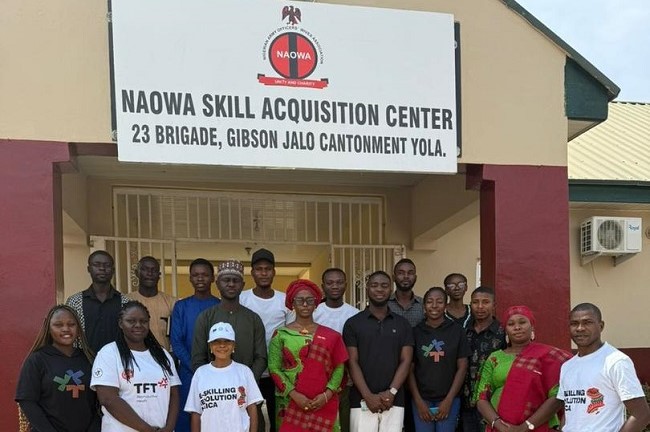
In a press statement signed by the executive director and founder of YASIF Nigeria, Blessing Ewa, the organisation added that the programme provides structured and labour-market-relevant learning pathways via a digital platform that supports self-paced learning, tracks progress and awards internationally recognised IBM SkillsBuild digital credentials.
She hinted that YASIF Nigeria is implementing the SkillsBuild Phase 2 initiative following the successful completion of the programme’s pilot phase, which demonstrated strong learner uptake, gender inclusion, and measurable skills outcomes in Nigeria.
“Through the SkillsBuild Phase of Reskilling Revolution Africa, YASIF Nigeria is scaling a proven model for youth skills development that is grounded in evidence from the pilot phase and focused on measurable employability outcomes, while contributing to a broader continental effort to prepare young Africans for participation in the digital and green economies,” Ewa said.
The IBM SkillsBuild is currently being delivered across multiple countries, including Nigeria, South Africa, Kenya, and Ethiopia, with implementation adapted to local contexts while maintaining consistent quality standards. To date, the programme has demonstrated strong results, engaging tens of thousands of learners, achieving high female participation, recording tens of thousands of learning hours, and enabling thousands of learners to earn IBM SkillsBuild digital badges, confirming its effectiveness as a scalable, partner-driven model for building job-relevant skills and strengthening employability outcomes.
The RRA pilot phase, launched in October 2024, set out to engage 30,000 young Africans across Nigeria, Ethiopia, and South Africa. Nigeria exceeded its national pilot target by enrolling 12,061 unique learners on the IBM SkillsBuild platform, drawn largely from unemployed and underemployed youth, including students in tertiary and technical institutions. Female participation surpassed the minimum benchmark, contributing to an overall pilot outcome in which nearly 60 percent of learners were women.
Across the three pilot countries, learners collectively recorded almost 93,000 learning hours and earned close to 2,000 internationally recognised IBM SkillsBuild digital credentials, establishing a strong performance baseline for programme scale-up.
Building on these results, the SkillsBuild Phase expands both the scale and structure of programme delivery in Nigeria. Under Phase 2, YASIF Nigeria partnering with Emerging Communities and Little Gifted Hands Matter alongside other implementing partners, will coordinate the enrollment of 15,000 young Nigerians over a 12-month period, with at least 50 percent female participation.
Implementation will span Abuja, Lagos, Kaduna, Katsina, and Niger State, ensuring geographic spread and access for youth from diverse backgrounds. Learners will be onboarded in weekly cohorts through a blended learning model that combines IBM SkillsBuild’s online curriculum with in-person facilitation, coaching, and peer support delivered through trained volunteers and facilitators. This time, YASIF and her partners will be collaborating with various Ministries, Departments and Agencies (MDAs) as well as the private sector to enable successful outcomes.
Learning pathways were informed by a National survey and are aligned with labour-market demand and local context, with focus areas including climate change and green economy, digital marketing, artificial intelligence, web development, project management, entrepreneurship, and sustainability-related skills.
Programme performance is monitored through the SkillsBuild platform, with Nigeria targeting a minimum of 1,500 digital badges earned during Phase 2, representing at least 10 percent of enrolled learners achieving platform-recognised credentials.
In addition to skills training, YASIF Nigeria and its partners are implementing a structured employability and alumni support framework designed to extend programme impact beyond course completion. This includes career guidance services such as Curriculum Vitae (CV) development and interview preparation, partnerships with employment and job-placement organisations, and entrepreneurship training and mentorship for participants pursuing self-employment. A national alumni network will be maintained to support peer learning, collaboration, and continued access to employment and enterprise opportunities.
In her final words, the founder of YASIF Nigeria, submitted that volunteering remains a core component of the SkillsBuild Phase, with participants encouraged to apply newly acquired skills through community-based activities, peer learning support, and volunteer-led initiatives.
This, according to her, is because the integration of skills development and volunteering strengthens practical experience, supports job readiness, and reinforces the programme’s focus on inclusive development and community resilience.
By Etta Michael Bisong, Abuja