

Leading minigrid company CEOs operating across Africa on Tuesday, January 26, 2026, issued a 17-step action plan for funders, governments and industry to urgently align ambition with the scale, speed, and structure of capital mobilisation and regulatory reform required to meet Africa’s electrification targets.
The companies have endorsed a Mission 300 Industry Position Paper setting out 17 priority actions to ensure minigrids can catalyze electrification at the scale envisioned.
Mission 300, led by the World Bank and the African Development Bank, seeks to connect 300 million people to electricity by 2030. So far, the banks have signed Energy Compacts with 29 African governments.
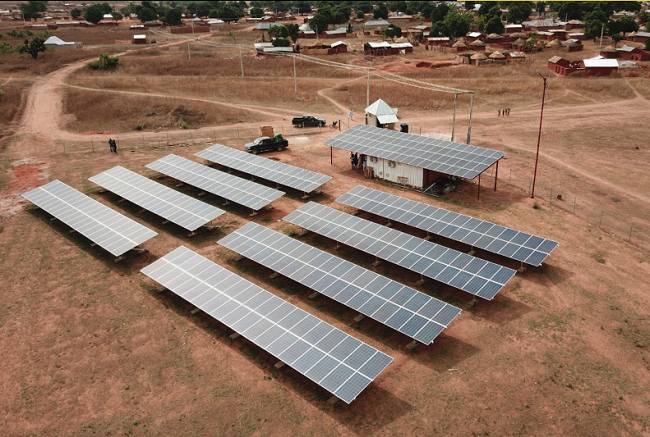
An analysis of the Compacts, released with the position paper for the first time, is said to demonstrate a strong desire by governments for the minigrid industry to play a central role. Governments expect to serve over 115 million people, equivalent to 23 million connections, by the end of the decade.
Core industry messages
Mission 300 is achievable, but only with a step change in delivery. Delivering 23 million minigrid connections in less than five years implies unprecedented scale and coordination. The sector is ready to deliver, but success depends on immediate action across capital deployment, regulation and institutional execution.
Minigrid companies must have access to both corporate equity and local currency debt to scale. Accelerating deployment will require ensuring that a combination of corporate equity and appropriately structured local currency debt is available to enable minigrid companies to scale operations within existing markets and expand into new countries. Achieving Mission 300 will require $28–46 billion in total capital, including over $10 billion in equity by 2028.
Mission 300 funders must publish a clear, time-bound capital plan. It is important that Mission 300 clearly state how much concessional and risk capital will be deployed, how this capital will mobilise private equity at scale, and how approval and deployment timelines will be accelerated to reflect the urgency of the target. Transparent capital mobilisation plans and measurable delivery milestones should form part of Mission 300 performance tracking.
Policy, regulatory and performance standardisation is essential for speed and scale. Governments and funders must support greater standardisation of policy frameworks, technical standards and industry Key Performance Indicators (KPIs) to reduce transaction costs, streamline approvals and build investor confidence across markets.
Minigrids must be allowed to earn appropriate commercial returns. Governments are urged to enable cost-reflective tariffs, remove import duties and taxes that add over 7% to equipment costs, and allow deployment in commercially viable peri-urban, interconnected and standalone urban settings. Without these conditions, private capital cannot scale at Mission 300 speed.
Mission 300 KPIs must reflect economic impact, not household connections alone.
Perhaps most importantly, Mission 300 should count connections to small and medium enterprises (SMEs) and social institutions, not only households as currently stipulated. Including productive and institutional demand in KPIs will enable higher utilisation, stronger economics and more sustainable minigrid systems.
Endorsements
The companies endorsing the paper collectively operate 392 active minigrid sites, have invested over $300 million, and hold a development pipeline exceeding 1 GW, representing a capital requirement of up to $8.2 billion. The sector states that it is ready to deliver, provided the enabling environment moves at the pace Mission 300 demands.
Commenting on the paper, AMDA CEO, Olamide Niyi-Afuye, said: “Mission 300 has set an ambition that meaningfully confronts the scale and urgency of Africa’s electrification challenge. This paper is the industry’s response. It reflects a strong alignment among minigrid CEOs who are already delivering on the ground and ready to scale. The message is clear: the sector is ready. What is now needed is capital mobilisation with a clear, time-bound plan, and regulatory and institutional systems that move at the same speed as the ambition.”
Manoj Sinha, CEO & Founder of Husk Power, said: “M300 has enabled more predictable policies, reduced market risk and unlocked more capital. As a result, Husk Power has increased its ambition to 1GW of distributed energy projects in Africa by 2030. However, it is well known that high income, low energy countries do not exist. Governments have spoken on the need for minigrids to power economic growth beyond households. Now a step change in action is needed.”
CEO & Co-Founder of ANKA, Camille André-Bataille, said: “Mission 300 is not constrained by technology or demand, but by how capital is structured and deployed. Project-level financing remains essential to build minigrid infrastructure, but scaling delivery at the pace M300 requires will depend on increased corporate equity, alongside enabling national frameworks, to strengthen companies’ capacity to grow, execute, and manage portfolios efficiently. No strong companies means no successful projects.
“This Position Paper brings together practical insights from minigrid companies active across Africa and provides concrete recommendations to help align capital, regulation, and institutional frameworks with the realities of large-scale delivery. It is vital that we all move forward in the same direction.”
Olu Ajala, CEO of Ashipa Electric, added: “Mission 300 is no longer a question of ambition. It is a test of execution. Governments have made clear their expectation that minigrids will serve over 115 million people by 2030, and companies like ours are already delivering at scale. What will determine success now is whether capital, regulation, and institutional processes move fast enough to match that demand. With access to appropriately structured equity and local-currency debt, cost-reflective tariffs, and standardized performance frameworks, the minigrid sector can deliver reliable power at Mission 300 speed.”
Kenneth Gitonga, Market Development Facility Manager at Camco, said: “Camco has been committed to the minigrid sector for over a decade, and we’ve seen how it can deliver clean energy and inclusive economic growth. The 17‑Step Action Plan offers the clarity needed to turn early ambition into scalable, bankable projects. With the right enabling conditions, we are ready to deploy catalytic capital and support developers to help Mission 300 deliver sustainable impact for households, SMEs, and communities.”
According to the World Bank, over 600 million people in Africa still lack access to electricity. With less than five years to the 2030 deadline, industry leaders warn that incremental approaches will fall short.
The Position Paper concludes with a clear message: achieving 300 million new connections has massive implications for capital flows, regulatory alignment, and institutional delivery. The minigrid industry stands ready to play a central role, but success will depend on funders and governments matching ambition with execution.