

United Nations Food and Agriculture Organisation (FAO) Representative to Nigeria, Dr Hussein Gadain, has reaffirmed commitment to timely planting season to achieve the Humanitarian Needs and Response Plan (HNRP).
Gadain disclosed this while briefing newsmen on the organisation’s strategy following the recent unveiling of the 2026 Nigeria HNRP for Borno, Adamawa and Yobe (BAY) states on Thursday, January 22, in Abuja.
The introduction of the 2026 HNRP underscored the need for coordinated action to save and protect lives through humanitarian action led by the Nigerian government, supported by national organisations and international partners.
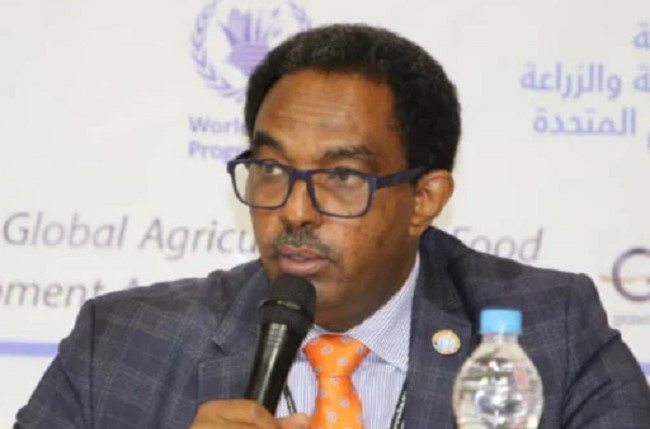
According to him, the HRP represents a shared commitment for all of us as a humanitarian community in the country, and particularly the communities facing the most food insecurity.
Gadain said, “As FAO, our key message today is that livelihoods are life-saving. So, saving livelihoods saves lives. When farmers receive seeds and tools on time, they are able to produce their food.
“Also, when livestock are protected and kept productive, and when communities can irrigate, even, a small plot behind their house, they will be able to produce the food they need.
“These interventions preserve dignity for us all, stabilise food access by families and reduce the need for repeated emergency assistance, especially during these difficult times where the global funding is shrinking.
“So, in 2026, for this HNRP, FAO intends to focus on timely agricultural inputs ahead of the planting season, which starts in June. We also support farmers during the dry season.”
Gadain revealed that the organisation was at present, supporting a number of farmers planting during the dry season, while promising to provide livestock health services, including feeds and livestock.
According to him, these livestock are very good assets for rural communities, adding that such rely on them for nutrition and also as assets.
“When the dry season comes, they sell them and buy food. We focus on small-scale irrigation and water management.
“Irrigating small plot can be more than enough for families to produce food needed, especially nutritious food like vegetables, besides agricultural inputs and life support.
“We intend to do what we call cash plus package. We link the inputs with training and market access as well.
“Families need cash before they grow their food and on this, FAO will provide the cash and inputs together, while people are planting and harvesting, they have cash to buy food.
“We look forward to strengthening partnership, including farmer groups. We bring farmers together to learn from each other and train each other, and also national NGOs and government institutions,” he said.
Gadain further mentioned that the organisation would work more closely with the food security sector to ensure coherence to make positive impact and to avoid duplication and also to drive stronger accountability to affected population.
He urged partners to front-load flexible funding, so that inputs could reach farmers on time, before the rainy season.
“This is critical to transforming humanitarian assistance into resilience building at large scale. FAO, together with our partners, especially WFP, look forward to working together to deliver more food-secure year for Nigeria.
“It does not matter how little the proportion of HNRP the agricultural component is, but the integration.
“If we work together and identify our beneficiaries together, and target them differently, we will create sustainability, and people who are going to receive repeated assistance every year will reduce,” Gadain said.
By Fortune Abang