

The Centre for Climate Change and Development (CCCD) at Alex Ekwueme Federal University, in partnership with the Institut du Développement Durable et des Relations Internationales (IDDRI) in Paris, under the Ukama Network, in collaboration with Nigeria’s Federal Ministry of Industry, Trade and Investment (FMITI) has successfully hosted a workshop on Trade, Investment and green industrialisation in Nigeria: strengthening relationship with the European Union.
The workshop, which held at Transcorp Hilton Abuja, brought together over 50 high-level stakeholders, including policymakers, private sector leaders, diplomats, and development experts, to advance Nigeria’s green economic agenda and strengthen its position in green industrialisation, with a focus on the relationship with the European Union (EU).
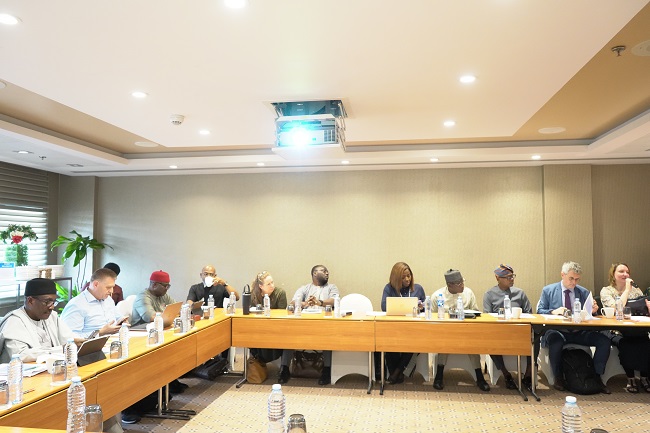
As Nigeria seeks to diversify its economy from fossil fuels, stakeholders examined existing policies, institutional frameworks, and partnerships towards these goals, and offered recommendations. This intervention is of impeccable timing in light of recent geopolitical shifts, which have impacted several sectors and heralded international market realignments, highlighting the need to forge new international partnerships amidst the urgency to transition from fossil dependence.
Recently, Nigeria’s President Bola Ahmed Tinubu, speaking at the 2026 Abu Dhabi Sustainability Week, outlined Nigeria’s strategic vision of mobilising up to $20-$30 billion annually in climate finance for climate-resilient growth and energy transition. The workshop served as a timely platform to analyse the pathway to operationalising these national priorities through enhanced EU collaboration.
At the policy workshop, participants emphasised green industrialisation as an economic necessity, aligning with Nigeria’s Energy Transition Plan and net-zero goals by 2060, while identifying operationalisation gaps, opportunities, and making practical and actionable recommendations towards strengthening collaboration on sustainable trade and green industrialisation.
In his welcome remarks, Prof. Chukwumerije Okereke, CCCD Director and Ukama Co-Chair, highlighted the workshop’s focus on addressing structural vulnerabilities in Nigeria’s economy, such as over-reliance on oil exports, which accounts for 90% of Nigeria’s earnings, and leveraging global opportunities like the African Continental Free Trade Area (AfCFTA) and EU’s Global Gateway Initiative.
“This dialogue aims to access policy frameworks, identify barriers and opportunities, facilitate collaboration, curate actionable plans, and commitments to reposition Nigeria for sustainable, inclusive growth,” Prof. Okereke stated.
In his remarks, Dr. Sebastien Treyer, IDDRI Executive Director and Ukama Co-Chair, underscored the importance of mutual partnerships.
“We aim to identify factors blocking market access, with a focus on understanding the key issues faced by private players in Africa who want to invest in green industrialisation supply chains, and enhance investment relations between Nigeria and the EU, fostering shared prosperity and climate action,” he said.
Dr. Mrs. Rachel Mandi George, Director of Trade at FMITI, reaffirmed the Ministry’s commitment to policies promoting sustainable industrial development, renewable energy, and value addition.
“The steps taken by the European Union represent a shared commitment to shape a more resilient, inclusive, and sustainable economic future for Nigeria. As Africa’s largest economy and most populous nation, the choices we make today regarding industrial growth, trade, and investment will determine not only our economic prosperity but also our environmental sustainability and social wellbeing. Green industrialisation offers Nigeria a transformative pathway,” she stated.
Mr. Olamide Fagbuji, Senior Special Assistant to the President on Climate Technology and Operations, speaking on Nigeria’s policy landscape, outlined several policies developed by Nigeria to promote climate action.
“Nigeria, through the Climate Change Act, established the National Council on Climate Change to promote and coordinate national climate action. This body has enabled the development of several key policy frameworks, including the Energy Transition Plan (our blueprint for achieving net zero), the Long-Term Low Emission Development Strategy (LT-LED), and, notably, the Nationally Determined Contribution 3.0, published late last year. As a country, we remain focused on mobilising investment to ensure Nigeria meets its climate commitments,” he said.
In his Address, the Head of EU delegation in Nigeria, Ambassador Gautier Mignot, described the EU partnership offer as long-term, and sustainable, quality infrastructure that is beneficial to partner countries without creating new forms of dependency.
“At the regional level across West Africa, we are fostering integration and developing trade corridors while supporting the African Continental Free Trade Area. On industrialisation, our priority is to build the industries of the future, not the industries of the past, and to support companies through that transition. That commitment lies at the heart of our partnership with Nigeria. Specific strategies will reflect each country’s sovereign choices, and we are ready to provide technical assistance to both federal and state governments. Ultimately, our goal is to develop local value chains that deliver real benefits to partner countries,” he said.