

The 23km Phase One of the Lagos-Badagry Highway is 95% completed, the Minister of Works, Sen. Dave Umahi, said on Monday, January 12, 2026, in Lagos.
Umahi made this known while inspecting the project.
The minister noted that the highway comprised three lanes and two carriageways with a train track.
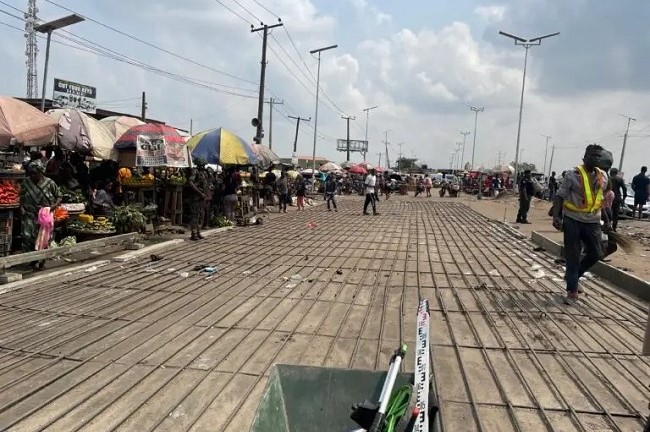
He expressed satisfaction at the quality and pace of the work being handled by CGC Construction Company.
“I can say they have completed the job to about 95 per cent. What is left for them to finish this phase one is only 300 metres.
“We have directed them to put the solar lights, not cable lights as they proposed. We are building for tomorrow,” he said.
Umahi said that the Federal Government was working on Section Two of the project, which is 22km.
“I want them to still do the same three lanes, two carriageways up to Seme Border, although it is part of the Lagos-Abidjan route.
“The point where we will get to the Sokoto-Badagry Superhighway is also the point where the tunnel is coming, which means that the flyover there is imperative.”
He noted that the tunnel would begin from Ahmadu Bello Way on Victoria Island and go underground at a point.
“It will pass through the fishery school underground and go through the Ogogoro Island, and from there, it will go through the Snake Island and we come over to that junction and join the Sokoto-Badagry Superhighway through the flyover,” he said.
He said that President Bola Tinubu was committed to the development of Nigeria.
Nigeria plans to build an underground tunnel in Lagos.
It is expected to connect Victoria Island to Snake Island and extend toward Badagry, linking the Lagos-Calabar Coastal Highway with the Sokoto-Badagry Superhighway.
Meanwhile, The Federal Government has ordered immediate commencement of palliative works on the Lagos-Ota-Abeokuta Road to address critical failures and restore traffic flow.
Minister of Works, Sen. Dave Umahi, gave the directive during an inspection of the federal highway linking Lagos and Ogun states.
He said that although about 22km were assessed, active intervention would focus on about 18km of the most distressed sections of the road.
Umahi said that the Federal Government was already handling about 60km on the corridor and they were being executed in phases based on urgency.
He attributed the road’s failures to unresolved concession issues and misjudged engineering parameters during an earlier construction.
The minister said that the repair would begin immediately, mostly at night, targeting sections that prevented free movement of vehicles.
According to him, low-lying failed areas will be reconstructed with concrete to ensure durability.
Umahi said that the Ota-bound carriageway suffered more severe damage than the Lagos-bound carriageway.
He said that a second phase would involve full resurfacing, replacement of bridge expansion joints, and installation of solar streetlights.
The minister gave the assurance that the concessionaire would operate and maintain the road as soon as works on it would be completed.
By Lydia Chigozie-Ngwakwe