

Against the backdrop of the New Year, global trade has been faced with a significant development – from January 1, 2026, exports of select industrial goods to the European Union (EU) is being charged a carbon price under the EU’s Carbon Border Adjustment Mechanism (CBAM).
Says Sunita Narain, director general of the New Delhi-based think tank Centre for Science and Environment (CSE): “By putting a carbon price at the border, CBAM changes how competitiveness is defined in global trade. But what it also does is shift the decarbonisation costs to developing countries, thus extending a familiar dynamic where developing countries adapt to rules set elsewhere, under conditions that structurally disadvantage them.”
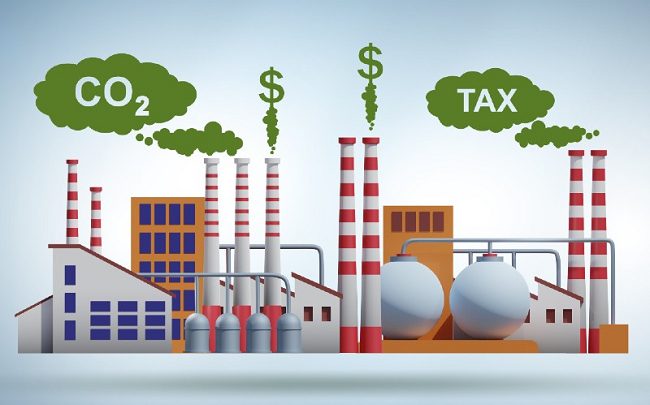
A carbon tax is a financial charge imposed on businesses for their carbon dioxide emissions, aimed at reducing greenhouse gas emissions and combating climate change.
Narain adds: “Decarbonisation in industry is both necessary and unavoidable. Developing countries will need to pursue decarbonisation to remain competitive. However, this transition cannot be driven through unilateral measures alone.”
CSE has recommended that developed countries like India should collect a carbon tax domestically at point of exports, so that the funds can be directed towards decarbonisation of domestic industry, whilst also meeting the CBAM’s carbon pricing criteria.
Says Avantika Goswami, programme manager, climate change unit, CSE: “To promote truly equitable global climate action, the provision of real sectoral decarbonisation support in the form of concessional finance and technology transfer from the EU to developing country partners is crucial. This can help reduce the carbon intensity of manufacturing. It will also ensure a level playing field and also provide funds for countries of the Global South to invest in low carbon growth.”
CSE had flagged its concerns in its 2024 study Carbon Border Adjustment Mechanism (CBAM): The Global South’s response to a changing trade regime in the era of climate change, warning that the mechanism does not address historical responsibility or structural asymmetries.
The debate on CBAM
Over the past 15 months, a series of measures under CBAM has expanded its scope — turning it into an extensive trade obligation, placing growing demands on exporters for data provision and verification. Recent proposals to expand CBAM’s scope to other sectors, tighten verification requirements, and introduce anti-circumvention provisions, further increase compliance and cost pressures on exporters from the Global South.
While the technical requirements have tightened, the political trajectory of CBAM has been shaped increasingly by domestic industrial pressures within the EU, with discussions on carve-outs, exemptions, and simplification geared towards the preferences of domestic industry.
Says Goswami: “This reflects a prioritisation of internal competitiveness rather than easing obligations on partner countries or contributing to global climate benefits, reinforcing trade partners’ branding of the EU’s policy as a protectionist measure rather than a climate tool.”
In international fora, developing countries have highlighted that climate-linked trade measures such as CBAM risk increasing the overall cost of climate action, fragmenting multilateral cooperation, and shifting mitigation burdens onto countries with lower historical emissions and weaker capacities.
Implications for India
For India, the implications are significant. CSE’s analysis shows that CBAM could impose substantial cost pressures on steel and aluminium exports to the EU. The study estimated that affected exports could face a price burden of around 25 per cent – a shock that exporters are likely to absorb through price compression in order to remain competitive.
Redressal measures must be urgently pursued
In addition to measures such as ensuring funds from the carbon tax stay within borders and the need for EU to provide additional decarbonisation-climate finance, a package of additional steps can be considered. These include recycling of CBAM revenues to developing country partners, support for monitoring and reporting of emissions, and exemptions for least developed countries.
However, these may provide only temporary relief and alleviate some immediate impacts of the CBAM; in the long run enabling the transition in developing countries through real finance must be a key goal for the EU.
CSE experts say multilateral fora must also urgently reckon with the structural inequities of the global trade, finance and industrial regimes, and envision equitable pathways to global green industrialisation, where developing countries can both decarbonise existing industry and participate in emerging green industries without being left behind.