

Preliminary report on chronic kidney disease (CKD) research conducted in Yobe State has indicated heavy metal presence in samples of water consumed by residents of Gashua town.
Prof. Mahmoud Maina, the Lead Researcher and Director, Biomedical Research and Training Centre (BioRTC), Yobe State University, Damaturu, disclosed this in an interview in Damaturu, the state capital, on Monday, December 29, 2025.
Gashua, Jakusko and other communities along the Yobe River are badly hit by decades-old renal failure burden, which has resulted in high mortality and morbidity rates in the areas.
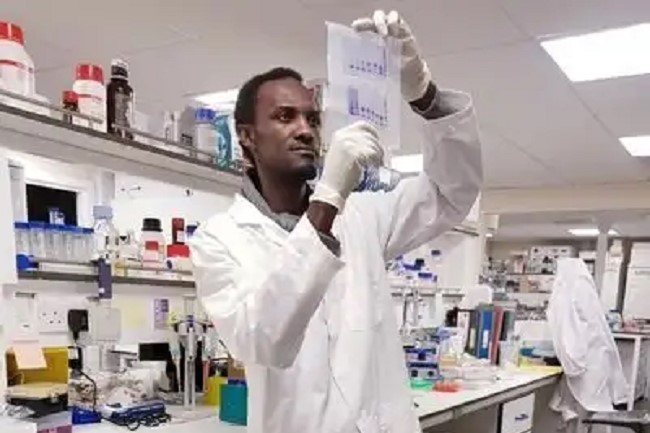
Maina, a neuroscientist and Adviser to Gov Mai Mala Buni on Science, Research and Innovation, noted that metals like cadmium, lead and arsenic were potential triggers of CKD and should not be near the environment in normal circumstances.
“If you find them close to your environment, then know that they can result in not only kidney disease but also other conditions like cancer and dementia,” he said.
The director said the report also revealed that CKD was significantly driven by known conditions like diabetes and hypertension, adding that fishermen in the area were mostly affected by the disease as compared to others.
He said BioRTC, in collaboration with a 50-man team of scientists from US, UK, Ghana, among others, collected over 3,000 human and environmental samples, including urine, blood, food items, farm soil, river and borehole water for the research.
The director listed the experts who participated in the state government-sponsored research to include nephrologists, geologists, chemists, physicians, geneticists and environmental scientists.
Maina, the recently turbaned “Shettima Ilmube” of Damaturu Emirate Council, however, emphasised that a more detailed and comprehensive report on the research would be made available in January 2026.
On dementia research recently launched by the centre in Damaturu, he said, life style information, blood samples and skin biopsies of 1,200 high risk individuals were collected for genetic analysis and screening for biomarkers.
Dementia is a condition associated with memory loss that gradually progresses into confusion, hallucination and the inability to manage oneself.
According to Maina, although dementia is associated with aging, it is not a normal part of aging.
The director said through the Induced Plurepotent Stem Cells (iPSCs) technology, tissue samples could be used to analyse dementia, especially in the absence of brain donors.
“If you collect a small pinch of tissue or even blood, you can go into the laboratory and convert these into stem cells. We can then further convert these stem cells into brain cells.
“Then we can now grow the brain cells using those ones, and these brain cells will have similar biology and property as the individual that gave us the donation of the skin biopsy.
“This means that if a person is at risk of dementia, we can test in his cells how to understand the risk and to prevent it as if it is happening in him, but without him giving us his brain,” Maina said.
He described the iPSCs as an essential technology through which drugs could be developed and prescribed for the treatment of dementia and other conditions in the near future.
The director said the centre decided to embark on dementia research as a proactive measure against the condition, which, according to recent studies, could surge by 300 percent in Africa in the next 25 years.
“The financial burden of dementia, globally, is also over $3 trillion. It will be more crippling to Africa than the West.
“This is why some people say dementia is worse than cancer because you can still remember and pray even on your sick bed. You can say your prayer before you die.
“But for dementia, you can stop being in this world decades before you are gone,” Maina said.
He commended the Buni-led administration for providing operational funds to the BioRTC, sponsoring its staff for foreign training and constructing the centre’s permanent office accommodation, which would be inaugurated in January.
The director said BioRTC was founded by him in 2021 with support from officials of the university and state government, adding that the centre had trained over 1,000 scientists on research and innovation since its establishment.
Maina, a visiting Prof. at University of Sussex, England, said through his foreign contacts, BioRTC had attracted funds for research and N6 billion worth of equipment, including high-end laser confocal microscopes and circular dichroism machine.
He identified corruption within and outside academia, inadequate funding and equipment as some of the drawbacks of research and innovation in Nigeria and other African countries.
The director, therefore, called on government and philanthropists to embrace the culture of supporting research and innovation financially, and promote talented scientists whose inventions could attract funding and investments.
“This will lead to solving societal problems; showing the value of science, increasing the visibility of our impact and make us among the power houses,” he said.
By Nabilu Balarabe