

On a rainy evening on a Nigerian highway, a tanker overturned, blocking the road.
As a result, some victims died immediately, while others later died in crowded hospitals, leaving families in grief and confusion.
Such incidents therefore reveal why Nigeria is reassessing its disaster and epidemic preparedness.
Moreover, recurring emergencies continue to expose gaps in coordination, response capacity, and the humane management of mass fatalities.
Across the country, floods, explosions, road crashes, and disease outbreaks have repeatedly tested emergency systems.
Consequently, families are often left struggling with loss and unanswered questions.
Questions such as who identifies the dead, ensures bodies are handled with dignity, and supports survivors have long exposed weaknesses in Nigeria’s response framework.
Data further highlight the scale of these challenges.
Between 2020 and 2024, Nigeria recorded over 150 infectious disease outbreaks, including cholera, Lassa fever, and measles, revealing gaps in rapid response, according to the Nigeria Centre for Disease Control (NCDC).
In addition, the Federal Road Safety Corps (FRSC) reports that Lagos, Kano, and Rivers states account for nearly 35 per cent of road fatalities, with unsafe practices such as fuel scooping and overloading contributing heavily.
Similarly, surveys by the West African Society of Parenteral and Enteral Nutrition (WASPEN) indicate that malnutrition affects up to 45 per cent of patients in surgical and paediatric wards in northern tertiary hospitals, increasing recovery times, infections, and readmissions.
Albeit these challenges, authorities say the gaps are now being addressed.
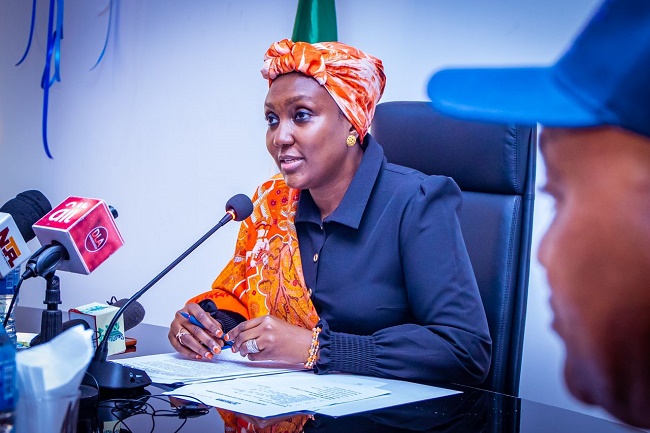
In Abuja, the National Emergency Management Agency (NEMA) inaugurated Nigeria’s first National Mass Fatality Response Plan.
The framework is designed to improve coordination, clarify responsibilities, and ensure dignified handling of victims during large-scale disasters.
According to NEMA’s Director-General, Mrs. Zubaida Umar, the plan was developed in response to lessons drawn from previous emergencies.
“This document is a response to what we saw in past disasters.
“We now have clear procedures, defined responsibilities, and the right tools to manage mass fatalities with compassion and professionalism,” Umar said.
She noted that mass fatality incidents, ranging from explosions and floods to building collapses and epidemics, have become increasingly common across the country.
Umar attributed the trend to climate change-induced flooding, rapid urbanisation, strained infrastructure, and rising insecurity.
She added that each incident leaves behind not only casualties, but families searching for answers and closure.
Moreover, she explained that the new response plan prioritises coordinated action across federal, state, and local governments to address past challenges of fragmented responses and overlapping mandates.
“In the past, overlapping mandates and unclear chains of command often resulted in confusion, duplication of efforts or neglect,” Umar said.
Unlike previous emergency responses, where bodies were sometimes mishandled, poorly documented, or left unaccounted for, she said NEMA now has standard operating procedures, trained personnel, and essential resources, including body bags.
According to her, the plan establishes clear protocols for identification, documentation, storage, and burial or release of remains, while taking cultural and religious sensitivities into account.
“The goal is dignity for the dead and hope for survivors,” Umar said, saying the initiative was a shift from reactive to proactive disaster management.
Developed through stakeholder consultations and evidence-based processes, the framework assigns responsibilities across all tiers of government and relevant agencies.
Running from 2025 to 2029, Umar said the plan is designed as a living document that will be periodically reviewed and adapted as new risks and lessons emerge.
Beyond policy formulation, she stressed that the document must guide training, simulations, and real-time operations to restore public confidence and improve outcomes during emergencies.
While natural disasters and epidemics often dominate public attention, officials say road traffic crashes remain Nigeria’s most persistent source of mass fatalities.
Mr. Hyginus Omeje, Assistant Corps Marshal of the Federal Road Safety Corps (FRSC), said Nigerian roads have effectively become the country’s most consistent disaster zone.
“In 2024 alone, more than 5,400 people were killed on Nigerian roads, a seven per cent increase from the previous year.
“This is in spite of a reduction in the total number of crashes and injuries,” Omeje said.
He added that tanker explosions, highway collisions, and urban road accidents occur daily, overwhelming emergency responders and devastating families.
Omeje also identified fuel scooping from fallen tankers as one of the most dangerous practices, noting that poverty and desperation continue to drive the activity.
According to him, more than 400 people died in 2024 alone while attempting to scoop fuel from overturned tankers.
Human factors, he said, remain central to the crisis.
“Reckless driving, speeding, overloading, fatigue and poor road discipline continue to fuel Nigeria’s high fatality rates,” Omeje said.
In spite of the progress in reducing crash numbers, he noted that Nigeria remains among countries with the highest road accident rates globally, contributing nearly 10 per cent of road fatalities worldwide.
Omeje called for the declaration of a state of emergency on Nigerian roads, warning that without sustained intervention, road traffic deaths would continue to overshadow other disasters.
“Daily on Nigerian roads, lives are lost. We don’t need to wait for another tragedy before identifying that there are gaps,” he said.
He added that road crashes are one of the most frequent sources of mass fatalities, reinforcing the need for a comprehensive national response framework.
Nigeria’s renewed commitment to humane disaster response has drawn support from international partners.
Dr Latifa Arfaoui, Field Coordinator for Health Emergencies at the World Health Organisation (WHO), noted that the National Mass Fatality Response Plan was a “critical milestone” in strengthening Nigeria’s emergency preparedness.
She emphasised that managing the dead with dignity is not merely a technical issue, but a deeply human one.
According to her, respectful handling of remains supports family grieving, community healing, and reduces the long-term psychological toll of disasters.
Furthermore, Arfaoui added that the plan adequately addresses cultural and religious considerations, ensuring that emergency responses do not deepen trauma.
She reaffirmed WHO’s commitment to providing continued technical support to strengthen readiness at national and subnational levels.
Similarly, Ms. Nourane Houas, Protection Coordinator at the International Committee of the Red Cross (ICRC), stressed that implementation would determine the success of the plan.
“The impact of this document lies specifically in execution.
“We stand ready to play our part to ensure it achieves the purpose for which it was created,” Houas said.
She emphasised the importance of wide dissemination to ensure that all agencies and stakeholders understand and apply the framework consistently.
According to her, the ICRC will support training, systems, and tools that improve coordination and uphold the dignity of human remains during mass casualty incidents.
Emergency response, experts say, extends beyond disaster sites to hospitals and military medical facilities.
In Kaduna, the Chief of Air Staff, Air Marshal Hasan Abubakar, underscored the role of healthcare professionals while addressing Nigerian Air Force nurses during a Mandatory Continuing Professional Development Programme.
“In an era marked by epidemics, disasters and tumultuous conflicts, the role of healthcare professionals, especially nurses, has never been more critical.
“Your expertise forms the backbone of our medical response capabilities,” Abubakar said.
He added that nurses play a vital role in caring for the injured, maintaining operational continuity, and supporting humanitarian and disaster relief operations.
The training, organised in collaboration with the Nursing and Midwifery Council of Nigeria, focused on emergency preparedness and disaster response within the Nigerian Air Force.
According to Abubakar, such programmes help build resilience, encourage innovation, and strengthen collaboration among healthcare workers.
Even when disaster victims survive and reach health facilities, another challenge often threatens recovery.
Dr Teresa Pounds, President of WASPEN, described hospital malnutrition as a “silent epidemic”.
Speaking during the 2025 Malnutrition Awareness Week, Pounds said that globally, between 20 and 50 per cent of hospitalised patients suffer from malnutrition.
She added that emerging studies from tertiary hospitals in Nigeria suggest inpatient malnutrition rates of 30 to 45 per cent, especially among surgical, paediatric, oncology, and elderly patients.
Pounds cited findings from Nasarawa, Borno, and Enugu states, noting high levels of malnutrition among hospitalised children and elderly patients.
“Malnutrition in the community and in hospitals are two sides of the same coin,” she said.
She called for the integration of clinical nutrition into national health strategies, stressing that addressing malnutrition is essential for improving patient outcomes, reducing healthcare costs, and strengthening resilience during emergencies.
Stakeholders say initiatives such as the National Mass Fatality Response Plan, road safety advocacy, military healthcare training, and increased attention to hospital nutrition reflect a growing recognition that preparedness saves lives and preserves dignity.
For NEMA, the focus is ensuring the new plan does not remain a document on the shelf; it must become “a living tool,” guiding daily operations, inter-agency collaboration, and training.
By Abiemwense Moru, News Agency of Nigeria (NAN)