

Nigeria’s natural resources in communities in states like Zamfara, Nasarawa, Niger and Cross River are being extracted and carted away without recourse to the people and environment. Similarly, the gaps in monitoring and regulation of the solid minerals sector give the impression that government institutions are surrendering to foreign interests.
Executive Director, Renevlyn Development Initiative (RDI), Philip Jakpor, made the submission in Lagos on Thursday, December 11, 2025, in his welcome words at the official launch of Silent Conquest: The Chinese Infiltration of Nigeria’s Solid Minerals Sector, a report influenced by RDI’s work in host communities across Nigeria where sold mineral is mined.
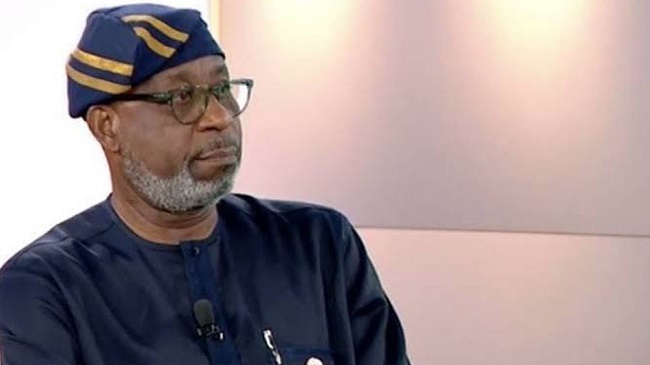
“The report reminds us that Nigeria’s solid minerals sector holds as much potentials as oil and gas and, when transparently harnessed and managed, could bring prosperity to the local communities and the nation at large.
“Unfortunately, like oil and gas, we have observed that the solid mineral sector is opaque and allows players, especially the foreign players, to extract without responsibility, leaving host communities empty handed,” stated Jakpor, co-author of Silent Conquest.
The findings, he disclosed, show that the country’s invasion, which most Nigerians fear, has already happened.
“It is the Chinese that have invaded all the spaces where solid minerals like gold and transition minerals like lithium are found. From Nasarawa to Zamfara, Niger, Kwara, Ogun and Abia to Akwa Ibom the story is the same. Not only has the sector been captured, but the players are also not ready to play by our rules. That is the bad news.”
He added: “We only get some little succor from the activities of some agencies of government like the EFCC that has been up and doing in checkmating unlicensed and illegal mining. The EFCC has been very proactive and have their hands full with arrests, prosecutions and arraignments of illegal Chinese miners and their local collaborators.
“The NSCDC has also been very active in that space. Disturbingly, we have seen some security agencies fighting each other to protect the illegal miners and the report also draws a nexus between illegal mining and terrorism currently ravaging the northern part of the country.
“The recent proposal by governors of northern Nigeria to ban mining for six months to checkmate terrorism financing should set us thinking. It should make us ask questions and the answers are in plain sight. What we have documented in the report we are launching today is happening around us, it is happening in our communities. We read it, watch it and listen to it on radio. But if we continue to overlook or gloss over it, it will become a monster like we have seen in Nigeria’s Niger Delta where oil has become a curse.”
Samuel Orovwuje, co-author of Silent Conquest, described the event as being more than the unveiling of a report.
“It is a call to attention, a call to accountability, and ultimately, a call to action. We gather here because the future of our nation’s mineral wealth – and the dignity of our communities who live on these lands – cannot be left to chance, silence, or external interests.”
Silent Conquest, according to him, began as a simple inquiry on how Nigeria, a country blessed with vast solid minerals, has become a landscape of unchecked extraction, foreign infiltration, and institutional vulnerability.
“The answers we found were deeper and more consequential than we anticipated. What emerged was not just a narrative of illegal mining, but a story of governance failure, quiet incursions, and the gradual erosion of state authority across mineral-bearing regions.
“This work is the product of months of research, careful documentation, and the difficult task of distilling complex incidents into a coherent national story. It draws on verifiable data, policy audits, investigative reports, field accounts, and official records. At every stage, we were guided by one principle: truth must serve the public interest.
“But this launch is not about pointing fingers. It is about laying a foundation for reform.
“It is about insisting that Nigeria’s minerals do more than enrich shadow networks – that they contribute meaningfully to our economic diversification, industrial development, and collective prosperity. It is about strengthening the institutions that stand between national resources and global exploitation. And it is about ensuring that Nigeria’s sovereignty is neither negotiated nor quietly eroded under the weight of foreign interests and internal collusion.
“As we unveil Silent Conquest today, we do so with humility, clarity of purpose, and a firm belief that evidence-based work can change the direction of public policy. I extend my deep appreciation to colleagues, reviewers, researchers, civil society partners, and every institution that contributes to the ongoing struggle for transparency and accountability in our extractive sector.”