

The United Nations Human Settlements Programme (UN-Habitat) has expressed its profound sorrow and solidarity with the governments and people affected by the catastrophic flooding and landslides triggered by the convergence of tropical cyclones Senyar and Ditwah.
UN-Habitat calls on all partners and humanitarian actors to support life-saving activities to prevent more losses and support vulnerable affected communities, while appreciating ongoing efforts by people, communities, governments and international humanitarian organisations.
The cyclonic events that have affected several countries in South and Southeast Asia have severely impacted cities and human settlements, homes, infrastructure, and livelihoods in Indonesia, Sri Lanka, Thailand, and Malaysia.
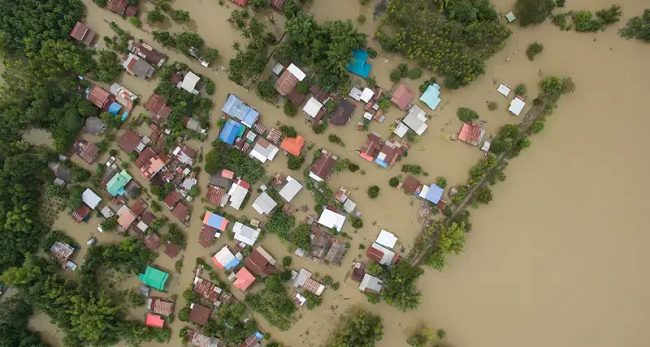
The staggering toll of the twin cyclones
The scale of this disaster is staggering and calls for a unified and robust response rooted in climate resilience and sustainable urban recovery. Preliminary reports indicate a heavy humanitarian toll, with nearly 1,000 lives lost across the region.
In Indonesia, Northern Sumatra was severely affected, with over 500 fatalities and many more people missing as of December 1, 2025. Large-scale deforestation worsened the impact, triggering landslides that swept debris into residential areas. More than 1.4 million residents have been affected.
Sri Lanka is experiencing its worst flooding in two decades, with over 1.3 million people affected and more than 360 confirmed dead and many more still missing as of 2 December 2025. The cyclone damaged critical infrastructure across the entire island, rendering many cities inaccessible due to damage to roads and rail networks. Power outages and damage to communication infrastructure are affecting multiple communities, including the most vulnerable.
In Thailand, floodwaters reached up to 2.5 meters in Hat Yai, a major economic hub, causing daily trade losses estimated at nearly $47 million. The southern floods have killed 170 people and injured more than 100 others, with numbers expected to rise.
In Malaysia, although the number of evacuees has decreased, 14,040 flood victims from 4,518 families remained displaced across 8 states as of December 1, 2025.
Beyond the immediate loss of life, the storms have forced hundreds of thousands of people from their homes into emergency shelters. Critical urban and rural infrastructure – including roads, bridges and communication networks – has been severely compromised, cutting off aid access to vulnerable and often informal settlements. These dynamics worsen the already critical global housing crisis affecting almost 3 billion people globally.
Resilient settlements and urban planning
These climate-induced disasters are a stark reminder of the extreme vulnerability of the region’s unplanned and rapidly growing cities and towns to the intensifying impacts of the climate crisis. Informal settlements and slums remain the most vulnerable. For UN-Habitat, the most urgent concern is the devastation to the housing sector, which usually makes up around 80 per cent of the infrastructure in cities and provides access to basic services and safety.
Thousands of housing units have been destroyed or severely damaged, underscoring the need to always integrate disaster risk reduction and climate adaptation strategies into all settlement planning, both urban and rural, and policy frameworks, building resilience.
Building back better
As the immediate life-saving efforts are made, focus should, gradually, intensify towards the principles of building back better. UN-Habitat believes in building the foundations for a sustainable and resilient development right from the emergency phase. We have seen in many urban disasters, that “temporary shelters” become de-facto permanent, adding future vulnerability to the already high-risk areas in fragile landscapes and cities. The poor and vulnerable communities suffer the most and cannot quickly recover after such disasters.
UN-Habitat, therefore, has activated its emergency protocols and is preparing to deploy technical expertise to Sri Lanka in support of national and local authorities in three priority areas essential for urban recovery and resilience building:
- Resilient housing and basic services: Providing technical support for community-driven housing reconstruction and basic service recovery that incorporates climate-resilient designs and promotes the use of sustainable, locally available and appropriate materials.
- Risk-informed spatial planning: Supporting the integration of climate risk mapping and disaster risk reduction measures into urban and regional planning, avoiding risk prone areas and guiding safe land-use and settlement development.
- Strengthening tenure security: Assisting local authorities to use recovery efforts as an opportunity to formalise land tenure for vulnerable families, enabling secure investment in permanent and resilient housing.
The road to recovery and resilience building requires sustained commitment and significant resources. UN-Habitat urges the international community, development partners, and financial institutions to stand in solidarity with the affected countries and contribute to a resilient response and sustainable reconstruction efforts ensuring resilient housing solutions.
UN-Habitat reaffirms its commitment to supporting the governments and people of the affected countries as they rebuild their homes and create stronger, safer, and more resilient communities.