

A tribute to Governor Mallam Dikko Umaru Radda of Katsina State on his Conferment as Champion of Green Governance by the Forestry Association of Nigeria
When Mallam Dikko Umaru Radda assumed office as Governor of Katsina State, few could have predicted the scale of transformation that was about to unfold. In a country where environmental decline, insecurity, poverty and institutional decay often conspire to frustrate development ambitions, Governor Radda has shown that visionary leadership; anchored on planning, discipline and courage can still change the direction of an entire state.
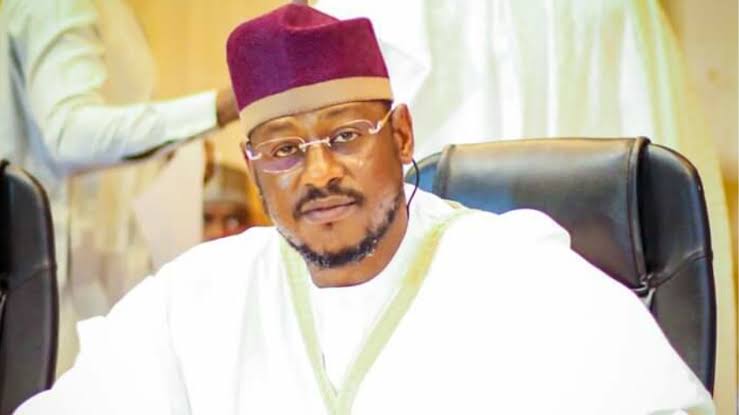
It is for this reason that the Forestry Association of Nigeria has honoured him with the national award of Champion of Green Governance. Yet the award, impressive as it is, only scratches the surface of a story far larger, and far more consequential, than any plaque or citation can capture.
Governor Radda has not only become a leading voice in environmental restoration; he has also distinguished himself as arguably the most strategic and results-oriented governor in Nigeria today. His governance style is not episodic but integrated; carefully stitched together like a master plan whose components strengthen one another.
At the heart of Radda’s approach is the belief that sustainable development cannot thrive in the absence of strong institutions. He began by building a climate governance structure that is unparalleled in the country. The creation of the Katsina State Climate Change Council and its Secretariat placed environmental policy at the highest level of executive decision-making.
Reporting directly to the Governor, the Secretariat was designed to bypass the bureaucratic inertia that so often stalls development. Its mandate is clear: harmonise state initiatives, oversee donor-funded programmes, accelerate climate investments and ensure that every ministry, department and local government authority operates with climate consciousness.
This structural foundation was soon fortified by one of the most impressive administrative reforms ever recorded at the subnational level in Nigeria: the deployment of trained climate-designated officers across all 41 MDAs and across all 34 LGAs. Never before has climate governance been mainstreamed so thoroughly at the grassroots in any Nigerian state.
By doing this, Radda ensured that climate action is not confined to pledges, speeches or external funding proposals, but becomes a day-to-day government responsibility; embedded in agriculture, health, education, works, water supply, urban planning and finance.
Recognising the urgent challenge of rising urban temperatures and deteriorating city environments, the Governor created a dedicated Department of Urban Greenery – another first in Nigeria. The department is aggressively implementing tree-planting corridors, solar-powered streetlight retrofits and rainwater harvesting systems, making Katsina one of the first states ready to tap into the global carbon-credit market. Already, the carbon footprint of major urban clusters is diminishing, and the environmental landscape is being reshaped into one that supports healthier, cooler, more livable cities.
But Governor Radda’s vision goes far beyond institution-building. It extends deeply into the physical, ecological and economic transformation of the state. His “Green Wall Katsina” initiative; a five-year plan to plant ten million trees across the state is emblematic of the scale at which he operates.
With over ₦3 billion committed so far and more than 2.2 million seedlings already planted across frontline LGAs like Jibia, Kankia, Danmusa, Batsari and Zango, the project is not merely about planting trees; it is about reclaiming farmland, restoring degraded soils and creating green jobs for young people. Over three thousand temporary jobs have been created, while more than fifty thousand hectares of farmland are projected to be shielded from desert encroachment.
Radda’s agricultural interventions extend into the fields where Katsina’s farmers work daily. Through a ₦1.5 billion partnership with the World Bank’s ACReSAL programme, agroforestry systems now integrate nitrogen-fixing trees into farmlands, improving soil health, reducing fertiliser dependence and stabilising yields. A massive fertiliser programme, backed by a ₦7 billion investment, has made inputs more accessible to over one hundred thousand smallholder farmers.
With the rehabilitation of major irrigation assets like the Sabke and Gwaigwaye dams; supported by an additional ₦2.5 billion, thousands of hectares are being opened for dry-season farming. In a region traditionally bound by rain-fed agriculture, Katsina is steadily moving toward all-year farming.
Environmental emergencies that once tormented communities such as erosion, gully collapse and land degradation are now being contained through check dams and land reclamation works financed by the state. Areas like Malumfashi, Kankara and Funtua, long threatened by erosion, are witnessing the return of arable land and the protection of homes once on the brink of collapse.
If the environment is the foundation of human survival, then access to water, education and healthcare are the pillars of human prosperity. Governor Radda has invested heavily in all three. The “Water for All” initiative is expanding solar-powered boreholes and mini-waterworks across rural and peri-urban communities, supported by ₦4 billion from the state budget and a $5 million ACReSAL grant. Today, more than 300,000 residents in Katsina, Daura, Funtua and adjacent villages have access to clean water. This has profoundly reduced the drudgery of water-fetching—an activity historically borne by women and girls.
In the education sector, the Governor is spearheading the renovation of primary and secondary schools, the establishment of digital learning labs and the retraining of teachers. Over ₦5.8 billion has already been spent on infrastructure, complemented by ₦1.2 billion invested in education technology. The results are palpable: children learning under safer, better-equipped environments; teachers embracing ICT; and a growing generation being prepared not just for job markets of today but for those of the future.
Healthcare reform is unfolding with equal dynamism. With over ₦6.1 billion committed to primary healthcare in 2024 alone – and even more earmarked for 2025 – the state is modernising Primary Healthcare Centres in all 34 LGAs and deploying mobile clinics to reach remote communities. The impacts are far-reaching: better maternal health outcomes, lower infant mortality, and broader access to essential medical services for over 1.5 million rural dwellers.
Economic empowerment remains one of Radda’s strongest governance pillars. Under his watch, initiatives like the Katsina Youth Entrepreneurship Programme (K-YEEP) and the Katsina Women Empowerment Fund (K-WEF) have injected more than ₦2 billion into the hands of young entrepreneurs, artisans and women-led businesses. More than ten thousand jobs (direct and indirect) have emerged across agribusiness, tailoring, ICT and renewable energy value chains.
In the livestock sector, a ₦2 billion commitment to grazing reserves and ranching, notably the Wawi Grazing Reserve, is reducing farmer-herder conflict and promoting more sustainable livestock practices. Meanwhile, Katsina is also emerging as a pioneer in Nigeria’s green transport transition, with a pilot programme introducing electric tricycles and solar-powered charging stations in major urban centres.
The Governor’s boldest and most consequential intervention, however, may well be in the security sector. The Katsina Community Watch Corps (KCWC), created through a ₦6.5 billion investment, has become one of the most effective civilian-led security models in the country. With 2,500 trained and equipped personnel deployed across high-risk LGAs, bandit attacks have sharply declined. As a result, more than 50,000 displaced farmers have returned home; a development that has revived agricultural productivity and enabled the success of environmental programmes that would otherwise have been impossible.
To crown it all, the state has established the Katsina Green Economic Zone, designed to industrialise agro-processing and green manufacturing. With a projected ₦20 billion in PPP investments, the zone will generate thousands of jobs and create economic incentives for tree preservation, thus linking environmental conservation with industrial growth.
What becomes clear when all these efforts are woven together is that Governor Dikko Umaru Radda is not merely running a state; he is engineering a comprehensive development system. He built the institutions; he shaped the laws; he articulated the Katsina Green Agenda; and he invested more than ₦130 billion in one year in green sectors, human capital and security. The harmony between these interventions is unmistakable: security enables farming, farming strengthens food systems, environmental programmes protect farmlands, while empowerment and industrialisation reduce economic pressures on the land.
This is not governance by chance. It is governance by design.
It is systemic, deliberate, and visionary.
And it is why Katsina State today stands as a national leader in climate adaptation, environmental restoration, green economic transition and human development.
In an era where Nigeria urgently needs models that work, Governor Radda has become the example of what purposeful leadership looks like. He is, without exaggeration, one of the best governors in Nigeria today; and his legacy is only just beginning.
On behalf of the good and appreciative people of Katsina State therefore, we say Thank you, the Green Governor.
By Professor Mohammed Al-Amin, Special Adviser on Climate Change to the Katsina State Governor