

The International Energy Agency (IEA) on Wednesday, November 12, 2025, called on governments to diversify supplies and increase cooperation as global need for energy continues to grow.
The Paris-based agency warned of “pressing energy security threats and growing longer-term risks across an unprecedented range of fuels and technologies” as it released its flagship World Energy Outlook.
The outlook highlights that, while renewable energies were deployed at record rates for a 23rd consecutive year in 2024, traditional sources of energy like oil, natural gas and coal also hit all-time highs.
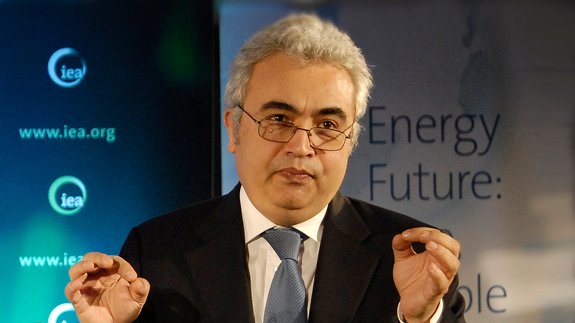
“When we look at the history of the energy world in recent decades, there is no other time when energy security tensions have applied to so many fuels and technologies at once,” said IEA head, Fatih Birol.
“With energy security front and centre for many governments, their responses need to consider the synergies and trade-offs that can arise with other policy goals on affordability, access, competitiveness and climate change.”
The report presents three scenarios “none of which is a forecast” the agency stresses based on the latest data policies, technologies and markets and aided by modelling.
In all three scenarios the Current Policies Scenario (CPS), the Stated Policies Scenario (STEPS) and the Net Zero Emissions by 2050 (NZE) Scenario.
The world is projected to surpass the threshold of 1.5 degrees Celsius above pre-industrial levels.
The NZE scenario however, would see temperatures dropped back below the 1.5-degree threshold in the long term, the agency said.
It insisted that, while the energy sector must be set up to deal with the security risks brought by higher temperatures, “there is still scope to avoid the worst climate outcomes.”
Birol said that the consumption of electricity in no longer growing merely in emerging and developing economies, marking a change in trend.
“Breakneck demand growth from data centres and AI is helping drive up electricity use in advanced economies, too,” Birol said.
“Last year, we said the world was moving quickly into the Age of Electricity and it’s clear today that it has already arrived.
“Global investment in data centres is expected to reach $580 billion in 2025.
“Those who say that ‘data is the new oil’ will note that this surpasses the $540 billion being spent on global oil supply a striking example of the changing nature of modern economies,” the IEA chief noted.
In response to the IEA’s World Energy Outlook, observers have submitted that the governmental OECD and global think tank has shown how it largely does not have its finger on the pulse of where most countries are at regarding support for net zero emissions.
“Even if temperature overshoot is very likely in the next few decades, getting below 1.5C° is still possible with political will. This is crucial, as across the world people and ecosystems are already experiencing more frequent weather disasters, sea level rise and heatwaves. While the likely prioritisation by the IEA of its new Energy ‘Access’ scenario shockingly ditches the UN SDG agreement to overcome energy poverty by 2030 and moves that goal to 2040.”
Dr Stephan Singer, Global Energy Senior Advisor, CAN International, said: “In a nutshell, the IEA is backsliding. As a global think tank, the IEA has largely failed to represent where most countries in the OECD and the developing world are, as they’re supporting net zero emissions with 98% CO2 emissions reductions by mid-century. The IEA has also failed to put the global 1.5 C objective as the fundamental centre piece of its WEO and across all their reasoning and missed out on calling the other scenarios what they are – a strong violation of the Paris Agreement. Even if temperature overshoot is very likely in the next few decades, getting below 1.5C° is still possible with political will.”
Svitlana Romanko, Founder and Executive Director of Razom We Stand, said: “While this vital new report highlights the urgency of quickly transitioning to renewables to achieve energy security and a chance to stop climate disruption, it also gives hope. We can clearly see that clean energy is now cheaper than ever, and its rapid buildout is happening at a faster pace than ever. In Ukraine, this also gives us hope, because the faster we can end global consumption of fossil fuels, especially those from Russia, the quicker we can dry up the Kremlin’s funded war, and have a chance for a just peace in Ukraine.”
Mohamed Adow, Founder and Director of Power Shift Africa, said: “The march of clean energy is now unstoppable and it’s offering a lifeline to people in Africa and around the world living with the impacts of the climate crisis. Not only is it cheaper and cleaner than fossil fuel, renewable energy is also far more agile, adaptable and quicker to get up and running. For Africa this is a huge opportunity. We have an abundance of wind and solar potential that can power our development, but this report also shows that keeping global heating rise to 1.5C is still possible with the right investments and a phase out of fossil fuels.
“We need countries at the COP30 climate summit to heed the message of this report and realise they have nothing to fear from committing to a phaseout of fossil fuels, something that Brazil’s President Lula has mooted could be on the table. In fact, when it comes to the impacts of the climate crisis that are biting hard around the world, countries would be mad not to embrace the benefits of the clean energy revolution.”
Kaisa Kosonen, Senior Policy Advisor, Greenpeace Nordic, said: “This report clearly shows we still have a choice: a path still exists to avoid the worst of climate disasters by defending the Paris Agreement 1.5°C warming limit and it comes with many benefits. That’s the path governments in Belém must take, by agreeing on a roadmap for a fair fossil fuel phase out. The great news here is that solar, wind and energy smart solutions are ready to deliver faster CO2 cuts than what countries currently assume in their pledged climate targets. So the key is to push fossil fuels out of the way, and eliminate barriers related to grids, storage and climate finance gaps.
“Regardless of which future scenario you looked at, the winners are clear. The future will be increasingly powered by cheap, abundant renewable energy, coupled with electrification. But we need to speed up and scale up and governments at COP30 must now agree on a global response plan to urgently bridge the 1.5°C ambition gap.”
David Tong, Global Industry Campaign Manager at Oil Change International, said: “This year’s World Energy Outlook makes the choice clear: uphold 1.5ºC with no new fossil fuels and a just energy transition, accept a business-as-usual path to 2.5ºC, or backslide into a nightmare future. Under U.S. pressure, the IEA reintroduced a regressive obsolete scenario. Despite the industry spin, the facts of the WEO show Donald Trump’s path is a dystopian energy fantasy with high energy costs and climate disaster. The IEA affirms that breaking free from fossil fuels is the best, most affordable way to secure energy for all. At COP30, governments must commit to a fast, fair, and funded phase-out of fossil fuels.”
Maria Pastukhova, Programme Leader Energy Transition at E3G, said: “This year’s World Energy Outlook makes the choices for the global energy system and the global economy unambiguous. The Current Policies Scenario points to continued fossil fuel dependence, persistent market volatility, and structurally high energy prices… If countries want to grow their economies and protect their citizens from rollercoaster energy prices, they need to focus relentlessly on energy efficiency and the decarbonisation of energy demand. These are not just climate measures: they are economic imperatives.”
Dr. Rachel Cleetus, Senior Policy Director for Climate and Energy, Union of Concerned Scientists, said: “The IEA’s latest report underscores the daunting challenge ahead for rapidly decarbonizing the world’s economy but also highlights the tremendous opportunity to do so in a way that prioritizes renewable energy, energy efficiency, climate resilience and addressing energy poverty. With the world on the brink of overshooting 1.5C, it’s crucial to double down on clean energy policies and investments that align with climate and sustainable development goals.
“A fast fair phaseout of fossil fuels – coal, oil and gas – is also essential, yet nations continue to recklessly expand these polluting sources of energy. Contrary to the IEA’s framing, cooperation among countries will be key to accelerating the manufacture and deployment of clean energy technologies globally. At COP30, we need world leaders to live up to the commitments they made in Dubai to advance a clean energy transition within this critical decade.”
Mariana Paoli, Global Advocacy Lead, Christian Aid, said: “The IEA’s report confirms what many climate-vulnerable communities have known for years: the fossil fuel era is ending, but governments are still dragging their feet when it comes to building the clean energy systems that need to replace it. Oil and coal are peaking, renewables are surging, yet public money continues to flow into new fossil fuel projects that the IEA itself says we simply don’t need.
“This report underlines why the issue of funding the energy transition is so important. Developing countries want to embrace the benefits of clean energy and not follow the destructive fossil fuel development of the global north, but they need climate finance to allow them to do that.”
Janet Milongo, Senior Manager Energy Transition, CAN International, said: “The IEA World Energy Outlook illustrates that a full, fast, and funded phase-out of all fossil fuels is critical and urgent. The world needs renewable energy to deliver universal access and eradication of energy poverty for all people, while attaining the 1.5°C survival limit. Nuclear energy and other false solutions only delay real progress. Governments must lead the way to realize 100% renewables through enabling policies and step up with public finance to power a truly just transition that protects people, not polluters.”
Sriram Madhusoodanan, US Climate Action Network, Director of Policy & Advocacy, said: “The latest edition of the IEA’s World Energy Outlook is one more sad example of how the regressive mindset and bullying actions of the US government are having deadly consequences even though they are absent at COP30. Despite the signs of caving to US pressure – the scenarios outlined in the report must be a wake up call to delegates in Belem – most especially for Global North countries – if we are to stand any chance of a liveable planet. Delegates at COP30 have an opportunity to choose which of these scenarios becomes a lived reality for billions around the world. We hope they rise to the moment.”
Hari Krishna Nibanupudi, Global Climate Change Adviser, HelpAge International, said: “The IEA’s outlook confirms a stark truth: pathways that keep fossil fuels flowing lock in deadly heat, energy poverty and widening inequality. Only a rapid, fair transition to renewables and efficiency can protect lives – especially older people – while delivering affordable, clean energy and honouring the 1.5°C promise to future generations in all countries.”