

At COP30, 11 governments joined over 300 companies and civil society groups in endorsing the Principles for Responsible Timber Construction (Principles), a science-based framework to guide the responsible use of timber from forest to building. This endorsement, it was gathered, marks a significant step in aligning global efforts to transform the global construction industry in ways that benefit climate, nature and people.
The Principles were developed through a collaborative process co-led by the Forest & Climate
Leaders’ Partnership, Built by Nature and Bauhaus Earth, along with a wide coalition of experts,
governments and industry leaders. This brought together a wide array of stakeholders from around the world for extensive collaboration on making the Principles a reality on the road to COP30.
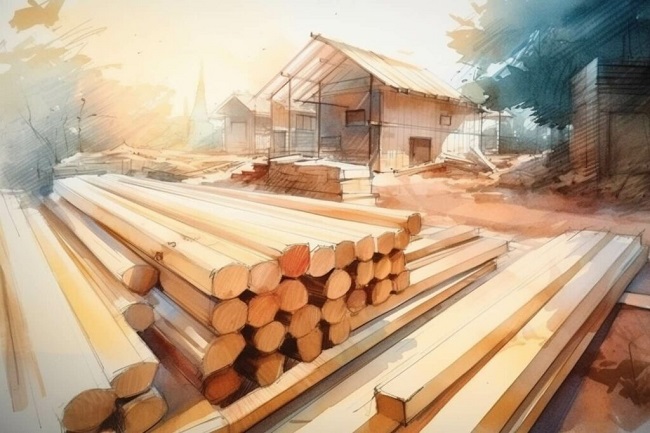
According to the promoters, the endorsement represents the first time such a diverse global group – from forest managers and certification bodies to developers, architects, engineers, investors and national governments – has aligned behind one common approach to scaling timber in construction.
Vice Minister Carlos Isaac Pérez, Ministry of Environment and Energy, Costa Rica, stated: “Costa Rica not only adheres to these Principles but also actively promotes them internationally, encouraging adoption by other producer countries committed to transparency, traceability and deforestation-free wood products.”
Welcoming the launch and representing Canada’s co-leadership of the FCLP Greening Construction with Sustainable Wood initiative, Emmanuel Kamarianakis, Ambassador of Canada to Brazil, said: “This best practice approach can transform the market for responsible timber construction, providing a win-win for the climate and global goals to halt deforestation. These Principles and the guidance that accompanies them are a testament to the tremendous collaboration between stakeholders across all sectors with a determination to turn an aspiration into a reality. Together, the five principles provide a common language and approach that can be used to inform the development of public policy, regulation and industry practices.”
Andrew Waugh, Co-Founder of Waugh Thistleton Architects added: “These principles reflect
everything we’ve been advocating for: low-carbon, high-performance buildings that are beautiful, healthy, and financially viable. Timber allows us to build at scale without compromising the planet. The Principles give the industry a clear framework to move from innovation to mainstream adoption, which is exactly what the future demands.”
Paul King, CEO of not-for-profit Built by Nature stated: “These Principles were developed to build trust and confidence across the value chain—but we know they’re already being applied. This year’s Built by Nature Prize attracted nearly 400 entries from almost 40 countries, showcasing completed timber buildings that bring the Principles to life. That global response proves they’re not just aspirational – they’re achievable. All five Principles are ambitious yet realistic. To drive the transition, we need in the built environment, we must apply them everywhere, all the time.”
Demand for new buildings is expected to double by 2050, especially in the Global South. At the
same time, the construction sector already accounts for nearly 40 per cent of global greenhouse gas emissions, with the production of building materials like concrete and steel making up at least a quarter of those emissions. The Principles set out how timber can safely replace more carbon intensive materials, store carbon in buildings for decades, and create economic value for forest communities, but only if demand is matched by sustainable forest management.
The framework draws on IPCC science and builds on the FCLP “Greening Construction with
Sustainable Wood” initiative launched at COP28 in Dubai, which was backed by 17 governments. Today’s endorsements show that this work has matured into an actionable, globally accepted model for the construction sector. Additional governments, companies, and non-governmental actors are expected to continue to back the Principles throughout COP30 and beyond.