

The Adaptation Fund (AF) Board has accredited three new national implementing entities (NIEs), that enhance the Fund’s ability to support vulnerable developing countries in adapting to the impacts of climate change in Africa: the Environmental Investment Fund (EIF) of Namibia, the Bank of Industry (BOI) of Nigeria, and La Banque Agricole (LBA) of Senegal.
The new accreditations mark a significant milestone for each of the host countries in combating climate change, especially given that national financial institutions and trust funds play an important role in helping to build countries’ adaptation capacities. They do this by providing a range of financial products and services, including grants, concessional loans, risk-sharing facilities, and insurance.
The Fund now has 39 NIEs accredited across the globe under its Direct Access modality that builds country ownership in adaptation.
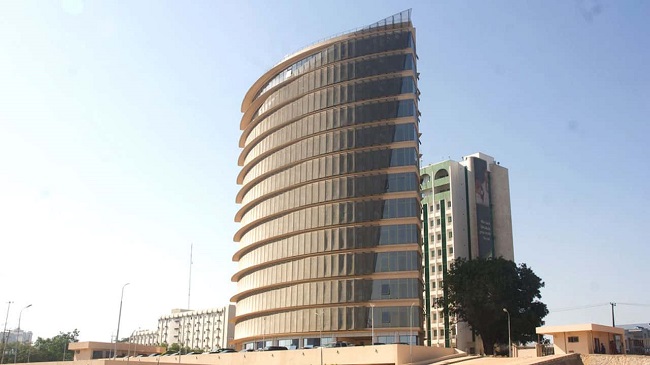
The accreditation of BOI represents a significant development for Nigeria as it becomes the country’s first accredited NIE. BOI achieved its accreditation in September 2025, reaffirming its compliance with the Fund’s fiduciary standards and its capacity to identify and develop effective adaptation projects.
The accreditation follows a comprehensive review by AF’s independent Accreditation Panel, which assessed BOI’s application against rigorous criteria covering financial management, institutional capacity, transparency, and environmental and social safeguards.
As Nigeria’s oldest and largest development finance institution, BOI’s accreditation enables it to access funding and develop projects directly that will benefit the most vulnerable communities disproportionately affected by climate change.
Meanwhile, the accreditation of La Banque Agricole (LBA) marks the second NIE to be accredited in Senegal. Joining the Centre de Suivi Ecologique – which was among the Fund’s first NIEs accredited 15 years ago when the Fund pioneered Direct Access. .
The Fund’s Board doubled the number of NIEs that can be accredited per country to two in 2021 to enable countries to further broaden their expertise and capacities to develop adaptation projects.
“It is great to see Namibia, Nigeria and Senegal strengthen and add to their capacities to develop effective and needed adaptation projects, which ultimately will benefit more people in communities most at risk to climate change impacts,” said Mikko Ollikainen, Head of the AF.