

Some energy experts have expressed concern over the Federal Government’s approval of a 15 per cent import duty on petrol and diesel, saying it may drive up fuel prices.
They expressed their concerns in separate interviews on Saturday, November 1, 2025, in Lagos.
On Oct. 29, President Bola Tinubu approved a 15 per cent import tariff on petrol and diesel, a policy expected to raise the landing cost of imported fuel.
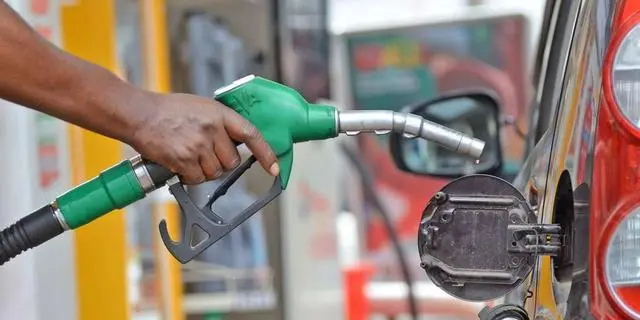
The experts said that the move could ranslate into higher pump prices for consumers, with some estimating an increase of up to N150 per litre or more.
Dr Ayodele Oni, Partner and Chair of the Energy and Natural Resources Practice Group, Bloomfield Law Practice, said the policy, though aimed at protecting local refining, could worsen inflation and cost-of-living pressures.
“The imposition of a 15 per cent duty will increase the landing cost of imported fuel, and this additional cost will be passed on to consumers.
“In a deregulated economy like Nigeria’s, where prices are determined by market forces, there’s a strong possibility of price volatility,” Oni explained.
Oni noted that the government’s stated objectives for the policy include strengthening national energy security, supporting domestic refining capacity, and ensuring competitive market stability.
“By making imported fuel more expensive, local refineries will become more competitive.
“This should, in theory, encourage domestic production and reduce dependence on imported fuel,” he said.
However, he warned that without adequate infrastructure and operational refineries, the policy could backfire, resulting in fuel scarcity and black-market activities.
“If local refining capacity remains weak, this duty could disrupt supply, as over 60 per cent of Nigeria’s fuel is still imported.
“The government must back this policy with infrastructural support, refinery rehabilitation, and efficient logistics to prevent scarcity,” Oni added.
Oni also emphasised that the increased duty would raise operational costs for importers and marketers, affecting competition and liquidity within the downstream sector.
“This policy could push out smaller independent marketers who may be unable to meet the new cost requirements, leaving the market dominated by larger players,” he said.
As an alternative, Oni advised the government to incentivise local refining through tax holidays, duty-free importation of refining equipment, and infrastructure investment rather than imposing heavy tariffs on imports.
Meanwhile, Petroleum Products Retail Outlets Owners Association of Nigeria (PETROAN), however, lauded th decision, describing it as a step toward achieving energy security and sustainable local refining.
Its national president, Dr Billy Harry, commended President Bola Tinubu for approving the duty, saying it would encourage investment in domestic refining and stabilise the downstream sector.
“This policy will increase local refining capacity, boost the economy, create jobs, and strengthen the Naira
“While there may be short-term challenges such as price hikes and job losses in the import sector, the long-term benefits outweigh the disadvantages,” Harry said.
He urged the Nigerian Midstream and Downstream Petroleum Regulatory Authority (NMDPRA) to ensure that local refineries are properly regulated to prevent monopolistic tendencies.
“We must guard against a situation where a few refineries dominate the market. Monopoly could defeat the purpose of this policy,” he noted.
He also appealed to the Nigerian National Petroleum Company Ltd. (NNPC Ltd.) to guarantee adequate crude oil supply to local refineries to ensure consistent production and prevent scarcity.
A downstream operator who preferred anonymity raised questions about the current state of local refining and transparency in the sector.
“The government has supported local refineries through tax incentives and crude supply in naira, but the cost of locally refined products remains higher than imported fuel.
“Before imposing such tariffs, there should be full transparency about production levels, cost structures, and refinery efficiency,” the source said.
He cautioned that without clear data and accountability, the 15 per cent duty could worsen the situation by raising both local and imported fuel prices simultaneously.
“If imports become more expensive and local refineries can not meet demand, the outcome will be higher prices and scarcity,” he said.
He urged the government to critically assess the timing of the policy and ensure that refinery operations were capable of meeting national fuel demand before implementing the duty.
“Supporting local manufacturing isn’t bad, but it must be backed by transparency and realistic planning,” he added.
According to him, while the 15 per cent import duty aims to stimulate local refining and reduce dependence on imports, its success will depend on transparency, infrastructure, and effective regulation.
The former National Operations Controller of the Independent Petroleum Marketers Association of Nigeria (IPMAN), Mr. Mike Osatuyi, has commended President Bola Tinubu for approving a 15 per cent import duty on petrol and diesel.
In an interview in Lagos on Sunday, Osatuyi said that the policy would protect local refineries and attract new investments into the sector.
He noted that it would ensure the sustainability of both existing and upcoming private refineries, encourage modular refinery operators, and attract foreign investors.
Osatuyi added that the policy would discourage importation of cheaper refined products, improve competition among marketers, and ultimately benefit Nigerians.
“The Federal, State and Local Governments will also gain from increased revenue, job creation, foreign exchange savings, and the stabilisation of the naira,” Osatuyi noted.
According to him, the import duty demonstrates the Tinubu administration’s commitment to protecting domestic investment in the downstream petroleum sector.
He described the Dangote Refinery in Lekki, Lagos, as a “national asset and Nigeria’s energy security facility,” commending its role in reducing dependence on imported petroleum products.
Osatuyi criticised the prolonged non-performance of government-owned refineries like Port Harcourt, Warri, and Kaduna, saying that over ₦11 trillion had been spent between 2010 and 2023 on maintenance and rehabilitation without results.
“It is unpatriotic that attempts to privatize these refineries in 2007 were resisted, costing the nation over ₦264 billion annually in maintenance with zero output,” he said.
He emphasised that the 15 per cent import duty would not primarily serve as a revenue measure but as a protective policy to ensure local refineries remain viable against imported products.
Osatuyi highlighted the growth of Nigeria’s refining capacity, citing the Dangote Refinery’s current 650,000 barrels per day (bpd) capacity – making it the seventh largest in the world – and its planned expansion to 1.4 million bpd, which would make it the largest globally.
He also mentioned other upcoming projects such as the BUA Refinery in Akwa Ibom State with 200,000 bpd capacity and several modular refineries including OPAC, Duport, Niger Delta (Aradel Holdings), Edo, Waltersmith, Azikel, Ogbele, and Abia refineries, with a combined capacity of about 150,000 bpd.
“A responsible government must protect these massive private investments worth billions of dollars,” Osatuyi stated.
He further explained that fears of product scarcity were unfounded, as Dangote Refinery alone could meet national demand and still have excess for export.
The refinery, he said, has a storage capacity of over 4.6 billion litres, 200 loading gantries, and can produce 57 million litres of petrol, 25 million litres of diesel, and 20 million litres of jet fuel daily when fully operational.
Osatuyi urged local refiners to act responsibly and not exploit the import duty policy to make excessive profits.
Stressing that regulators such as the Nigerian Midstream and Downstream Petroleum Regulatory Authority (NMDPRA) must ensure fair pricing and market stability.
He called for vigilance to prevent abuse of the import duty protection, fuel scarcity, or black-market activities.
He noted that the Federal Government’s new centralised revenue collection system, effective January 2026, would ensure compliance.
The former IPMAN official also applauded the President’s directive allowing local refineries to purchase crude oil in Naira, describing it as a major step in stabilising operations and reducing pressure on foreign exchange.
“President Tinubu has again demonstrated courage and patriotism by prioritising national interest over political considerations.
“His decision to impose a 15 per cent import duty on petrol and diesel is a bold step to protect Nigeria’s economic sovereignty,” he said.
By Yunus Yusuf