

Stakeholders comprising trade unions and civil society organisations (CSOs) have called for the urgent reversal of privatisation in the electricity sector and all existing privatisations in the water and waste sectors.
The stakeholders also called for the suspension of ongoing or planned discussions with the World Bank and other International Financial Institutions (IFIs) on the privatisation of public assets.
Their call is contained in a communiqué issued at the end of the National Public Utilities Summit and made available to newsmen on Wednesday, October 29, 2025.
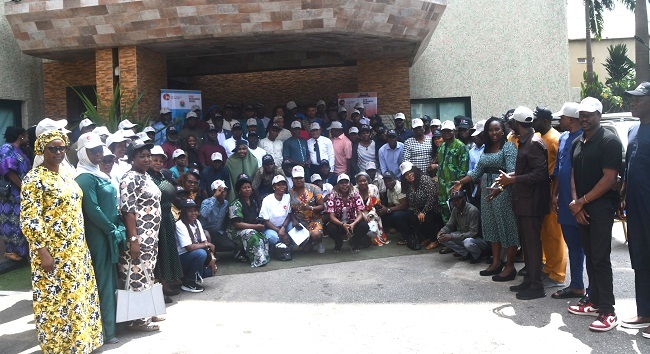
The summit, themed “Promoting Transparency and Decent Work in Supply Chains in Electricity, Water, and Waste Services in Sub-Saharan Africa”, was organised by Public Services International (PSI) in collaboration with DGB Bildungswerk Bund (DGB BW).
The event reviewed the impact of the PSI-DGB project on promoting decent work and addressing privatisation in the water, electricity and waste sectors.
The communiqué was endorsed by the Amalgamated Union of Public Corporations, Civil Service Technical and Recreational Services Employees (AUPCTRE), the National Union of Electricity Employees (NUEE) and their CSO partners under the PSI-DGB project.
The CSO partners include the Renevlyn Development Initiative (RDI), Citizens Free Services Forum (CFSF), Child Health Organisation, and the Union of Kenya Civil Servants (UKCS).
The stakeholders urged the government to adopt Public-Public Partnerships (PUPs) as a sustainable, democratic and just alternative to privatisation which have shown proven success in delivering quality public services without profit motives.
They called on the government to reinvest in human capital within the public sector by allocating sufficient resources for the training, motivation, and retention of workers to promote efficiency, innovation, and transparency.
They also called for stronger social dialogue and collaboration among civil society, trade unions, and other key sectors to hold the government accountable.
They further urged the PSI-DGB to support education projects for workers on the PUP model, which was still at its early stage in Nigeria.
The stakeholders noted that privatisation had failed to serve the public interest, arguing that Nigeria’s electricity sector had neither increased power generation nor improved distribution.
They added that, instead, it had led to escalating tariffs and categorised consumers according to economic status. In the water sector, it had shut off consumers, and in the waste sector, discouraged unionism.
According to the communiqué, public revenues have been plundered and funds that could have been invested in improving public services have been channelled into privatised entities that claimed they would invest in public utilities.
“For instance, the Nigerian government and international funders have ploughed over N2 trillion in bail out funds for the 11 Power distributing companies without any single megawatt added to the 12,500 megawatts obtained in 2013,” they noted.
They linked increased corruption and conflicts of interest to privatisation, noting that opaque contracts that did not pass through due process had created room for private individuals and companies to fleece Nigeria while holding onto public utilities.
They noted that workers in the water, electricity and waste services sectors face precarious work conditions marked by low wages, wage arrears, job insecurity, casualisation, and lack of social protection such as pensions and unemployment insurance.
“These deliberate policies continue to undermine workers’ morale, workers’ dignity, service quality and community well-being.
“Advocates of public sector solutions are largely ignorant on the workings of the Public-Public Partnership Model of managing public utilities and there are few discussions going on about the model,” they said.
By Martha Agas