

After painstaking consultations with several stakeholders and field assessments, Nigeria has eventually validated its National Adaptation Plan (NAP), signaling the nation’s readiness for its submission to the United Nations Framework Convention on Climate Change (UNFCCC) ahead of the Conference of Parties (COP30), which is scheduled to take place from November 10 to 21, 2025, in Belem, Brazil.
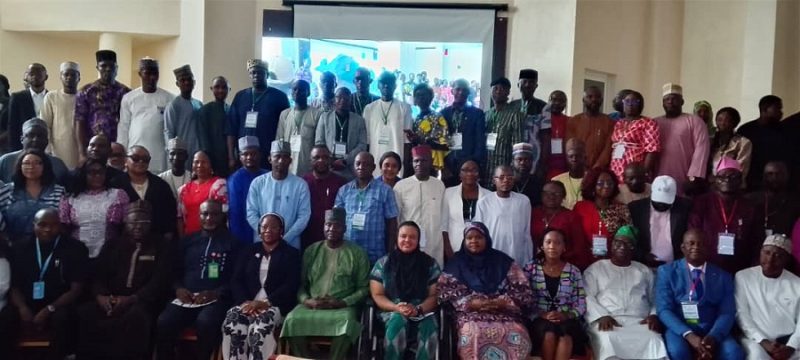
The high-level event, which was organised by the Department of Climate Change (DCC) under the Federal Ministry of Environment in Abuja, Nigeria’s capital, on Wednesday, October 22, 2025, brought together non-state actors and representatives from various Ministries, Departments and Agencies (MDAs) across the 36 states of the federation, including the federal capital territory, who all lauded the process, describing it as being inclusive and encompassing in nature.
Minister of Environment, Balarabe Abbas Lawal, drew attention to Nigeria’s climate vulnerability, such as drought and desertification, rising seas, and flooding, which he said if drastic and decisive actions are not taken now to address them, coping with these impacts in the future will be more difficult and costly.
“Adapting to climate change means taking action to prepare for and adjust to both the current effects of climate change and the predicted impacts in the future,” Lawal, who was represented by the Permanent Secretary (PS) of the Ministry, Mahmud Kambari, said.
Nigeria’s National Adaptation Plan (NAP), conducted with the support of the Green Climate Fund (GCF), focuses on the 13 thematic areas outlined in the National Adaptation Strategy and Plan of Action (NASPA). A key component of the process, the nation’s environment chieftain highlighted, is the Climate Risk and Vulnerability Assessment (CRVA), which identifies community vulnerabilities and suggests adaptation options to address challenges.
Other gaps that would further enrich and make the document more robust were also identified during this process, particularly gender considerations and conflict sensitivity & peacebuilding, which have all been integrated into the document.
“I especially appreciate the NAP Global Network, who supported the country in addressing these gaps,” he stated.
He informed the participants that presently, talks are on with the NAP Global Network and other delivery partners to address other identified gaps such as issues on loss & damage and human mobility, as well as education, to further enhance the document.
Now that the nation has created its NAP, he said, the next stage would be implementation, which calls for everyone to work together to make sure Nigeria can secure the funding it needs, both local and international, to address the effects of climate change, particularly in the area of adaptation.
Mr. Gift Gewona, Task Manager for the United Nations Environment Programme (UNEP) Nigeria, referred to the NAP as a living document that allows Nigeria to plan for its short-term, medium-term and long-term activities to ensure that the resilience of communities is gained.
According to him, the process arose due to Nigeria’s pressing climate challenges, which he assured that he was going to be working with his team members to address.
“I would like to thank the whole team that has been involved in this process. We are going to ensure we implement the plan to finance the global climate fund,” he guaranteed.
The validation of the NAP document, according to Dr. Angelina Ugben, President of Global Disabilities Green Initiative (GDGI), represents more than a policy milestone; it is a crucial opportunity to ensure that no Nigerian is left behind in the collective response to climate change.
She hinted that her organisation strongly advocates for a climate adaptation framework that is inclusive, accessible, and disability-responsive, stressing that persons with disabilities – who are often among the most vulnerable in times of environmental crisis – must be recognised not just as beneficiaries, but as active participants and contributors to national climate planning.
“Inclusion must go beyond consultation – it must be reflected in implementation, with clear strategies for accessibility, representation, and data-driven monitoring to track the impact of climate actions on persons with disabilities,” Dr Ugben stated.
Consequently, the GDGI boss urged that the NAP document should be a bold blueprint for resilience, justice, and equity – one that reflects Nigeria’s diversity and upholds the rights of every citizen, regardless of ability.
In conclusion, this document arrives at a crucial moment as Nigeria aligns itself with global efforts to green its economy. It is anticipated that the insights contained within will significantly contribute to shaping, enriching, and assisting the country in achieving its global climate targets.
By Etta Michael Bisong, Abuja