

As the world gears up for COP30, Africa is amplifying its voice to address one of the most pressing and underfunded challenges of climate change: Loss and Damage. For too long, Africa has borne the brunt of climate impacts, despite contributing a minimal share to global greenhouse gas emissions. From extreme floods to devastating droughts, the continent has witnessed firsthand how climate change can wipe out years of development in a matter of days.
With the path to COP30 now set, Africa’s unified call for loss and damage finance is more urgent than ever. But the pressing question remains: will the Global North finally fulfill its commitments, or will Africa’s fight for justice be sidelined once again?
A Unified Voice for Loss and Damage
At the Second Africa Climate Summit (ACS2) in Addis Ababa, the African Union (AU), in collaboration with the UN Economic Commission for Africa (UNECA), the African Development Bank (AfDB), and the Pan-African Climate Justice Alliance (PACJA), presented a clear and unified position for COP30. The position advocates for comprehensive financial mechanisms to address loss and damage from climate change impacts.
The loss and damage fund agreed upon at COP28 represents a historic step in recognising the severe and irreversible impacts of climate change. However, as Africa has rightly pointed out, this fund must be adequately capitalised and operationalised. The money in this fund must not only be sufficient but must be accessible to those who need it most – vulnerable communities that are often left out of traditional climate finance channels.
Who Holds the Purse Strings?
The issue of climate finance brings with it uncomfortable political economy questions. The Global North, responsible for the bulk of historical emissions, continues to hold control over the financial mechanisms designed to aid the Global South. According to the latest IPCC report, developing countries will require an estimated $1.5 trillion per year in climate finance to meet the needs of mitigation and adaptation.
Yet, the current global climate finance commitments remain a fraction of this amount, with developed nations failing to meet the annual $100 billion target they set at COP15. The question arises: How much longer can the Global South afford to wait for financial support while the Global North continues to shift the burden onto the shoulders of those least responsible for the crisis?
The Financial Mechanism: A Lifeline for Africa
For African nations, the climate finance they require extends beyond mitigation efforts aimed at reducing emissions. The true test lies in how the international community responds to the immediate and long-term losses and damages already being experienced across the continent. The impacts of climate-induced displacement, reduced agricultural productivity, and damaged infrastructure are not hypothetical – they are happening now.
African countries, particularly those in the Sahel, Southern Africa, and the Horn of Africa, face dire consequences. Losses that cannot be prevented must be compensated, and damage that cannot be repaired must be restored. These are the humanitarian and economic needs that the loss and damage fund must address.
Mitigation vs. Adaptation
The debate between mitigation and adaptation is not merely a technical issue – it is deeply political. Africa faces the immediate effects of climate change, and its need for adaptation finance is critical. However, the Global North continues to focus on mitigation, arguing that climate finance should prioritise reducing emissions. But as the Global South deals with the brutal realities of climate impacts, how can we justify spending the lion’s share of climate finance on mitigation while adaptation – so crucial to Africa’s survival – is sidelined?
Herein lies the crux of the matter. Whose mitigation is climate finance and why is it amplifying aspects that resonates with the global north? The answer to these questions is blowing in the hot winds of the Sahara Desert blowing across climate ravaged communities from North Africa to West Africa towards the Kalahari Desert. Indeed, no community is left out.
Historical Injustice
There is a growing sense of frustration in Africa about the industrial North’s insistence on focusing heavily on mitigation rather than adaptation. The focus on mitigation has been characterised as a form of chicanery, a convenient excuse for the Global North to deflect from its responsibility to fund the adaptation needs of Africa. Mitigation efforts, such as reducing global emissions, are important, but they ignore the reality on the ground in Africa. By pushing the mitigation narrative, the Global North diverts attention from the urgent needs of African nations for adaptation.
It allows developed countries to continue with emission reduction schemes where the profit from climate risks while neglecting the financial commitments they made at previous COP meetings, such as the $100 billion annually in climate finance promised to developing nations. While the Global North continues to emphasise reducing carbon footprints, the Global South – especially Africa – faces the current and catastrophic impacts of climate change. There are accusations across of some firms being risk mongers and hunger profiteers and that the whole nature of climate finance rather than solving African climate crisis has reinforced existing status.
Though slightly far-fetched but on second thought holds significant truth that must be carefully interrogated. One thing is, however, certain: it is all not well with the state of climate finance. Multilateral agencies such as UNDP and UNEP have done excellently well in this regard by improving livelihoods without increasing debt burden.
Key Demand for COP30
But loss and damage are not the only areas where African leadership is calling for immediate attention. At COP30, the AU has emphasised the need for a scaling up of investment in adaptation efforts across Africa. This includes enhancing climate resilience in vulnerable sectors such as agriculture, water, energy, and health. Adaptation is not a choice for Africa – it is an imperative for survival. The AU’s agenda for COP30 underscores the need for sustainable development with a focus on equitable financing and resilience-building. The impacts of climate change are not just a threat to the environment – they undermine the very social and economic fabric of African societies. By investing in adaptation, Africa is laying the groundwork for a more resilient future.
Whose Resilience is Adaptation Resilience, Who Benefits?
There are important questions of equity and political economy that must be addressed in scaling up investment for adaptation. Who will benefit from these investments? How will the wealth generated by adaptation and resilience-building be distributed within African nations? Will it continue to flow to the same elites who have historically benefited from climate exploitation, or will it reach the vulnerable communities who need it most? The answer to these questions will determine whether the call for adaptation is truly about resilience or just another tool for maintaining the status quo.
The Need for Justice in Climate Action
Africa’s focus on adaptation is not an opposition to mitigation; it is a call for justice. Africa does not oppose emission reductions; however, it insists that the financial resources promised for adaptation must be honoured. The Global North must prioritise adaptation because it is an immediate need for vulnerable nations. Moreover, the loss and damage fund, which was established at COP28, must be adequately capitalised and made operational to help African countries deal with the irreversible impacts of climate change.
While adaptation is undoubtedly Africa’s priority, the conversation must not be about mitigation versus adaptation – it is about both actions. Mitigation is essential for long-term sustainability, but it must not come at the expense of adaptation. Africa’s future depends on a balanced approach that allows for emission reductions while addressing the immediate survival needs of those already impacted by climate change. The Global North should invest in both mitigation and adaptation simultaneously, acknowledging that Africa is not asking for charity but for equitable access to the financial resources necessary to adapt to a changing climate.
COP30 as a Turning Point
COP30 is a turning point for global climate action. If the Global North continues to push for mitigation-first strategies, while failing to adequately fund adaptation and loss and damage, the climate justice that Africa seeks will remain elusive. However, if the Global North is willing to honor its financial commitments and shift its focus to adaptation, then COP30 could mark the beginning of a new era in climate cooperation. The political economy of climate finance has reached a critical juncture: will the global community rise to the occasion, or will Africa continue to bear the cost of a crisis it did not create?
Africa’s call for adaptation finance is a call for climate justice. The Global North must recognize that Africa’s survival depends not only on global mitigation efforts but also on financial support for resilience-building and adaptation. The time to act is now, and COP30 offers a crucial opportunity to achieve a balanced approach that meets both mitigation and adaptation needs. As the world gathers for COP30, Africa’s message is clear: no one should be left behind in the fight against climate change.
For Africa, it is not just about adapting to climate impacts – it is about recovering and thriving in the face of climate challenges. To do so, the international community must ensure that the loss and damage fund is fully capitalised, and that climate finance is scaled to meet the demands of adaptation and resilience. The world cannot afford to wait. Africa’s future depends on the actions we take today.
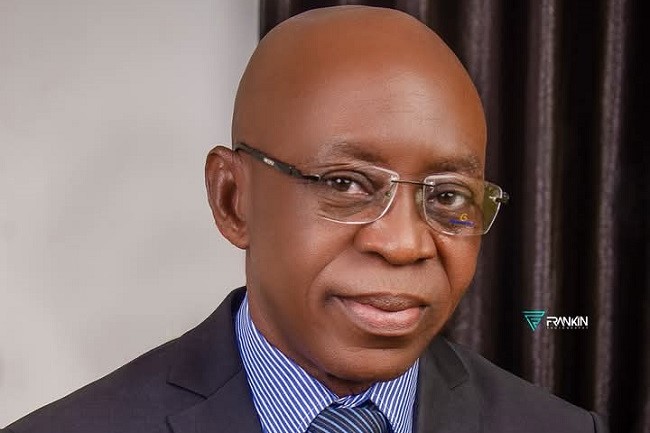
By Sadiq Austine Igomu Okoh, PhD, Climate Governance/Net-Zero & Energy Transition/GHG Accounting/Capacity Building Expert