

The revelation that Nigeria only invested 19% in climate finance despite receiving a staggering $4.928 billion between 2015 and 2021 to carry out various projects across the country has continued to raise eyebrows among stakeholders, particularly regarding the role of environmental education in raising awareness among citizens about these issues.
These findings, which were published in a report titled “The State of Climate Finance in Nigeria” in December 2024 by Connected Development (CODE) and Oxfam in Nigeria, showed that the aforementioned inflow of climate finance into the country amounts to an average of $704 million in climate finance annually and 118 projects annually.
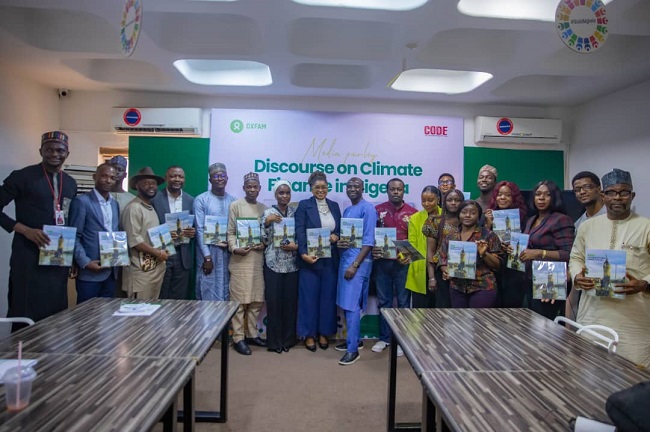
During a media parley organised by CODE with support from Oxfam in Nigeria on Tuesday, September 16, 2025, in Abuja, concerned participants raised issues regarding the report’s 81% climate finance deficit and the implications this has for the country’s sustainable growth.
Speaking about the key findings of the study, Hyeladzira Msheila, the Acting CEO of CODE, blamed the country’s low climate finance investment on weak policy enforcement.
In addition to insufficient policy enforcement, the research also found out that the majority of climate inflows into the country were loans rather than grants, which she strongly denounced as having fundamental implications for meeting the nation’s climate objective.
Msheila feels that a widespread public education campaign is desperately needed; thus, she called on journalists and other industry players to assist in filling up the current knowledge and information gaps.
“Empower communities on how to deliver climate results,” CODE’s chieftain stated as her call to action.
According to Greg Odogwu, a columnist for THE PUNCH newspaper, reporting on climate financing is sensitive and political.
“The media plays a vital role in advancing climate finance in Nigeria by bridging the gap between complex financial negotiations and public understanding,” he stated.
Consequently, he urged the organisers to collaborate with relevant stakeholders to help strengthen the capacity of journalists and science communicators to address the challenge that is impeding climate financing flow into Nigeria.
The event featured a number of papers on climate finance to provide context for the conversation and improve the participants’ knowledge of the topic. During the interactive session, questions were posed and responses were given, with many underlining the importance of bringing environmental journalists together behind a single front to get the best possible results.
The purpose of this study was to help the public debate climate finance, climate action, and policy choices. This can help with decision-making on local and sub-national climate governance and the roles of civil society in monitoring climate funding in Nigeria.
Through investigative reporting, storytelling, and accountability journalism, the media ensures that climate finance is not just about global pledges but about tangible solutions for Nigeria’s people.
By Etta Michael Bisong, Abuja