

GreenFaith Africa has called on leaders and other key stakeholders to intensify quick actions to tackle the global climate crisis that is threatening human existence.
The group made this call on Monday, September 8, 2025, at the ongoing Second Africa Climate Summit (ACS2) holding in Addis Ababa, the capital of Ethiopia.
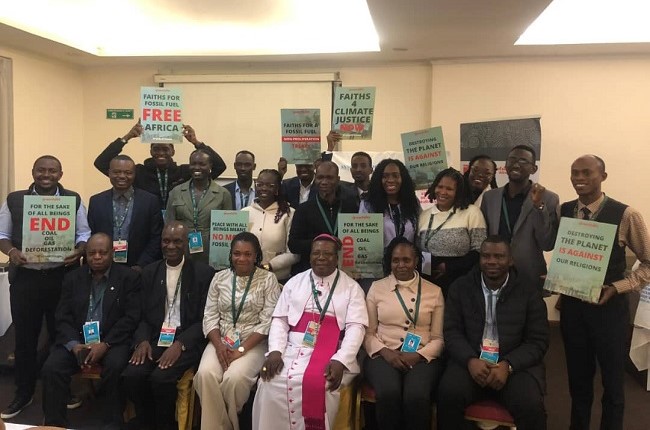
In an opening speech by Bishop Roje, he said the faith leaders and communities across Africa, representing Christians, Muslims, Indigenous people, Hindu, Baha’i, Buddhist and other spiritual traditions, call for urgent, just and faith-rooted climate action that centres people, the planet and the common good.
In the joint statement issued by GreenFaith Africa, Christian Aid, Symposium of Episcopal Conferences of Africa and Madagascar (SECAM), and the Green Anglican Movement, the four organisations said despite endowed resources in Africa, structural drivers exacerbate climate change owing to continued approval and expansion of fossil fuel projects, which could lock the region into decades of carbon‑intensive development.
As clearly documented through high‑impact cases in East and Central Africa, these climate changes generate local harms, displacement, ecosystem destruction and rights violations, deeply affecting women in disproportionate ways.
At the same time, climate finance flows remain far short of adaptation and loss & damage needs and are frequently channelled as loans or through complex modalities inaccessible to grassroots and faith‑based organisations.
Debt servicing diverts public resources away from social protection, adaptation and resilient infrastructure, while investment models often bypass local priorities and customary systems of stewardship.
The group called for partnership‑oriented architecture for climate action in Africa – one that bridges spiritual leadership, traditional ecological knowledge and scientific expertise; that channels finance directly to communities and faith‑led initiatives; and that embeds human rights, gender and disability inclusion into the design, governance and accountability of all climate investments.
They also called on the governments, financing institutions and partners to:
● Deliver climate finance at scale and fully honour and accelerate the $100 billion pledge.
● Ensure at least 50% of new finance is for adaptation and loss & damage, prioritise grants over loans, and operationalise participatory governance for funds.
● End new fossil fuel expansion immediately and adopt binding timelines for a just phase‑out, while massively scaling decentralised renewables and community ownership models.
● Implement debt‑for‑climate swaps and debt relief tied directly to investments in renewable energy, adaptation, and nature‑based solutions.
● Legally recognise and protect community and indigenous land tenure, sacred sites and customary stewardship; require prior, free and informed consent for all extractive and land‑intensive projects.
● Ensure meaningful, quota‑driven inclusion of women, youth and People With Disabilities (PWDs) in climate decision‑making, and tailor accessible funding streams for grassroots and faith‑based organisations.
● Scale up financing for water security and agroecological approaches, privileging locally led, nature‑based resilience projects.
On energy and just transition, the group advocated for an immediate, time‑bound end to new fossil fuel exploration and major carbon‑locking infrastructure across Africa and for African states to endorse and align with global efforts such as the Fossil Fuel Non‑Proliferation Treaty; accelerate investment in decentralised, community‑owned renewable energy (solar, wind, geothermal, small hydro) that prioritises energy access, local jobs and energy sovereignty, especially for rural and informal settlements; and rights‑based, just implementation in energy transition.
Accordingly, on gender, women, youth and PWDs, they requested guaranteed, meaningful participation of these constituencies in national climate planning, NDC revisions & implementation, project design and governance of finance mechanisms; targeted climate finance support for women‑led and youth‑led initiatives and accessible funding modalities for organisations of PWDs; and prioritisation of grant‑based funding to avoid exacerbating debt and inequality.
The faith-based organisations declared their willingness to partner in gender‑responsive climate education, leadership formation and community recovery programmes that defend dignity, end discrimination, and harness youth innovation and indigenous knowledge.
By Nsikak Emmanuel Ekere, Addis Ababa, Ethopia